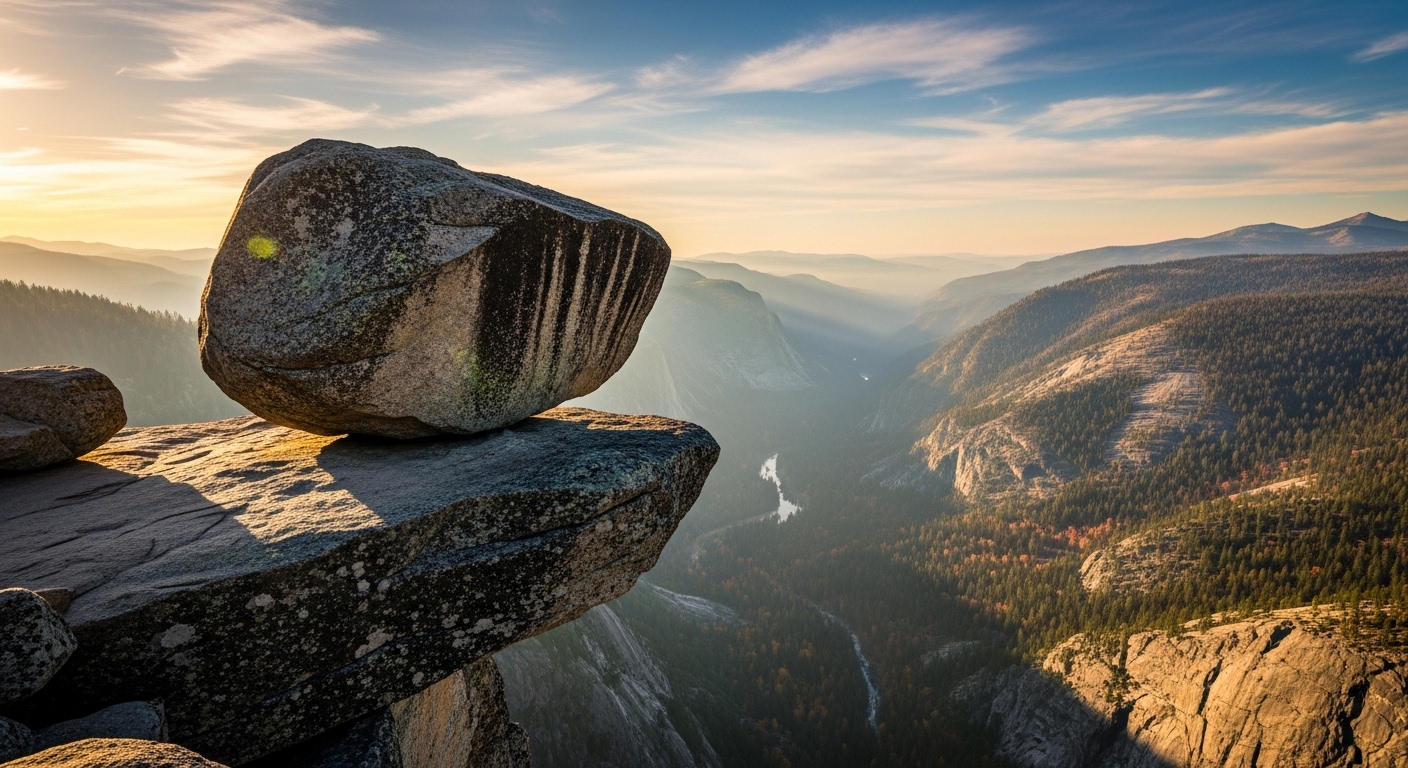
Giant boulders balanced over lookouts feel like nature paused mid-motion. You see them and instantly wonder how they are still standing. Massive rocks perched on cliff edges, leaning over valleys, oceans, or forests, appearing ready to fall—yet they have remained stable for thousands of years. The question most travelers ask is simple: are they safe to visit?
The answer, surprisingly, is yes. Around the world, many of these dramatic formations offer carefully designed, safe access routes that allow visitors to experience awe without unnecessary risk. These places combine geology, engineering, and storytelling into unforgettable lookout experiences.
How Giant Balanced Boulders Are Formed
These formations are the result of slow geological processes rather than sudden events. Weathering, erosion, and tectonic shifts gradually shape rock masses over millions of years.
Harder rock layers resist erosion while softer material beneath wears away. Over time, this leaves enormous stones seemingly balancing on narrow bases. Despite appearances, the weight distribution is often remarkably stable.
This is why giant boulders balanced over lookouts are not fragile accidents of nature, but long-lasting geological sculptures.
Why They Appear More Dangerous Than They Are
Human perception plays a big role in how these boulders feel. Our brains are trained to associate overhangs with instability. When a rock appears to defy gravity, fear naturally follows.
In reality, many of these boulders have centers of gravity well within their base. Some have not shifted for thousands of years, surviving earthquakes, storms, and erosion.
What looks like danger is often simply unfamiliar geometry.
Safe Access: How Lookouts Are Designed
Authorities understand the psychological impact of these sites. As a result, access paths are intentionally designed to feel secure while preserving the dramatic effect.
Stone steps, railings, viewing platforms, and controlled pathways guide visitors to safe vantage points. In many cases, you never need to step directly beneath or onto the boulder to experience its scale.
Clear signage and guided routes ensure that visitors can enjoy giant boulders balanced over lookouts without exposing themselves to unnecessary risk.
Famous Balanced Boulders With Visitor Access
One of the most iconic examples is Krishna’s Butterball in Mahabalipuram, India. This massive granite boulder has rested on a slope for centuries, fascinating scientists and visitors alike. Information about the region is available through Tamil Nadu Tourism.
In the United States, Yosemite National Park features several precariously balanced rocks, shaped by glacial movement and erosion. The park’s geological history is detailed by the National Park Service.
Australia’s Devil’s Marbles, known locally as Karlu Karlu, showcase enormous rounded boulders scattered across the landscape. These formations hold cultural significance and are managed for safe visitor access, as described by Northern Territory Parks.
What It Feels Like to Stand Near One
Standing near a balanced boulder creates a mix of wonder and disbelief. The scale is often larger than expected, making nearby trees or people appear miniature.
Many visitors report an instinctive pause—a moment of silence—as they process what they are seeing. The experience feels humbling, reminding you of time scales far beyond human life.
Despite the visual drama, properly managed sites feel calm rather than threatening.
Why These Lookouts Attract Travelers
Travelers seek experiences that feel extraordinary yet accessible. Balanced boulder lookouts deliver exactly that combination.
You do not need advanced climbing skills or extreme fitness. A short walk often leads to a viewpoint that feels otherworldly.
This makes giant boulders balanced over lookouts ideal for travelers who want dramatic landscapes without extreme adventure.
Photography and Viewing Tips
Lighting plays a crucial role. Early morning or late afternoon light emphasizes shadows and textures, making boulders appear even more dramatic.
Wide-angle lenses capture scale, while including people in the frame helps convey size. Always follow designated paths to avoid erosion and safety risks.
Many sites prohibit climbing on boulders to protect both visitors and the formations themselves.
Cultural and Spiritual Significance
In many cultures, balanced boulders are seen as sacred or symbolic. They may represent balance, strength, or divine presence.
Local legends often explain how these rocks were placed or protected. Respecting these stories adds depth to the visit.
Understanding cultural context transforms a photo stop into a meaningful encounter.

Environmental Protection and Preservation
These formations are sensitive to human impact. Even small disturbances can affect erosion patterns.
Park authorities limit access, monitor stability, and educate visitors to ensure long-term preservation.
Responsible travel helps ensure that future generations can experience these natural wonders safely.
Planning Your Visit
Before visiting, check official park or tourism websites for access updates and safety guidelines. Weather conditions can affect pathways.
Comfortable footwear and patience are usually all that’s required. These sites reward slow observation rather than rushing.
Planning ahead allows you to enjoy giant boulders balanced over lookouts with confidence and respect.
Why These Places Stay With You
Balanced boulders challenge assumptions about stability, gravity, and permanence. They stay in your memory because they look impossible yet exist quietly and confidently.
They remind us that nature operates on timelines far beyond our own.
Would you feel excitement or hesitation standing beneath one of these formations? Have you already visited a place that made you question gravity?
If stories like this spark your curiosity about unusual landscapes and safe ways to experience them, follow WentWorld on social media for more remarkable places shaped by time and nature.
Catch up on the top stories and travel deals by subscribing to our newsletter!