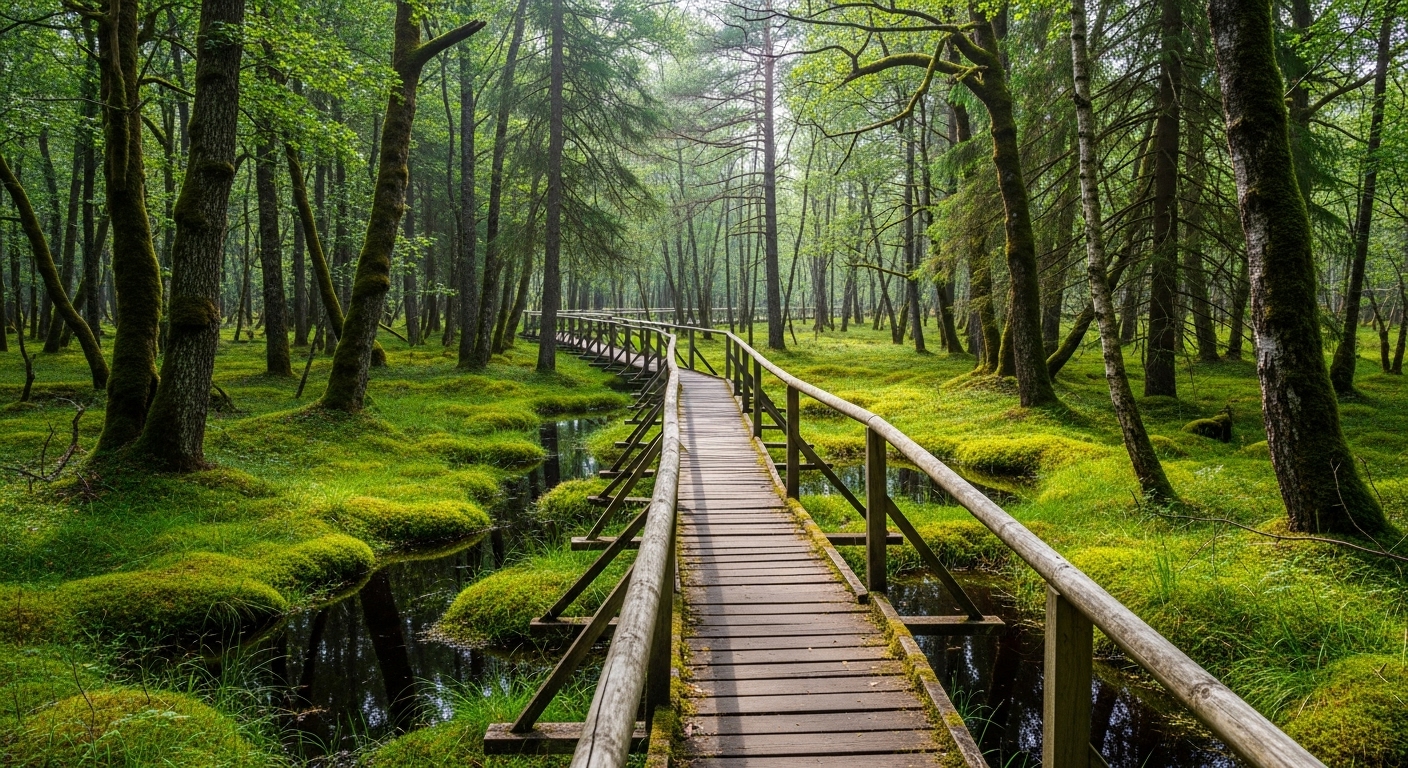
Forest boardwalks over peat and moss gardens offer one of the most peaceful and quietly fascinating travel experiences in the world. These elevated wooden paths allow travelers to walk gently above fragile ecosystems that have taken thousands of years to form. Unlike loud adventure trails or crowded viewpoints, these boardwalks invite you to slow down, observe closely, and reconnect with nature at its most subtle and resilient.
Have you ever walked through a forest where the ground feels alive, spongy, and ancient beneath your feet? That feeling usually comes from peatlands and moss gardens, ecosystems that quietly store carbon, regulate water, and support rare plant life. Forest boardwalks exist not to dominate these spaces, but to protect them while still allowing people to experience their beauty.
What Makes Peat and Moss Gardens So Special
Peatlands and moss gardens are among the oldest living landscapes on Earth. They form slowly, layer by layer, as mosses and plants partially decompose in waterlogged conditions. Over centuries, this process creates thick peat beds that act as natural climate regulators.
These ecosystems absorb enormous amounts of carbon dioxide, making them crucial in the fight against climate change. At the same time, they store water like sponges, reducing floods and maintaining steady water flow in surrounding forests. Because of this delicate balance, even a single careless footstep can damage decades of growth.
This is where forest boardwalks over peat and moss gardens become essential. Instead of restricting access entirely, these pathways allow visitors to explore responsibly while preserving the land beneath them.
Why Boardwalks Are Built Above These Ecosystems
Unlike regular forest trails, peat and moss gardens cannot withstand repeated human traffic. The soil compresses easily, water drainage changes, and rare plant species suffer. Boardwalks solve this problem by lifting visitors above the surface.
Additionally, boardwalks guide movement naturally. Rather than wandering off-trail, visitors follow a clearly defined path that minimizes environmental impact. This design encourages mindful walking and observation instead of hurried trekking.
In many regions, these boardwalks also serve educational purposes. Informational signs explain how peat forms, why moss is essential, and how these ecosystems support wildlife.
Iconic Forest Boardwalks Around the World
One of the most famous examples of forest boardwalks over peat and moss gardens is found in Finland. Finnish nature reserves such as Repovesi National Park feature beautifully maintained wooden walkways that stretch across deep peat bogs and moss-covered wetlands.
In Norway, forest boardwalks wind through misty boglands surrounded by pine and birch forests. The combination of cool air, soft moss carpets, and still water creates an atmosphere that feels almost otherworldly.
Across the Atlantic, Canada offers remarkable boardwalk trails in places like Kejimkujik National Park. Here, raised wooden paths pass over peatlands dotted with carnivorous plants, lichens, and ancient trees shaped by time and weather.
The Sensory Experience of Walking Above Moss
Walking on forest boardwalks over peat and moss gardens feels very different from hiking traditional trails. The sound changes first. Footsteps become soft and hollow, echoing gently against the wood. Around you, the forest often feels quieter, as moss absorbs noise rather than reflecting it.
Visually, these landscapes are subtle yet rich. Shades of green dominate, ranging from deep emerald to pale lime. Tiny flowers emerge seasonally, while pools of dark water reflect the sky and tree canopy above.
There is also a distinct smell: earthy, clean, and slightly sweet. Many visitors describe it as grounding, almost meditative. Have you ever noticed how certain places naturally slow your breathing and clear your thoughts? Moss gardens tend to have that effect.
Wildlife You May Encounter Along the Boardwalks
Peat and moss ecosystems support a surprising variety of life. Birds nest close to the ground, insects thrive in damp conditions, and amphibians rely on the steady moisture. Because these areas remain relatively undisturbed, wildlife often appears calm and unafraid.
In northern regions, visitors may spot cranes, owls, or even reindeer moving quietly near the boardwalks. In warmer climates, dragonflies, frogs, and rare butterflies are common sights.
Boardwalks allow humans to observe without intrusion. Instead of disturbing habitats, visitors become quiet witnesses to daily forest life.
Seasonal Changes in Peat and Moss Gardens
One of the most fascinating aspects of forest boardwalks over peat and moss gardens is how dramatically they change with the seasons. In spring, fresh moss growth creates vivid green carpets, while wildflowers bloom briefly but brilliantly.
Summer brings longer walks under filtered sunlight, with insects buzzing and birds calling from hidden nests. Autumn transforms these gardens into warm tones of gold, rust, and amber, especially in regions with deciduous forests.
In winter, snow-covered boardwalks feel almost surreal. The moss beneath rests quietly, insulated and protected, while the forest becomes hushed and reflective.
Why Travelers Are Drawn to These Quiet Trails
Modern travelers increasingly seek experiences that feel restorative rather than exhausting. Forest boardwalks over peat and moss gardens offer exactly that. They do not demand physical endurance or specialized skills. Instead, they reward patience, curiosity, and attention.
These trails appeal to solo travelers, photographers, families, and even older visitors who want safe yet meaningful nature encounters. Because boardwalks are often flat and accessible, they welcome a wide range of people.
Have you ever returned from a trip feeling calmer than when you left? Many visitors describe these forest walks as moments of mental reset, where time seems to stretch and worries fade.
Responsible Travel and Conservation Awareness
Walking these boardwalks also builds appreciation for conservation. When travelers learn how fragile peat and moss gardens are, they often leave with a deeper respect for protected landscapes.
Many parks use these trails as living classrooms, emphasizing the importance of wetland preservation. This awareness matters, especially as peatlands worldwide face threats from drainage, development, and climate change.

By supporting destinations that invest in sustainable access, travelers help ensure that these ecosystems remain intact for future generations.
Forest boardwalks over peat and moss gardens remind us that nature does not always need grandeur to impress. Sometimes, the most powerful experiences come from quiet places that ask us to slow down and observe.
Would you enjoy walking above centuries-old moss, listening to the forest breathe around you? Or have you already explored a peatland boardwalk somewhere in the world? We would love to hear your thoughts and experiences.
For more rare landscapes, thoughtful travel ideas, and destinations that reveal how nature and humans coexist, follow WentWorld on social media and stay connected with journeys that go deeper than the surface.
Catch up on the top stories and travel deals by subscribing to our newsletter!