If you’ve ever dreamed of drifting off under a blanket of infinite sky, you’re not alone. From desert dunes to alpine meadows, certain places let you truly sleep under the stars. This guide highlights the best spots, travel tips, stargazing advice, gear must-haves, and why this experience is more than Instagram—it’s soul-expanding. Let’s dive into remarkable locations where you can sleep under the stars and wake up in awe.
1. Wadi Rum, Jordan: Desert Night Under Ancient Skies
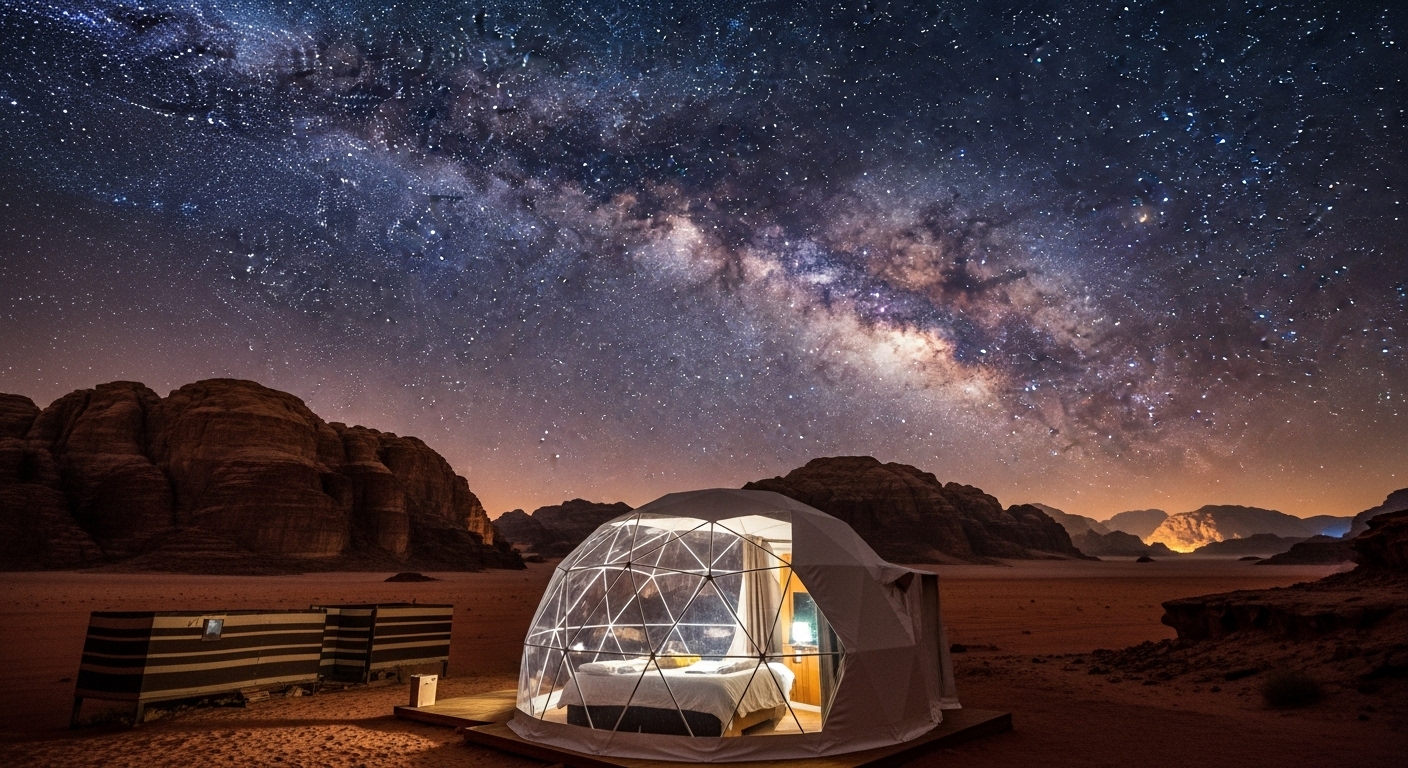
Wadi Rum’s desert landscape is legendary for its stark beauty and prime stargazing. Its isolated valleys and sandstone cliffs create an ideal backdrop for a night under the cosmos. Camps like Crimson or SunCity offer Bedouin-style tents with clear-roof domes—perfect if you want to sleep under the stars yet enjoy warm blankets and soft lighting.
At night, though, the temperature drops to near freezing—so a hot dinner, tea, and wool blankets come standard. The Milky Way arcs brilliantly overhead, and meteor showers feel surreal. Guided stargazing tours add stories of constellations from Arab astronomy tradition, making this a rich cultural moment.
For a more rugged option, pitch your own tent among the dunes and enjoy silence broken only by wind. Still, to fully “sleep under the stars” here, pack warm layers, a thick sleeping bag, and a telescope if you’ve got one.
2. Atacama Desert, Chile: One of Earth’s Darkest Skies
The Atacama Desert holds the record for some of the darkest skies on Earth. High altitude (2,500–4,000 m) and minimal water vapor create near-perfect stargazing conditions. Specialized lodgings like Alto Atacama or Dome Lodge let you sleep under the stars through clear geodesic domes with sky roofs and climate controls.
Each dome comes equipped with star charts and blankets—from cosmic dust to zodiac constellations. Local operators offer guided evening sky tours that point out Andean lore and Southern Hemisphere highlights like the Magellanic Clouds. When you sleep here, you’re literally wrapped in telescopic clarity.
If stately comfort isn’t your thing, dedicated astrophotographers bring portable sleeping pods and bivvy sacks. Under this sky, even silhouetted mountains appear bright against the universe—one of the most extraordinary places to sleep under the stars.
3. Sahara Desert, Morocco: Live the Sahara Nomad Dream
In the Sahara, silence is thick and skies are boundless. Desert camps like Merzouga or Erg Chigaga offer traditional nomad-style tents illuminated by lanterns—heated in winter, cool in summer. Wandering dunes, evening drum circles, and mint tea set the scene before you **sleep under the stars** on a rooftop bed or sand-dune lounge.
Temperatures swing between extremes, so wind-blocking clothes and a good sleeping bag are key. Guides may take you to deeper dunes for stargazing—away from all tents—where the Milky Way streaks across a sky so vivid you’ll taste it. Falling asleep on an outer mattress is a memory many say changes perspective.
For adventurous types, moonlit sand-bivvies and a single sleeping mat can suffice. You’ll hear camel bells in the night, and the sunrise—dramatic—over shifting reddish dunes. That’s the essence of choosing to sleep under the stars in the Sahara.
4. Patagonia, Argentina/Chile: Alpine Wilderness Above
Patagonia offers windswept plains and granite peaks. In Torres del Paine or Los Glaciares, backcountry refugios and campsites let you fall asleep wrapped in nature. To truly sleep under the stars, head to remote campsites, where tent rainflys remain off and max-warm gear is essential.
At night, cold clear air reveals constellations like the Southern Cross and Magellanic Clouds. The campfire stories here are half wind, half sky—guaranteeing a night seared into memory. Plus, you’ll wake under the dawn glow on glaciers or jagged peaks.
For those wanting comfort, several lodges offer star-viewing decks and outdoor jacuzzis. In Patagonia, sleeping under stars doesn’t require sacrifice—it balances rugged exposure with thoughtful warmth and breathtaking vistas.

5. Big Bend National Park, Texas, USA: America’s Dark Sky Gem
Big Bend is one of the few U.S. parks classified as an International Dark Sky Park. Backcountry sites and remote campsites allow you to sleep beneath unfiltered Texas skies. Some frontcountry campgrounds, like Chisos Basin, let you pitch tents or bunk in stargazing platforms—perfect to sleep under the stars.
Fall nights show Milky Way arcs and planets so bright they cast faint shadows. The national park hosts ranger-led astronomy events in season—sometimes with telescopes and hot chocolate. Bring warm clothes for October–April, when temperatures can plummet at night.
Added bonus: nearby Rio Grande views and mountain silhouettes create a dramatic stage for night skies. In Big Bend, **sleep under the stars** feels like camping on another planet, yet it’s easy to reach for most U.S. travelers.
6. Remote Atolls of the Maldives: Overwater Bungalows & Ocean Ceilings
Luxury island resorts in the Maldives combine warm tropical nights with starlit views above transparent bungalow decks. Sleep above gentle waves—and watch the bioluminescent plankton glow below. It’s a soft version of sleeping under the stars, blending comfort and enchantment.
Some resorts offer astronomy nights, telescopic guides, and couples’ skies packages. For an authentic edge, take a local boat ride further from resort lights and pitch a tent on an uninhabited sandbank—just pack fresh water and a reef-safe lamp.
Here, the sky and sea become one, and the only sound is your partner’s breathing alongside the waves. That’s a modern take on choosing to sleep under the stars in tropical paradise.

7. Alpine Meadows & Ski Lodges: High-Elevation Hideaways
High-altitude meadows in the Alps or Rockies offer warming alpine huts near glacial lakes. Summer nights here—like in Switzerland’s Bernese Oberland or Colorado’s San Juan Mountains—allow backcountry hut-to-hut routes, with options to sleep outside in star blankets.
In these elevated zones, altitude gives clearer skies and thinner atmosphere—making it easier to glimpse faint constellations. Wake up to mountain silhouettes and cool air. Plus huts provide warmth via wood stoves—ideal combinations of rough and refined comfort for sleeping under the stars.
Consider endurance hikes followed by sky magic—here, sleeping under the stars is part of a full alpine adventure, not just a single-night wonder.
8. Planning Tips for Sleeping Under the Stars
Start with the right gear: a three-season sleeping bag rated to at least the local night temps, a comfy inflatable pad, and breathable base layers. For deserts, expect nightly lows under 0 °C; high-altitude places, -10 °C or colder—even in summer.
Also, eye masks, earplugs, and compact stargazing apps (Stellarium, SkyView) enhance your experience. And always sunscreen and bug spray if you’re escaping into the night early.
9. How to Capture the Moment
Use a tripod and wide-angle lens for sky photography—shoot at ISO 1600+, f/2.8, 15–30 seconds, depending on ambient light. Phone apps like NightCap can capture a starry canvas if you don’t have bulky gear. For the Maldives, use slow shutter speeds above bungalow decks and focus manually if possible.
Bring portable red‑light headlamps—these preserve night vision and add ambiance in photos. Shooting from inside clear‑roof domes? Use a microfiber cloth to reduce reflections and keep windows clean. A little prep goes a long way when you sleep under the stars and want to remember it forever.
10. Safety & Permits Under Open Sky
Check if camping under the stars is legal—some parks require permits or only allow designated sites (e.g. Wadi Rum, Big Bend). Use bear-proof containers in wilderness zones. Carry a satellite phone or locator beacon in Arctic or desert environments).
Always let someone know your coordinates, especially in remote places. For desert camping, calculate water needs precisely. For alpine or high-altitude treks, monitor acclimatization—altitude sickness can strike beyond 2,500 m. These precautions make sure your commitment to sleep under the stars is safe and smart.
To sleep under the stars is to step into a primal wonder—night skies undimmed, breath visible in cool air, wilderness surrounding you. Whether on desert dunes, alpine meadows, remote islands, or rocky plains, each destination offers a sky full of stories to dream within. With the right gear, safety preparedness, and spirit of adventure, choosing to sleep under the stars becomes more than travel—it becomes a memory stitched into the night sky itself.
Catch up on the top stories and travel deals by subscribing to our newsletter!