Few natural wonders rival the surreal beauty of vast salt flats—endless white expanses that shimmer under sun or stars, offering landscapes that feel both alien and intimate. For those venturing into salt flats travel, each destination brings its own magic: mirror-like reflections in Bolivia, fossil hunting in Utah, or remote solitude in Ethiopia. This guide dives deep into how to experience these otherworldly terrains: what to know, where to go, when to visit, and how to plan a trip that transforms you.
From the iconic Uyuni in South America to lesser-known salt pans in Asia and Africa, this article helps you build an immersive trip rooted in landscape, culture, geology, and photography. You’ll learn how to choose the right season, what gear to pack, and how to navigate sensory extremes. Add in local stories, eco-safety tips, and practical logistics—and you’ve got a full-fledged adventure planner tailored for salt flats travel.
1. Why Salt Flats Travel Feels Like Another Planet
Salt flats, or salar, are formed when lakes evaporate, leaving behind thick salt crusts that stretch for miles. The result: a seamless white canvas that confounds scale and perspective. Step onto a dry salt flat and you feel weightless—your footsteps crack through crystalline surfaces; your horizon disappears. During wet seasons, shallow water creates perfect mirrors that blur sky and ground, doubling the visual drama.
This out-of-world effect draws photographers, naturalists, geologists, and anyone seeking a dreamlike landscape. When exploring salt flats, every step matters, every light angle shifts your experience, and every photo looks unreal yet beautifully real.
2. Top Salt Flats to Explore
Here’s a curated list of the world’s most captivating salt flats—some classic, some hidden gems:
– Salar de Uyuni, Bolivia
At 10,582 sq km, Uyuni is the planet’s largest salt flat. Visit during the wet season (December–April) for mile-wide reflections of sky and sun. Dry-season visits (May–November) reveal hexagonal salt patterns perfect for perspective photography. Combine it with volcanic geysers, colored lagoons, and overnight stays in salt hotels—an essential stop for any traveler seeking salt flats travel experiences.
– Bonneville Salt Flats, Utah, USA
Famed for land-speed racing, Bonneville’s smooth surface attracts motorsports enthusiasts and photographers alike. White sands stretch for miles outside Wendover. Visit in summer for evaporation or winter for dramatic snow contrast. It’s a salt flats travel classic with American open-space appeal.

– Lake Eyre, Australia
When this desert salt pan briefly fills from rain, Lake Eyre becomes a reflective wonder visible from above. Dry seasons bring stark white contrast fringed with red earth. Access via scenic flights or 4×4 tours, often timed with outback wildlife emergence and Indigenous cultural trips.
– Danakil Depression, Ethiopia
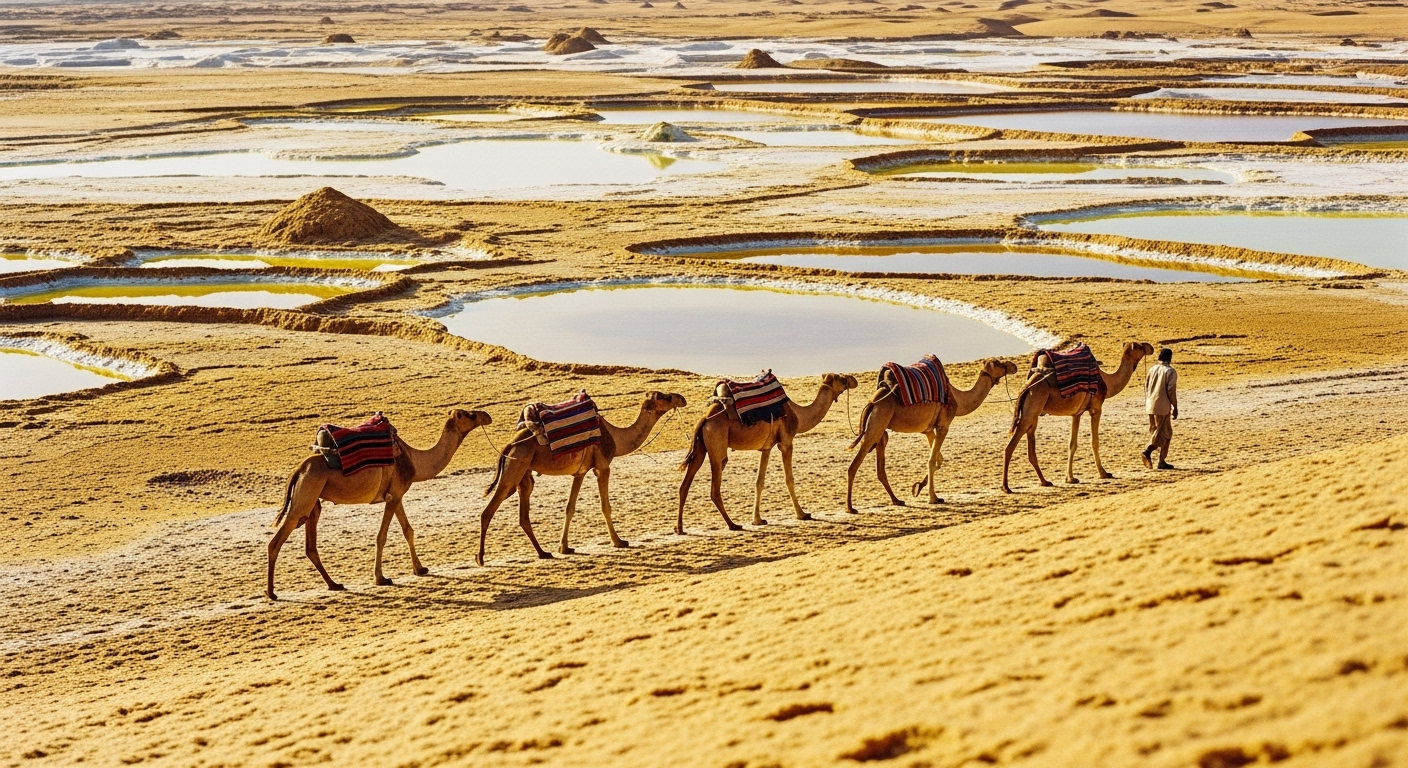
Ranked one of the world’s hottest places, Danakil’s salt outlets include vast salt plateaus and active salt caravans crossing dunes. The yellow sulfur springs and acid pools nearby make this a geologically extreme experience. For seasoned explorers, it’s a surreal salt flats adventure steeped in nomadic culture.
– Salar de Atacama, Chile
At 2,800m elevation, this high-altitude salt flat sits among flamingos and volcanoes. Combine its bright salt crust with altiplano fauna in remote national reserves. Visit during sunrise or sunset to see flamingos pink against white salt—perfect for enthusiasts seeking wildlife and salt flats travel.
– Salinas Grandes, Argentina
Accessible from northwest Argentina towns like Purmamarca, Salinas Grandes offers photogenic straights framed by mountains. Often visited in dry seasons, the crisp white salt makes great contrast shots. Nearby indigenous craft stalls make it culturally rich too.
– Bonneville and Other US Flats
Explore smaller salt pans across Nevada or elsewhere for quieter, non-touristy salt flats travel. They offer solitude and raw white expanses—ideal for campers and astro-photographers chasing star reflections.
3. Best Season and Time to Go
When planning salt flats travel, timing affects your experience profoundly. Photographers, drivers, and remote adventure seekers should consult this calendar:
- Mirror risk (wet season): Best in Uyuni (Dec–Apr), Lake Eyre after rains; be aware of soft surfaces and poor traction.
- Dry cracked salt: May–Nov in Uyuni, late summer in Bonneville—optimal for perspective shots.
- Color and wildlife: Flamingo season in Atacama (Nov–Mar), batched rains in Lake Eyre (Feb–Apr), months when caravans traverse Danakil (Oct–Mar).
- Temperature extremes: Middays are scorchingly hot; nights can freeze—pack reverse-weather gear.
Local guides often know micro-seasons too—so check recent weather trends and daily forecasts.

4. Planning Logistics and Accessibility
Salt flats travel requires extra planning. Consider:
- Guided vs. self-drive: Uyuni 4×4 tours are standard—choose multi-day or single-day depending on your route. Bonneville’s surface suits rented cars or bikes but need early checkout. Lake Eyre and Danakil require guided convoy access with permits.
- Passports & permissions: Danakil needs police escort; Uyuni border tours cross into Bolivia and Chile. Always verify visa entry rules and allow buffer time.
- Transport: Nearest airports: Uyuni, Calama (Chile), Jodhpur (India salt flats), Salt Lake City (for Bonneville), Addis Ababa (Ethiopia). Then add local transfers.
- Accommodation: Uyuni salt hotels, Bonneville motels, Danakil desert camps, Ecuadorian lodges—book ahead during peak times or photo trips.
5. Gear and Packing Essentials
Visiting salt flats demands special equipment. For smart salt flats travel, ensure you pack:
- Sun protection: Sunglasses, SPF 50+, lip balm with SPF.
- Layered clothing: Hot daytime temps but icy nights—and cold wind across open salt.
- Optical gear: Polarizing filter, ND grads, wide-angle lens, mirror filter.
- Footwear: Waterproof boots to handle mud; gaiters can help in salty mud flats.
- Navigation & communication: Offline maps, GPS, satellite messenger or personal locator beacon.
- Vehicles: Tire repair kit, dual burners fuel, flags for visibility; Uyuni tours usually equip vehicles.
- Waterproof bags: To protect cameras and gear from windblown salt.
6. Photography & Perspective Tips
Salt flats photos are a visual feast—embrace surrealism by following these tricks:
- Mirror effect: Bring low when shallow water is present and shoot across the flat horizon.
- Forced perspective: Use toy cars or walking subjects far from camera to play with scale.
- Golden hour: Dawn or dusk gives colorful reflections and softer light.
- Long exposure: Capture car trails as streaks of light during dusk on Bonneville.
- Starscapes: Moonless nights yield Milky Way reflections; bring tripod and remote shutter.
- Stay safe: Salt glare can blind components—wrap cameras in soft cloths between shots.
7. Eco‑Friendly Salt Flats Travel
These landscapes are fragile. Plan with care:
- Stay on existing roads to avoid damaging crusts beneath the salt.
- Take all your litter with you—no sinks, trash bins or water supply.
- Avoid driving in wet seasons on soft flats unless guided to prevent getting stuck or sinking.
- Respect local community: near Uyuni, salt harvesters still work by hand—observe from a distance.
- Hire local guides to support their economies and gain cultural insight.
- Use eco‑certified lodges and campsites.
8. Unique Cultural and Natural Highlights
Uyuni Train Cemetery & Salt Hotels
On Uyuni tours, you’ll stop at a train graveyard, watch flamingos on high-altitude lagoons, and sleep in hotels made entirely of salt bricks—an experience that blends culture, wildlife, geology, and kitsch.
Danakil’s Salt Caravans
Nomads guide camel caravans across dunes to harvest salt blocks. This ancient route carries traders through high heat and wind—a dramatic cultural tale of resilience and tradition.
Atacama Flamingo Fields
Watch thousands of flamingos feeding at sunset next to salt pans—an ethereal pink-on-white sight that blends wildlife and salt flat discovery.
Bonneville Speed Week
If your trip is late August, timing with Speed Week lets you witness adrenaline-fueled motorbike races and attempts at land-speed records.
9. Health & Safety Essentials
- High UV exposure—cover skin and eyes.
- Dehydration—drink more water than usual.
- Altitude issues at Uyuni or Atacama—allow acclimatization days.
- Desert heat and cold—layer wisely.
- Snake and scorpion caution in Ethiopia—follow guide advice.
10. Planning a Salt Flats Travel Itinerary
Here’s a sample 7-day itinerary around Uyuni:
- Arrive in Uyuni, acclimatize, visit town cemetery and salt museum.
- Drive across flats, stop at Isla Incahuasi for giant cacti & photo ops, overnight salt hotel.
- Visit Eduardo Avaroa Reserve—Bolivia’s colored lagoons and geysers.
- Cross into Chile, stay in San Pedro de Atacama, stargazing at flats nearby.
- Explore Atacama salt flats and flamingo sightings.
- Return to Uyuni via Chile/Argentina route, with optional hot springs.
- Fly or bus back to main city; shop for artisan salt and wrap up.
Adapt this to include Ethiopia, Australia, or Utah options depending on your starting region.
Salt flats travel isn’t just sightseeing—it’s sensory immersion. It’s about stepping into surreal environments, learning about geology and tradition, and pressing “reset” while standing on reflective ground that feels like nowhere else. Whether you’re chasing mirror selfies or nomadic salt routes, these landscapes offer solitude, history, and wonder in equal measure.
Which salt flat tops your dream list? Let us know below—and follow our page for more offbeat landscapes, adventure planning, and travel stories that bend your sense of normal.
Catch up on the top stories and travel deals by subscribing to our newsletter!