Ever wondered how to stay online while traveling, without your bank account spinning out of control? In this post, we’ll dive into how to stay connected on the road without paying too much—packed with real-world tips, tool comparisons, and funny anecdotal glitches. We’ll cover local SIMs, eSIMs, Wi‑Fi hacks, budget mobile plans, message apps, and unexpected pitfalls. Ready to avoid the dreaded “no‑signal” moments and surprise bills? Let’s go!
From hot debates about buying local SIMs versus going global, to pro tricks for streaming and mapping on the fly, you’ll find everything here. And we’ll pepper it with questions—so feel free to jump in and share your own hacks along the way.
1. Why Everyone Stresses About Connectivity (And Why You Shouldn’t)
Picture flying into a new country: your phone crashes into “no service,” GPS acts weird, and that coffee-shop Wi‑Fi asks for your email just to connect. We’ve all been there—trying to use a ride-share app, checking a message from home, or opening TripIt. Believe me, how to stay connected on the road without paying too much is the skill every traveler needs—but few have mastered.
Take it from Sam, who landed in Thailand with no SIM and faced a taxi meter ticking in silence. By the time he got internet, he’d already overpaid by 50%. A small upfront strategy could have saved him—and avoided that sinking “I’m in a foreign country with zero directions” dread. Ever had a moment like that?
2. Local SIM Cards: Cheap and Reliable—But Not Perfect
Local SIMs are usually the go-to. A few bucks gets you sweet data on national networks, and suddenly your phone is part of the country. The trick? Regions vary: in Europe and Southeast Asia, SIMs are a bargain. But in Australia or Japan, they’re pricier and fill slowly. Plus, passenger planes don’t allow activation until touchdown.
Make sure your phone is unlocked before traveling—otherwise, no dice. Bring a SIM cutter, a small pin tool, and your passport; some kiosks need copies. And watch the recharge game: some countries invalidate leftover data if you don’t top up within a month.
3. eSIMs: The Future is Here, but Is It for You?
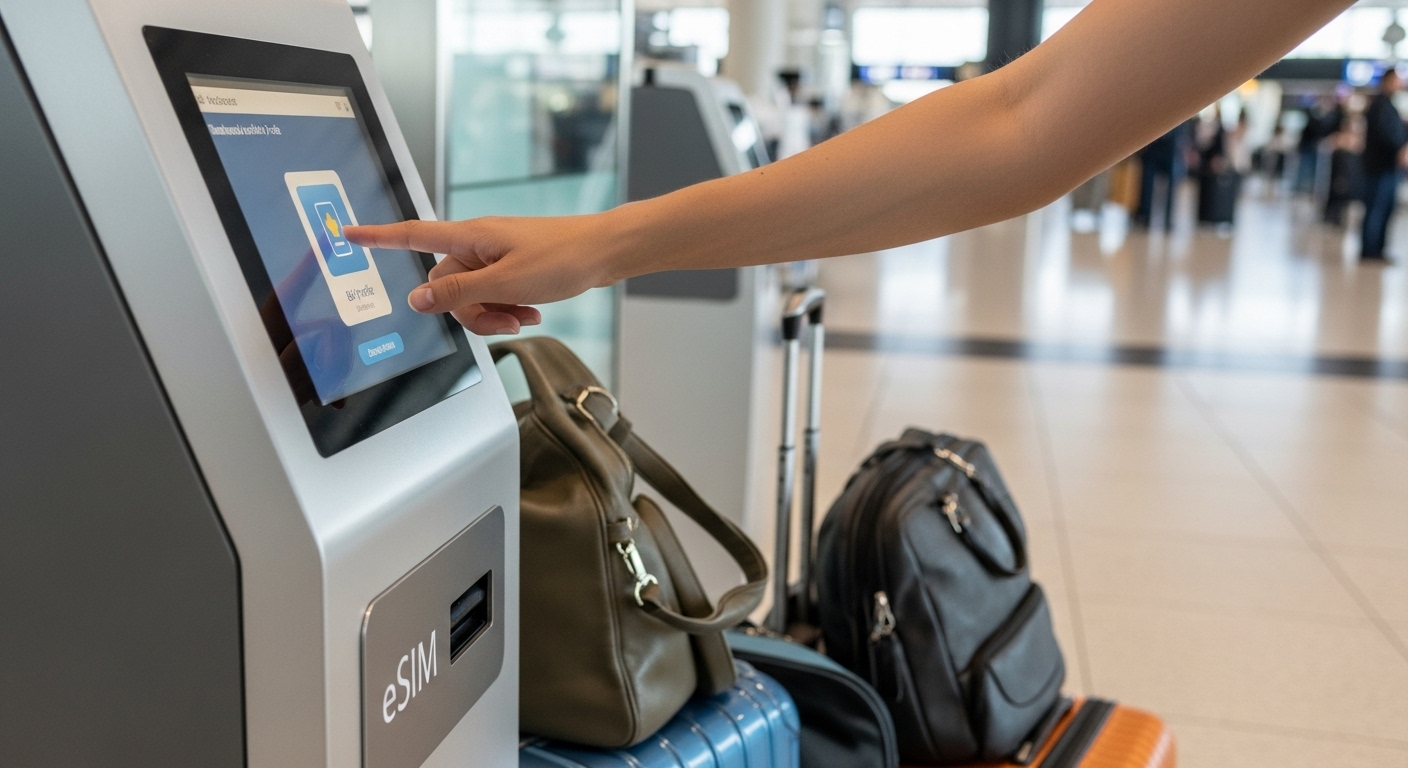
eSIMs let you download mobile data plans directly—no swapping severed plastic cards. Platforms like Airalo, Nomad, or Holafly let you buy data for dozens of countries. This is ultra‑handy for multi‑country trips, and it’s easier during airport layovers—you can activate ahead of arrival.
But watch for gotchas: eSIMs typically work only on newer phones, and some carriers block the process. Coverage quality and data caps vary too. Still, for how to stay connected on the road without paying too much, eSIMs are a strong contender—especially when paired with local SIMs on dual‑SIM devices.
4. Best Budget-Friendly Mobile Plans Globally
Many big telecoms offer travel plans—like T‑Mobile’s “Magenta” roaming—often better than paying heavy roaming charges. My friend Emma tried it in Europe: after a $10 top-up, she got unlimited data and texts across 10 countries. Not bad.
In Asia, telcos in Taiwan, Singapore, and Malaysia frequently offer 30‑day tourist plans under $15 with data, voice, and sometimes free access to music apps. Pro tip: always check if plans throttle speeds after 10 GB—you don’t want that 2G emergency throttle while trying to stream a map.
5. Wi‑Fi Hacks and Safe Public Networks
Airport lounges, cafés, co‑working spaces—Wi‑Fi is everywhere. But it’s not all sunshine; dude with a cheap VPN blocked ads, but good thing he didn’t check banking there. Public Wi‑Fi is often unsecured. So, always use a VPN, avoid banking on it, and enable two‑factor authentication.
Another hack? Look for shared routers that give you 3‑hour tokens for free. Some local businesses trade Wi‑Fi access for a small purchase—or ask nicely and they might hand you the password.
6. Offline-First Apps That Save the Day
If you know your data will be limited, download offline maps, guides, and playlists ahead of time. Google Maps, Maps.me Spotify, and Netflix allow offline usage. I once heard about a backpacker stuck in the Rockies with no signal—but thanks to pre‑downloaded maps, she navigated back safely.
Apps like WhatsApp, Telegram, Signal, or Viber let you message over Wi‑Fi even without mobile data. I used those while hiking in Sicily. The freedom to message home via café Wi‑Fi each morning was a relief. That’s part of the secret to how to stay connected on the road without paying too much—lean on offline modes and smart apps.

7. Dual-SIM Devices: Flexible and Future-Proof
Phones with two SIM slots (or one eSIM and one physical) enable you to run a local SIM in one slot and keep your home number on the other. That way, you avoid missing important calls when abroad and still get cheap local data.
For instance, I once had Airtel from India in slot one and an eSIM in slot two—this meant I could transfer money with OTP from home, while using cheaper local data. Just be sure your model supports VoLTE and both SIMs are active simultaneously.
8. Hidden Costs to Watch Out For
Watch out for these pitfalls: data throttling down to snail speed, expensive recharges for top-ups under $10, SIMs expiring if unused, limits on tethering, and charges for receiving calls/SMS from home.
Here’s a question: has anyone ever had data sneaky expire while traveling? I did in Chile—the remaining 5 GB vanished after they saw I hadn’t used it in three weeks—without notice. Not fun.
Pro Tips for Long-Term Travelers
If you’ll be wandering for months, consider a slow-and-steady combo: pick a base country with affordable long-term prepaid SIMs, and rotate that SIM during shorter trips. Or post up in one place for eSIM purchases and rely on local Wi‑Fi in between.
Another tactic is to buy a cheap unlocked hotspot device and local SIMs that you insert as needed. This helps if you’re traveling as a group, want to share data, or use for remote work over tether.
Staying online while traveling—without paying a ton—is totally doable. Track these tips: pick between local SIM or eSIM (or both); use secure public Wi‑Fi; download offline content; use dual‑SIM tools; and keep an eye on hidden fees. Trust me, you’ll never feel stranded with no direction or connection again.
So tell us: which connectivity plan do you swear by? Had any horror stories or miraculous connectivity creations on the road? Share your experiences and ask questions below. And don’t forget to follow us for more smart travel tips and tricks.
Catch up on the top stories and travel deals by subscribing to our newsletter!