Traveling with essential meds can feel like a puzzle—juggling time zones, legal rules, and keeping doses right. In this guide, we’ll walk through how to travel safely with prescription medications so you avoid hiccups at borders, delays, or missed doses on the road. We kept it real, sharing tips that work—from packing smart to communicating clearly about your meds—and we’ll sprinkle in questions, so feel free to jump in as you read.
No fluff here: we’ll dive into checklists of travel safely with prescription medications, real-world scenarios, international rules, storage hacks, and what to do if something goes sideways. By the end, you’ll be confident that your prescriptions won’t hold you back from exploring your next destination.
1. Planning Ahead: The Medication Travel Blueprint
The best journey with meds starts before you even book a flight. Begin by creating a simple meds itinerary document. List drug names (generic and brand), doses, schedule (with time zone adjustments), and your doctor’s contact info. Call your physician to get prescriptions that cover your entire trip plus a buffer—ideally enough for a week’s extra supply. If your trip is longer, plan a refill strategy overseas. It could mean transferring prescriptions to a local doctor or pharmacy system.
2. Prescription Documentation: Don’t Leave Home Without It
Many countries have strict rules on controlled substances. Carry your prescription in English (or translated into the destination language if possible), plus a doctor’s note on official letterhead explaining your condition and why you need the medication. Bring both the original prescription and a photocopy, and stash a digital scan in cloud storage or email. This documentation is essential when passing through customs, especially with injectable meds like insulin or ADHD medications like Adderall.

3. Choosing the Right Containers and Packing Strategy
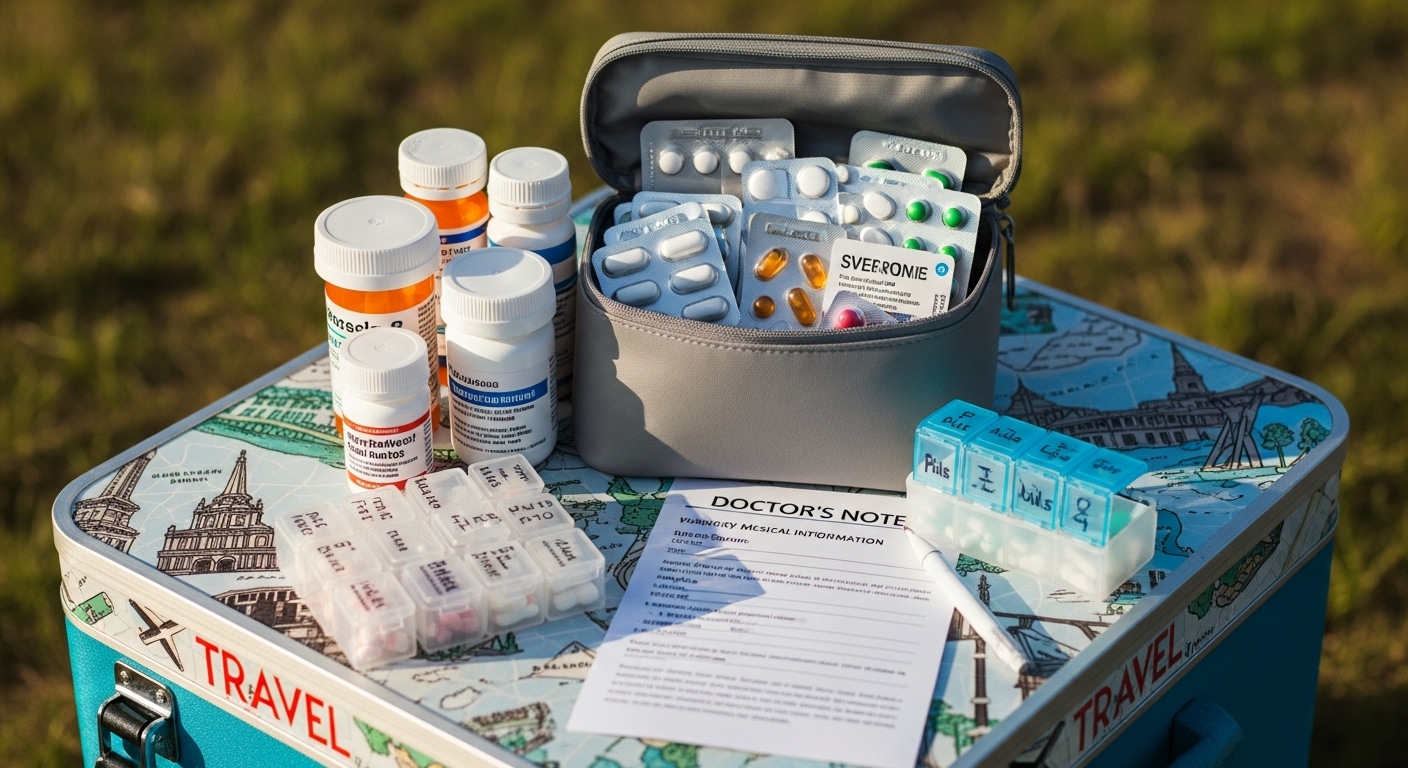
Airline security requires that all meds in carry-on bags be clearly labeled. Keep them in original pharmacy bottles or blister packs, and include a printed copy of your prescription. Use a pill organizer for daily doses, but keep the medications in the original containers too—as backup proof. Pack half your meds in your carry-on, half in checked luggage—especially if you’re flying multiple legs—so you have a backup if one bag goes missing.
4. Temperature Considerations and Storage Hacks
Heat-sensitive meds like insulin need special care. Pack them in an insulated bag with reusable ice packs—just don’t freeze the medication. Some travelers use gel freeze packs that stay within safe ranges. Keep an eye on storage instructions: room temperature versus refrigerated. Bring a digital thermometer if you’re unsure about hotel room temps. For longer trips, consider medicine travel cases with temperature monitoring and portable USB-powered fridge bags.
5. Crossing Borders: Customs, Security, and Legal Rules
Before travel, check each country’s regulations regarding prescription meds. Government and embassy websites are your best source. Countries such as the UAE or Japan may require advance permits for certain controlled medications. You can apply for a “Narcotic Control Certificate” or “Permission to Import Medications” ahead of travel. At airport security, greet officers politely, present your documentation, and don’t be rushed. Be prepared to show how much med you carry corresponds with your trip’s length—and your prescription records support it.
6. Time Zones, Dosing Schedules, and Jet Lag Challenges
Crossing time zones with critical meds can be tricky. Convert the dose schedule to the local time at your destination before flying. Set phone alarms adjusted for new time zones—say, “Take insulin at 7 am local time.” If you’ll hop through multiple zones, pause dosing to realign—your pharmacist can advise on safe transitions. And if travel brings on jet lag, take heart: adjusting the dose time calmly helps keep both sleep and medication stable.
7. Emergency Plans When Things Go Wrong
Things happen: bags get lost, prescriptions expire, or you fall ill. Always carry a spare refill in your carry-on. If that’s gone, don’t panic—you can usually get help by visiting a local clinic or contacting your embassy. Online consultations from back home are common now. Keep backup contact info for your doctor and insurance provider to request a remote prescription or authorization. In serious cases, doctors can issue a “Letter of Urgency” explaining the medical need in local language if necessary.
8. Local Prescriptions Abroad: Alternatives and Precautions
In many countries, pharmacists can provide common meds without a prescription, though quality and packaging vary. Research reputable pharmacies in advance—embassies often list them. If you need to replace a med abroad, check active ingredient and dosage equivalence first. Some prescription drugs in the US may be regarded as over-the-counter elsewhere—or vice versa. Always read labels carefully and stay vigilant about counterfeits. Communicate clearly with pharmacists and use translation apps to confirm ingredients.
9. Travel Insurance, Medical Coverage, and Legal Support
Don’t underestimate travel insurance that covers illnesses, med replacement, and telehealth. Some policies include medical evacuation, which is crucial if you rely on critical meds and a suitable hospital is far away. Check if your insurance covers lost meds or emergency refills abroad. Keep both digital and physical proof of insurance; show them immediately if you have to see a doctor unexpectedly.

10. Real Traveler Stories and Common Scenarios
Emma’s story: She travels frequently with insulin and planned a six-month Asia trip. She mapped clinics in each country and carried a doctor’s letter. When her bag was delayed three days, she managed using emergency insulin kits from a local outpatient clinic that required just a translated prescription.
Mark’s experience: He misplaced his ADHD meds in Germany and got refills by visiting a local psychiatrist. He discovered meds have different names, but he found a pharmacist who matched the active ingredient with his English prescription—and saved the rest of his trip.
11. On-the-Road Tips: Staying Organized Day by Day
Each morning, check your med supply and dosage schedule on a laminated sheet or app. Refill pill planners at the end of each week. Restock travel supplies—like syringes, alcohol wipes, or spare batteries for nebulizers—at reliable pharmacies along your route. Keep meds locked or sealed to avoid accidental spills or tampering when staying in hostels or shared rooms.
Going on trips while keeping your health routine steady is absolutely doable. By travel safely with prescription medications, packaging meds properly, tracking dosing schedules across time zones, and knowing where to find replacements or medical help, you can enjoy your journey without constantly worrying. Asking questions, sharing your experience, or chiming in with your own travel-med stories helps build a community—we’d love to hear from you.
Let’s keep exploring, together, safely and confidently. Follow us on social media for more travel-tested tips, honest guides, and stories from the road.
Catch up on the top stories and travel deals by subscribing to our newsletter!