When we travel, we don’t just bring back photographs—we carry little pieces of culture, memories, and emotions with us in the form of souvenirs. And while some souvenirs are sturdy like keychains or magnets, others are fragile: hand-blown glass, ceramic plates, delicate figurines, or even bottles of local wine. But here’s the million-dollar question—how do you travel with fragile souvenirs without ending up with a bag of broken pieces? If you’ve ever unwrapped shattered pottery after a long flight, you know the pain all too well. So, let’s dive into the best, most practical, and even creative ways to carry fragile souvenirs safely back home.
Think about it for a moment. How many times have you walked through a local market, spotted something stunning, and hesitated to buy it because you weren’t sure if it would survive your journey? We’ve all been there. That’s why this blog is here—to give you confidence, peace of mind, and actual solutions to ensure that beautiful handmade vase makes it back in one piece. Read more on How to Travel With Fragile Souvenirs.
Why Fragile Souvenirs Are Worth the Effort
Fragile souvenirs aren’t just “stuff.” They’re often crafted by local artisans, holding centuries of tradition and stories. For example, imagine buying a Venetian glass ornament in Italy or a hand-painted ceramic dish in Morocco. These items aren’t just decor—they’re conversation starters, family heirlooms, and tangible reminders of the experiences you had while exploring the world. Wouldn’t you want to preserve those memories as best as you can?
Yes, fragile items may require extra care, but isn’t that the point? To bring back something so special that it deserves the effort? By the end of this blog, you’ll have more than a packing strategy—you’ll have the confidence to say “yes” to that delicate masterpiece you fall in love with during your trip.
Understanding the Risks of Traveling With Fragile Souvenirs
Air travel, train rides, even long road trips—none of these environments are particularly gentle on fragile items. Turbulence, baggage handlers tossing luggage around, sudden braking in buses, or uneven roads can all cause damage. The reality is simple: fragile souvenirs are at risk, but risks can be minimized if you’re strategic.
Ask yourself: do you want to gamble with your treasures, or would you prefer to plan ahead and protect them like they deserve? That’s where our strategies come in.
Choose Your Souvenirs Wisely
Here’s a surprising truth—sometimes the safest souvenirs are still fragile, but they’re not impossible to carry if you make smart choices. If you’re shopping in a local market, ask yourself these questions before buying:
- Is it small enough to fit in my carry-on?
- Does the vendor provide a protective box or packaging?
- Is there a version of this souvenir made with slightly sturdier material?
You might love the massive hand-painted vase, but unless you’re okay with shipping it separately, it might be better to go for a smaller version. That way, you get the art and story without the headache.
Pack Like a Pro: The Layering Method
When it comes to traveling with fragile souvenirs, the way you pack makes or breaks the outcome—literally. The layering method is a tried-and-tested technique you should adopt:
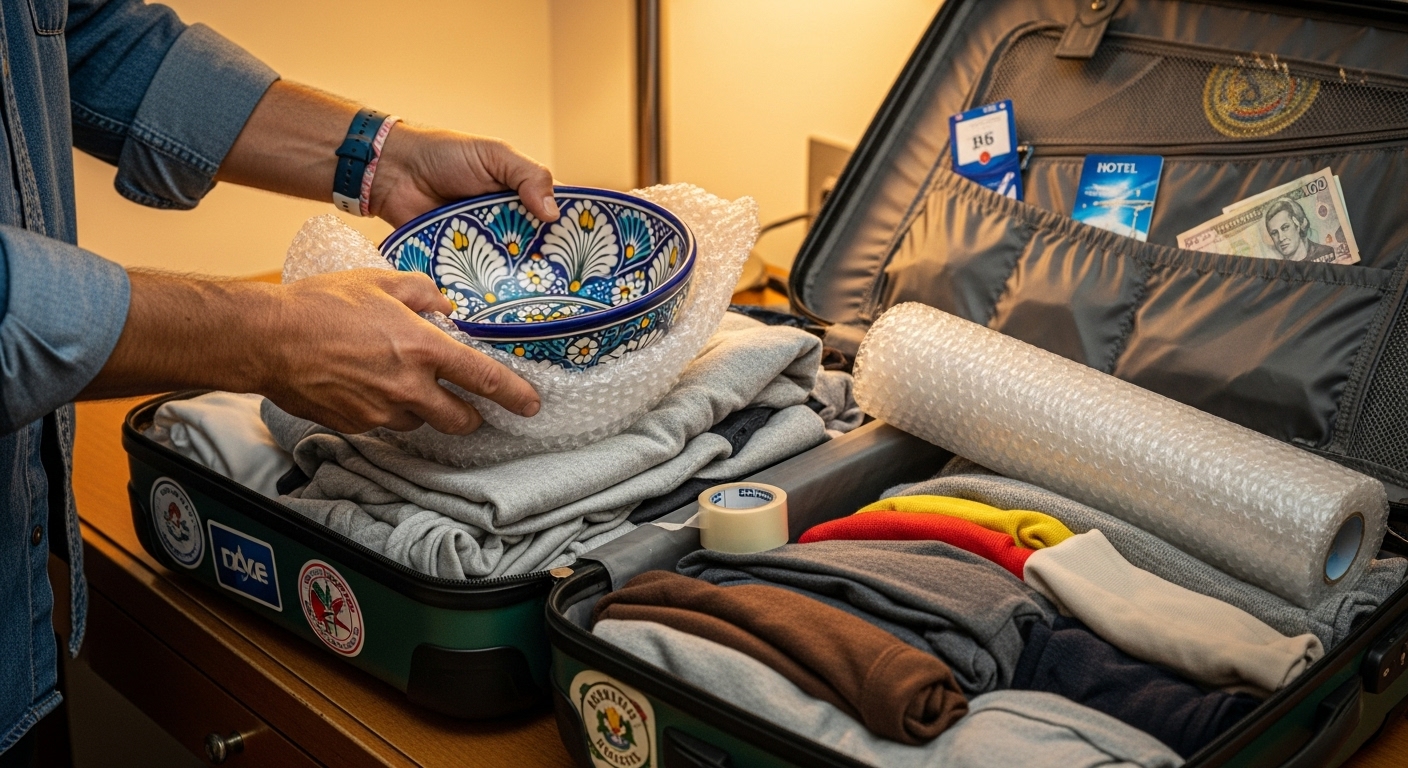
- Start with Soft Padding: Use clothing like scarves, sweaters, or even socks as the first layer of protection. Wrap your fragile souvenir completely.
- Create a Cushion Zone: Place the wrapped item inside the middle of your suitcase, surrounded by softer items like t-shirts or other clothes. Think of it as creating a “cushion bubble.”
- Double Layer Protection: If possible, use bubble wrap or tissue paper before wrapping with clothes. More layers equal more safety.
Here’s a quick tip: Don’t place fragile items near the edges of your suitcase. If the suitcase is dropped, that’s the first spot that absorbs impact.

Carry-On vs. Checked Luggage: The Eternal Debate
Let’s be honest—would you rather trust baggage handlers with your delicate souvenirs or keep them close in your carry-on? Nine out of ten times, carry-on is the better option. But what if your item is too large? That’s when you face the dilemma. Here’s how you can decide:
- Carry-On: Best for small, lightweight fragile items like glass ornaments, ceramic mugs, or small figurines. You have control, you know where it is, and you can make sure it doesn’t get crushed.
- Checked Luggage: Necessary for bigger items. If you have to check them, then extra padding, hard-shell suitcases, and “Fragile” stickers are your best friends.
Remember: even with “Fragile” tags, your luggage isn’t guaranteed to be handled gently, so pack as if no one will be careful.
Creative Packing Hacks You’ll Wish You Knew Earlier
Sometimes it’s not about spending extra money on special packaging but using what you already have. Here are a few clever hacks:
- Wine in Shoes: Got a bottle of local wine or olive oil? Slip it into a sneaker, then wrap it in clothes. The shoe’s padding protects it.
- Socks for Mini Treasures: Small figurines, ornaments, or jewelry boxes fit perfectly inside rolled-up socks. Double protection!
- Shampoo Bottles as Containers: If you’re carrying tiny fragile items like rings, earrings, or beads, empty a travel-size shampoo bottle, clean it, and place the item inside.
Have you ever tried one of these hacks before? Or do you have a packing trick that’s saved your souvenirs in the past? Share it in the comments—we’d love to hear your secret techniques!
What About Shipping Fragile Souvenirs?
Sometimes, no matter how carefully you pack, shipping might be the smarter option—especially for larger fragile items. Many vendors actually offer international shipping, often with insurance included. Yes, it might cost more, but wouldn’t you rather pay a little extra than risk losing something priceless?
Before you say no to shipping, think about these questions: Would you regret not buying this item? Will it last long enough to become part of your home’s story? If yes, then shipping might be worth it. Always ask the vendor if they provide secure packaging—most reputable shops do.
Insurance: The Overlooked Hero
Another overlooked tip is travel insurance. Many people think insurance is only about health or lost luggage. But did you know some travel insurance policies also cover damaged souvenirs? Always read the fine print—your fragile items might already be protected under your plan.
Souvenir Stories That Survived the Journey
Imagine this: a traveler brings back a hand-carved wooden mask from Africa, carefully wrapped in layers of clothing, and it survives perfectly. Another person buys a delicate porcelain tea set in China, ships it home, and receives it in flawless condition. Stories like these remind us—it’s possible to protect fragile souvenirs if you plan ahead.
Now, let me ask you this: Do you have a souvenir story worth sharing? Did something fragile survive against all odds—or did you face the heartbreak of opening your bag to find a broken treasure? Share your story in the comments so we can learn from each other!
The Emotional Value of Fragile Souvenirs
At the end of the day, fragile souvenirs are more than just objects. They carry emotional weight. That glass ornament you bought on your honeymoon? It’s not just glass—it’s a symbol of love, laughter, and a time in your life you’ll never forget. That delicate vase from Greece? It’s not just clay—it’s the memory of strolling through ancient streets.
Protecting fragile souvenirs isn’t just about preventing breakage—it’s about safeguarding your memories.
So, can you travel with fragile souvenirs without worrying? Absolutely! With the right packing techniques, smart choices, and maybe even a touch of creativity, you can bring back delicate treasures safely. The next time you’re tempted by that hand-painted bowl, don’t hesitate. Go for it. Just remember to treat it like the memory it represents—with care, thoughtfulness, and respect.
We’d love to hear from you: How do you protect your fragile souvenirs? Do you prefer packing them yourself, or do you rely on shipping? Share your experiences in the comments—we might even feature some of the best tips in future blogs!
And hey, if you found this blog helpful, don’t forget to follow us on our social media platforms for more travel tips, stories, and inspiration. Because travel doesn’t end when you return home—it continues with the stories you share.
Catch up on the top stories and travel deals by subscribing to our newsletter!