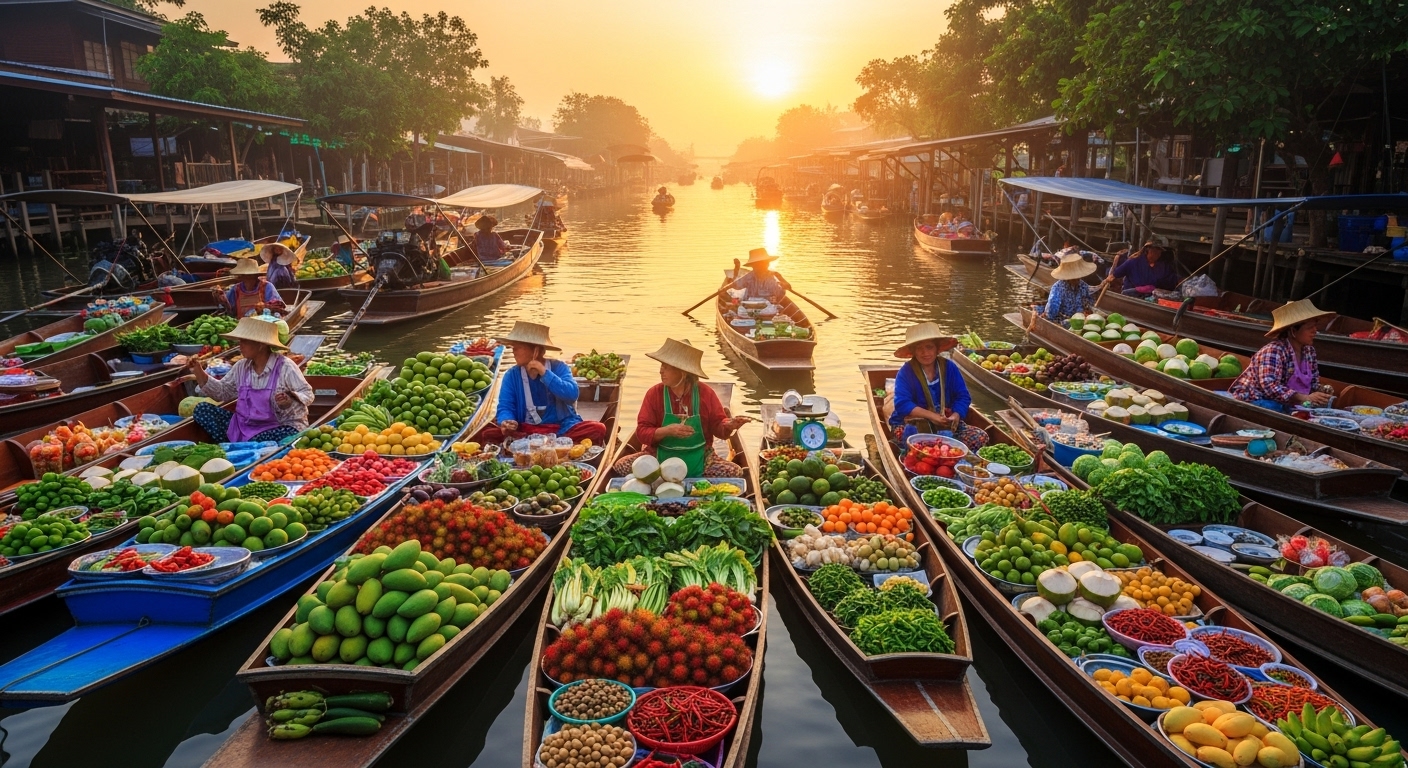
Imagine drifting through narrow waterways as vendors in colorful wooden boats glide past, offering fresh tropical fruits, fragrant flowers, sizzling street food, and handmade souvenirs — all while laughter and haggling echo across the water. Welcome to the world of floating markets across Asia, where culture and commerce literally float side by side.
These markets are not just shopping destinations; they’re living museums of tradition. Born from necessity in regions where rivers were once the primary highways, floating markets today are a fascinating blend of heritage and modern tourism. From the famous canals of Thailand to the hidden waterways of Indonesia and beyond, each floating market tells a story — of survival, community, and creativity on water.
But here’s the question: What makes these markets so magical? And where can you experience the best of them without falling into tourist traps? Let’s set sail through some of the most enchanting floating markets across Asia and beyond — discovering their history, charm, and the best tips for your own adventure.
The Origins of Floating Markets: Life Along the Waterways
Before the highways and high-rises, there were rivers. In many Asian countries — especially in Thailand, Vietnam, Indonesia, and Myanmar — waterways served as the main transportation routes. Villages naturally grew around them, and trade happened directly from boat to boat. Farmers, fishermen, and artisans sold their goods without ever stepping on land. Over time, these exchanges evolved into full-fledged markets that became central to local life.
While modernization has changed how people shop, many floating markets remain active. Some are preserved as cultural attractions; others still serve local communities daily. Either way, they’re a rare chance to see how people once lived in harmony with water — an essential part of life in tropical Asia.
1. Damnoen Saduak Floating Market, Thailand – The Iconic Experience
If there’s one image that defines floating markets across Asia, it’s Thailand’s Damnoen Saduak. Located about 100 kilometers from Bangkok, this market has become world-famous for its vibrant chaos — colorful boats piled high with fruits, vegetables, and souvenirs floating side by side.
Yes, it’s touristy. But it’s also spectacularly photogenic. Early mornings are the best time to visit before the crowds and heat arrive. Hop on a long-tail boat and glide through canals framed by traditional wooden houses. Don’t forget to taste some coconut pancakes or spicy boat noodles — cooked right on the water!
2. Amphawa Floating Market, Thailand – Where Locals Still Shop
For a more authentic experience, Amphawa is the heart and soul of Thai river culture. Unlike Damnoen Saduak, this market comes alive in the late afternoon and evening. Locals gather here for seafood feasts served directly from boat kitchens. As dusk falls, you can even take a short boat ride to see fireflies dancing along the riverbanks — pure magic.

3. Cai Rang Floating Market, Vietnam – The Mekong’s Beating Heart
Drifting through the Mekong Delta in southern Vietnam feels like entering another world. The Cai Rang Floating Market, located near Can Tho, is one of the largest and busiest in Southeast Asia. It starts before sunrise, when hundreds of boats converge to trade fruits, rice, coffee, and more.
Each boat hangs a sample of its goods on a tall pole — a clever floating advertisement system! Vendors call out to passing buyers, and the air fills with the scent of ripe pineapples and fresh herbs. Visiting Cai Rang gives you an intimate look at Vietnam’s deep connection with the Mekong River, which sustains millions of lives.

4. Lok Baintan Floating Market, Indonesia – Borneo’s Morning Ritual
In South Kalimantan, Indonesia, the Lok Baintan Floating Market wakes up before dawn. Here, women in traditional conical hats paddle wooden boats filled with fruits, vegetables, and snacks. Transactions are often bartered rather than bought, preserving centuries-old traditions.
The atmosphere feels raw and genuine — no loudspeakers, no tourist boats, just locals living their daily rhythm. Watching the sunrise over the Martapura River as the market hums to life is an unforgettable experience for anyone exploring floating markets across Asia.
5. Inle Lake Floating Market, Myanmar – Serenity and Spirituality
Inle Lake in Myanmar is famous for its leg-rowing fishermen, but its rotating floating market is equally captivating. The market changes location every five days, moving between lakeside villages. Locals sell produce, crafts, and textiles — often made by ethnic groups who live on the lake’s shores.
The calm waters, misty hills, and gentle pace make Inle Lake feel like a place lost in time. Visiting its market offers a blend of cultural immersion and tranquility you won’t find elsewhere.
6. Srinagar Floating Market, India – The Jewel of Dal Lake
Few people realize that India has its own version of floating markets. Every morning at dawn, the Dal Lake in Srinagar (Kashmir) comes alive with traders in small wooden boats selling vegetables, flowers, and handicrafts. Unlike Southeast Asian markets, this one feels quiet, reflective, and deeply spiritual — the Himalayas standing tall in the background.
It’s not just a market; it’s poetry in motion. As the sun rises over the water, the colors, reflections, and silence create a scene straight out of a painting.
7. Tonlé Sap Floating Villages, Cambodia – Where Markets Meet Homes
In Cambodia, Tonlé Sap Lake hosts entire floating villages — with schools, houses, and markets all built on water. Life here literally floats. During the monsoon, the lake expands massively, connecting communities by boat. The floating markets here serve as lifelines, providing everything from food to fuel.
Visiting Tonlé Sap gives you a humbling glimpse into resilience — people adapting perfectly to a life shaped by nature. Supporting local guides helps ensure your visit benefits the communities who call this remarkable ecosystem home.
8. Bangkok’s Khlong Lat Mayom – The Hidden Gem
Just 30 minutes from central Bangkok lies one of Thailand’s best-kept secrets: Khlong Lat Mayom Floating Market. It’s smaller, more authentic, and far less crowded than the touristy options. Locals come here for weekend lunches — try grilled river prawns or mango sticky rice while sitting beside the canal. If you’re exploring floating markets across Asia and want something local and relaxing, this one’s for you.
Beyond Asia: The Global Echo of Floating Markets
While Asia remains the heartland of floating markets, other parts of the world have embraced the concept too. In South America, Bolivia’s Uros Islands on Lake Titicaca feature reed islands where trade happens over water. In Africa, Nigeria’s Makoko Market near Lagos sits on stilts and boats. Even Europe has experimented with floating food markets, blending old-world charm with modern design.
This global spread of floating commerce shows how humanity continually finds creative ways to adapt to water environments — and how our relationship with rivers remains timeless.
Tips for Visiting Floating Markets Like a Pro
Planning to explore floating markets across Asia? Here are some travel-tested tips to make your experience smoother and more meaningful:
- Go early. Most floating markets start around dawn and are most active before 9 a.m.
- Hire a local boat guide. It’s the best way to navigate narrow waterways and support local livelihoods.
- Bargain politely. Haggling is part of the fun, but always with a smile.
- Bring small cash. Credit cards aren’t common here.
- Try local food on the boat. Nothing beats eating noodles cooked right on the water!
- Be eco-conscious. Avoid plastic waste and respect the natural environment.
- Observe before photographing. Always ask for permission when taking close-up portraits of vendors.
The Future of Floating Markets
As modernization continues, many floating markets across Asia are evolving. Some are becoming tourist-centric, while others are fighting to preserve authenticity. Fortunately, local governments and cultural organizations are stepping in to protect these water-based economies. Sustainable tourism initiatives are helping maintain both tradition and income for river communities.
The real challenge — and opportunity — lies in balancing tourism with preservation. Visitors who engage respectfully can make a huge difference in keeping these floating worlds alive for generations to come.
Why Floating Markets Matter Today
Beyond their visual beauty, floating markets embody human resilience, creativity, and community. They remind us that life doesn’t have to stand still — it can float, adapt, and thrive even when conditions change. In a world racing toward convenience and modernization, these markets slow us down and connect us to something older, deeper, and wonderfully human.
When you imagine your next journey, could it include drifting gently between boats, watching cultures come alive on water? Would you trade a mall for a market that moves with the tide? If so, maybe your next destination isn’t about where to go — but how to float.
Share your thoughts below! Have you visited any floating markets across Asia or elsewhere in the world? What was your favorite part — the food, the people, or the peace of it all? We’d love to hear your stories and tips in the comments. And don’t forget to follow us on our social media platforms for more inspiring travel stories, hidden cultural gems, and real-world adventures. Let’s keep exploring — one ripple at a time.
Catch up on the top stories and travel deals by subscribing to our newsletter!