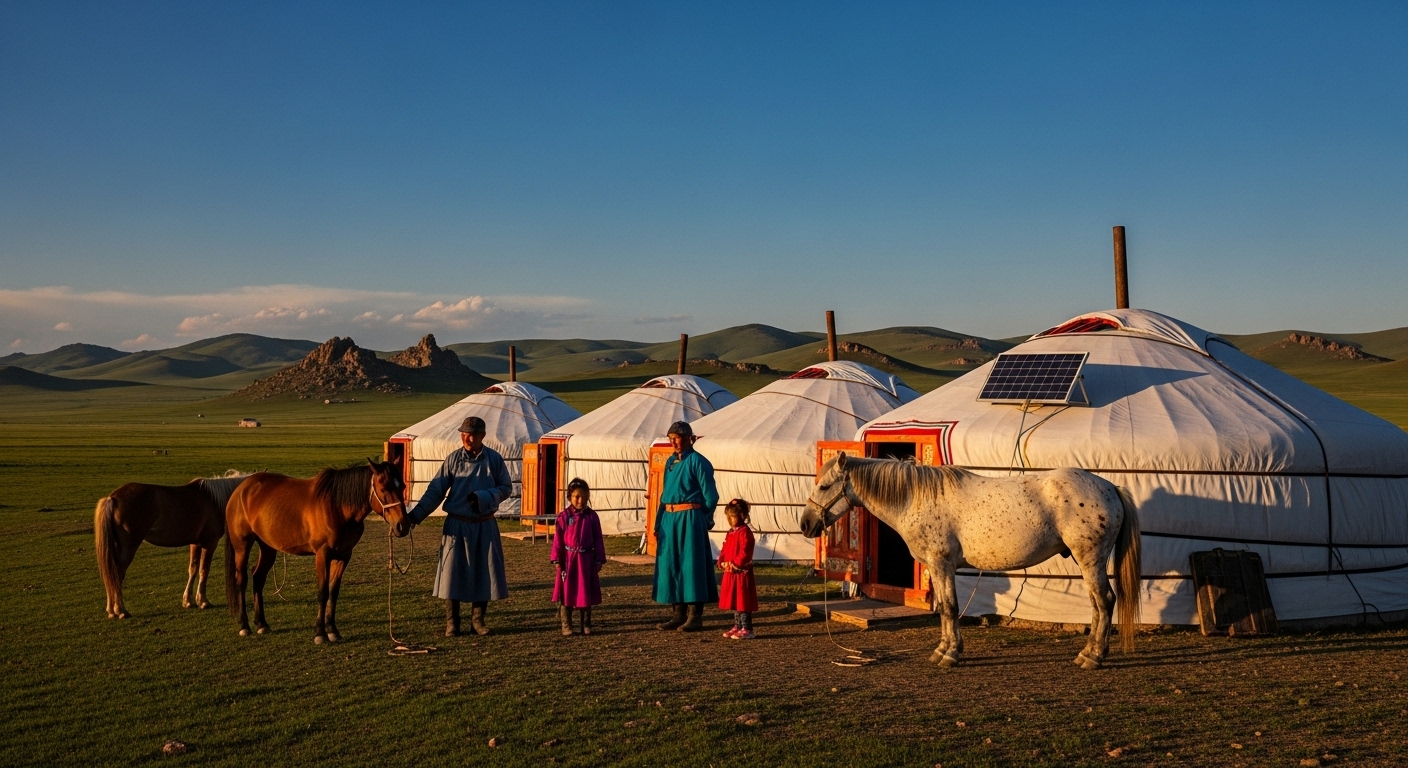
Imagine waking up under a sky full of stars, far from city noise, surrounded by open plains, mountain winds, and a rhythm of life that hasn’t changed for centuries. Sounds dreamlike? That’s the magic of true nomadic culture — a way of life that thrives on movement, community, and deep respect for nature. While modern travel often celebrates luxury resorts and curated itineraries, some of the world’s richest experiences lie in the lands of the nomads — those who roam freely, guided by seasons, herds, and traditions older than time itself.
In today’s world of fast-paced living, the idea of connecting with true nomadic culture is like taking a step back in time — but in the best possible way. You not only witness how people live in harmony with the land but also rediscover your own sense of simplicity, freedom, and resilience. So, where can you actually live among nomads and experience their authentic way of life? Let’s take a journey to some of the most fascinating corners of the world where nomadic heritage still beats strong.
Mongolia – The Eternal Land of Nomads
If there’s one place that defines the word “nomadic,” it’s Mongolia. Vast, rugged, and breathtakingly open, this country is home to one of the last remaining populations that still live as traditional herders. Families move across the steppes with their gers (yurts), horses, camels, and livestock, setting up temporary homes wherever the grass is greenest.
To truly understand true nomadic culture, spend time with a Mongolian family. Many offer homestays where you can live as they do — milking cows, herding yaks, sharing meals cooked over a wood fire, and sleeping under the same round felt roof. Nights are often filled with stories, songs, and an incredible sense of peace that’s hard to describe until you’ve lived it.
Try visiting during the Naadam Festival, held every July, to witness Mongolia’s most celebrated event featuring horse racing, wrestling, and archery — all deeply rooted in nomadic tradition.
Morocco – Life Among the Berbers of the Atlas
High up in Morocco’s Atlas Mountains and deep into the Sahara, the Berber (Amazigh) people have sustained a semi-nomadic lifestyle for centuries. While many now live in permanent villages, some still migrate seasonally with their herds. Staying with Berber families gives travelers the chance to see how these proud desert dwellers balance ancient customs with modern life.

Picture waking up to the sound of goats bleating, sipping mint tea as the sun rises over the dunes, and sharing couscous dinners under an endless starlit sky. In the Sahara, the simplicity of life — cooking over open fires, weaving rugs by hand, and moving with the rhythm of nature — shows the very essence of true nomadic culture.
Kyrgyzstan – Yurts, Horses, and Endless Horizons
In Kyrgyzstan, nomadism isn’t just history — it’s a living, breathing part of daily life. The summer pastures (called jailoos) come alive with families moving their livestock into the mountains, setting up yurts, and living as their ancestors did. Hospitality here is legendary — guests are treated with deep respect, and you’ll likely be invited to share fermented mare’s milk (kumis) and local bread within minutes of arriving.
For a deeper dive into true nomadic culture, attend the World Nomad Games — an incredible event celebrating traditional sports like horseback wrestling, eagle hunting, and archery. It’s a thrilling reminder that the nomadic spirit is alive and thriving.

Morocco to Mongolia – The Shared Nomadic Spirit
What’s fascinating about these far-flung lands is how similar their philosophies are despite the distance. Whether it’s the Mongols of Central Asia or the Berbers of North Africa, true nomadic culture revolves around mobility, hospitality, and balance with the environment. There’s an unspoken wisdom in their way of life — a lesson in adaptability, gratitude, and living with less but experiencing more.
Kenya – Life With the Maasai
The Maasai people of Kenya and Tanzania have long fascinated travelers with their striking red attire, intricate beadwork, and deeply rooted traditions. While many Maasai have adopted settled lifestyles, others still practice pastoralism, moving with their cattle in search of greener pastures.
Visiting a Maasai community lets you witness a side of Africa rarely shown in guidebooks. You can learn about their customs, dance with them around evening fires, and understand the deep connection they have to land and livestock. The simplicity and dignity of their life reflect the purest form of true nomadic culture.
Morocco – The Blue Nomads of the Desert
Another fascinating group are the Tuareg people — often referred to as the “Blue People” because of their indigo-dyed garments. Traditionally nomadic traders and herders of the Sahara, the Tuareg culture embodies independence, resilience, and wisdom. Traveling through Morocco, Mali, or Niger gives you glimpses into their desert camps, music, and poetry — all shaped by the vast, shifting sands they call home.
Mongolia’s Eagle Hunters – Guardians of a Proud Heritage
In western Mongolia’s Bayan-Ölgii region, Kazakh nomads have preserved one of the world’s most striking traditions — hunting with golden eagles. This 4,000-year-old practice showcases a deep bond between human and bird, land and spirit. Travelers can stay with eagle hunter families, learn how the birds are trained, and even ride alongside them through the Altai Mountains. It’s not just a glimpse into true nomadic culture — it’s a living connection to humanity’s ancient past.
Iran – The Qashqai and Bakhtiari Tribes
In the rugged Zagros Mountains of Iran, two of the most famous nomadic groups — the Qashqai and Bakhtiari — still move their herds through breathtaking landscapes, just as their ancestors did for centuries. Living with these tribes, even for a few days, offers rare insight into a lifestyle that blends endurance, artistry, and deep respect for nature.
As you travel with them, you’ll see how their tents, woven carpets, and traditional songs all tell stories of migration, survival, and pride. Experiencing true nomadic culture here means joining in daily rhythms — milking goats, baking flatbread, and watching sunsets that seem to stretch across eternity.
Morocco’s Sahara vs. Mongolia’s Steppe – Two Worlds, One Soul
Though they may seem worlds apart, the desert and steppe share a striking harmony. Both demand resilience, independence, and profound connection to nature. In both places, you’ll find that the essence of true nomadic culture lies not in constant motion alone but in balance — moving when you must, staying when you can, and always respecting the rhythm of the earth.
Modern Nomadism – Digital Nomads and Cultural Continuity
Interestingly, in our tech-driven world, the term “nomad” has taken on a new meaning. Today’s digital nomads travel the world with laptops instead of livestock, connecting Wi-Fi signals rather than herds. But deep down, they share the same hunger for freedom and experience as traditional nomads. Perhaps that’s why connecting with ancient nomadic societies resonates so deeply — it reminds us that the desire to wander, learn, and adapt is timeless.
How to Respectfully Experience True Nomadic Culture
Before diving into nomadic life, it’s vital to approach it with sensitivity and respect. Nomadic communities are not tourist attractions — they are living, breathing cultures. When visiting:
- Stay with families or eco-tour operators who prioritize cultural preservation.
- Participate in daily activities, but don’t disrupt routines.
- Always ask before photographing people or their homes.
- Buy local crafts directly from artisans to support their livelihood.
By approaching these experiences respectfully, you don’t just learn about true nomadic culture — you help sustain it for generations to come.
Why Nomadic Cultures Matter Today
In an era of globalization and rapid urbanization, nomadic societies remind us of something profoundly human — the ability to live lightly, adapt gracefully, and connect deeply with the land. Their resilience, generosity, and balance with nature hold lessons that modern civilization can learn from.
When you sit by a fire in the Mongolian steppe or share tea in a Berber tent, you realize that simplicity is not lack — it’s abundance in its purest form. These encounters don’t just change how you travel; they change how you live.
Experiencing true nomadic culture is more than just an adventure — it’s a return to something ancient within us. It’s about slowing down, listening to the wind, following the horizon, and understanding that “home” can be anywhere the heart finds peace.
So, when you plan your next journey, consider stepping off the beaten path. Stay in a yurt, camp under desert skies, or share a meal with shepherds who measure life not by hours, but by seasons. These are the moments that remind us why we travel in the first place — not to escape life, but to reconnect with it.
Now we’d love to hear from you! Have you ever met or stayed with a nomadic community? What did the experience teach you about life, freedom, or simplicity? Share your stories in the comments — we’d love to feature them in our next travel spotlight.
And don’t forget to follow us on our social media platforms for more inspiring travel stories, cultural insights, and adventures from around the world. Stay curious, stay kind, and keep wandering — the nomadic way!
Catch up on the top stories and travel deals by subscribing to our newsletter!