There’s something deeply human about the search for warmth. For centuries, people have gathered around hot springs and mineral pools not just to soothe their muscles, but to connect—with nature, with one another, and with traditions that run deeper than the water itself. In the heart of the continent lies a region where this connection still thrives: the Thermal Villages of Central Europe.
From the steam-shrouded spas of Hungary to the fairytale baths of the Czech Republic, these thermal villages are more than wellness destinations—they’re living museums of ritual and relaxation. Here, the word “spa” doesn’t just mean a treatment menu; it’s a culture, a rhythm, a way of life. Locals have been soaking, steaming, and sipping their way to health for generations. Travelers who visit are invited not only to unwind but to take part in centuries-old customs that blend healing, hospitality, and heritage.
So, pack your bathing suit—but also bring your curiosity. Let’s journey through the Thermal Villages of Central Europe, where every soak tells a story and every mineral-rich drop connects you to the past.
Where Water Heals: The Heart of the Thermal Tradition
Before we explore specific towns, it’s worth asking: why has Central Europe become such a hub for thermal culture? The answer lies beneath the surface—literally. This region sits atop a network of geothermal springs, each infused with minerals that have been revered for their healing properties since Roman times. The combination of natural resources, historical bathing culture, and a deep respect for wellness has created a patchwork of spa towns that feel both ancient and timeless.
Unlike modern luxury spas, the Thermal Villages of Central Europe often retain their old-world charm. You won’t find neon lights or sterile surroundings here. Instead, you’ll see marble colonnades, elegant cupolas, and locals strolling between treatments in white robes, stopping for mineral water tastings or quiet chats beneath ornate pavilions. These are places where leisure meets ritual—and where healing is as much social as it is physical.
1. Karlovy Vary, Czech Republic – The Grand Dame of Spa Culture
If there’s one place that defines the Thermal Villages of Central Europe, it’s Karlovy Vary (Carlsbad). This Czech spa town is a masterpiece of architecture, history, and hydrotherapy. Founded in the 14th century by Emperor Charles IV, the town grew around its 13 main springs and hundreds of smaller mineral sources. Over the centuries, it has hosted everyone from Beethoven to Tolstoy.
Visitors can stroll along the colonnades, sipping from porcelain cups filled with hot mineral water—each spring having a distinct taste and temperature. The tradition isn’t just for show; locals swear by the health benefits for digestion, skin, and overall vitality. Beyond the baths, Karlovy Vary’s candy-colored buildings and riverside promenades make it one of Europe’s most photogenic spa destinations.

2. Hévíz, Hungary – Europe’s Largest Thermal Lake
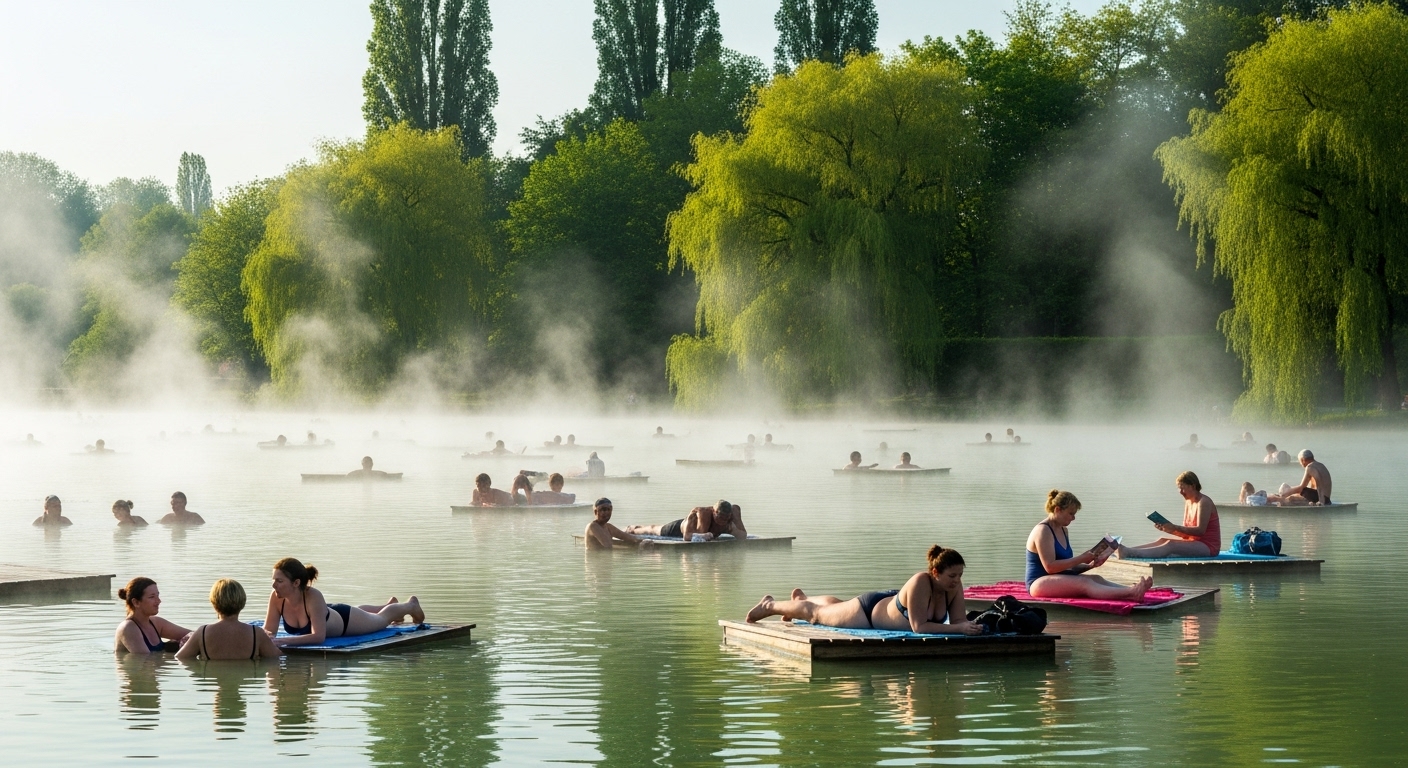
Just a few hours from Budapest lies Hévíz, home to the largest biologically active thermal lake in Europe. Floating in its warm, mineral-rich waters feels like being suspended in a natural dreamscape. Even in winter, steam rises from the surface as bathers drift among lily pads, chatting softly or simply closing their eyes in bliss.
Hévíz is not just about passive soaking—it’s about movement. Locals practice water exercises designed to relieve joint pain and improve circulation. The lake’s mud, rich in minerals, is also used for wraps and treatments. Many Hungarian visitors return yearly, viewing their time here as an essential ritual of renewal.
3. Baden-Baden, Germany – The Elegant Gateway to Wellness
Although technically on the western edge of Central Europe, Baden-Baden’s influence is impossible to ignore. The Romans first built baths here over 2,000 years ago, and today, the town remains synonymous with refinement and rejuvenation. Inside the historic Friedrichsbad, visitors follow a 17-step bathing ritual that alternates between hot, cold, steam, and relaxation rooms.
It’s not just about cleansing the body—it’s about slowing down the mind. Locals and travelers alike treat it as a spiritual experience, where time seems to dissolve in the mist. If you prefer a more contemporary twist, the Caracalla Spa nearby offers open-air pools surrounded by forest views. In Baden-Baden, every drop of water carries centuries of serenity.
4. Piešťany, Slovakia – The Spa That Mended Empires
In the Slovak town of Piešťany, a statue of a man breaking his crutch greets visitors at the entrance to the thermal park—a symbol of the healing powers of its mud and waters. For over 100 years, people have come here to treat arthritis, rheumatism, and joint disorders. The thermal river that flows through the town is rich in sulfur, giving the air its distinctive mineral scent.
But it’s not just about physical healing. Locals speak of a deeper energy in the place—a kind of collective exhale. Many guests spend weeks here, following doctor-prescribed spa regimens, joining group exercises, and ending the day in gentle conversation by the riverbanks. Piešťany proves that wellness isn’t just personal—it’s communal.
5. Mariánské Lázně, Czech Republic – The Melancholy Muse
While Karlovy Vary dazzles with grandeur, Mariánské Lázně (Marienbad) charms with introspection. It’s a town of whispers, music, and misty mornings. Each of its springs has a unique composition, and visitors move from one to another like pilgrims on a mineral quest. The ornate pavilions, fountains, and forest paths all contribute to its ethereal calm.
Famous composers like Chopin and writers like Goethe once stayed here, seeking not only physical restoration but creative inspiration. Even today, you can sense that artistic spirit in the air. Sitting by the Singing Fountain in the evening as it dances to classical melodies, you might just feel your own imagination start to stir.
6. Băile Herculane, Romania – Ancient Waters of the Gods
Romania’s contribution to the Thermal Villages of Central Europe is both ancient and extraordinary. Băile Herculane, named after Hercules himself, dates back to Roman times and was once the preferred spa of Austro-Hungarian nobility. Surrounded by dramatic mountains and fed by sulfuric springs, it’s a place where history, myth, and nature meet.

Although some of the town’s imperial architecture has weathered time, a revival is underway. New boutique hotels and wellness centers are restoring its former glory, while the surrounding Cerna Valley offers hiking trails that pair perfectly with post-trek thermal soaks. Few places feel as cinematic as Băile Herculane at dawn, with mist curling around its ornate facades.
7. Bükfürdő, Hungary – Wellness for the Everyday Traveler
Unlike the more aristocratic spa towns, Bükfürdő offers a casual, family-friendly vibe. The thermal waters here are among the most mineral-rich in Hungary and are said to help with circulation and joint health. The modern spa complex has indoor and outdoor pools, saunas, and wellness centers—but you’ll still see local traditions thriving. Many visitors follow a daily rhythm: morning soak, hearty lunch, afternoon nap, evening stroll. It’s the Hungarian version of hygge—simple, satisfying, and deeply human.
The Rituals That Keep These Villages Alive
What makes the Thermal Villages of Central Europe so captivating isn’t just the water—it’s the rituals surrounding it. Across borders, you’ll find shared customs that remind us that healing is more than medicine:
- Water tasting: In Czech spa towns, visitors sip warm mineral water from ornate cups, believing in its digestive and detoxifying benefits.
- Bath sequences: Many spas follow traditional cycles of heat, cold, and rest—anchored in both science and spirituality.
- Communal quiet: Silence is sacred. Locals often soak together in near silence, letting the water do the talking.
- Balneotherapy: Treatments using mud, gases, and minerals are prescribed like medicine, blending modern science with ancient wisdom.
Seasonal Soaking – When to Visit
While these spa towns are open year-round, each season brings its own charm. Winter visits are particularly magical—the contrast between cold air and steaming pools is unforgettable. Autumn adds golden forests to the backdrop, while spring and summer invite long strolls through gardens and parks. No matter when you go, the Thermal Villages of Central Europe promise relaxation in every season.
Beyond the Baths: Culture, Cuisine, and Connection
Each thermal village is a gateway to local culture. You’ll find hearty Central European cuisine served in elegant dining halls or rustic taverns—think goulash, dumplings, and mineral water instead of wine. Many towns host music festivals, wellness retreats, and cultural fairs celebrating their spa heritage. And everywhere you go, locals are happy to share their stories—how their grandparents soaked here, how the springs helped them recover from illness, or simply how they come every Sunday to feel whole again.
Why Travelers Keep Returning
Perhaps the greatest secret of the Thermal Villages of Central Europe is their ability to restore more than the body. These are places of stillness, where time stretches and thoughts settle. You arrive tired and leave lighter—not just because your muscles are relaxed, but because your spirit has had space to breathe.
In an age of fast travel and constant distraction, these villages remind us that the best journeys aren’t about moving fast—they’re about slowing down. Maybe that’s why so many visitors return year after year, finding something new in the same familiar waters.
Have you ever visited one of the Thermal Villages of Central Europe? Did you sip the mineral waters, join a local ritual, or simply let the steam carry your worries away? Share your experience in the comments below—we’d love to feature your story in an upcoming WentWorld feature!
And if you love exploring the world’s hidden cultures and natural wonders, don’t forget to follow us on our social media channels for more authentic travel inspiration. Because sometimes, the best journeys begin with a single soak.
Catch up on the top stories and travel deals by subscribing to our newsletter!