Have you ever looked up at the night sky and wondered what ancient people saw when they gazed at those same stars? Long before telescopes or space agencies existed, early civilizations were already mapping the heavens, building monuments aligned with the sun, moon, and stars. These ancient astronomy sites weren’t just scientific wonders — they were sacred, social, and spiritual centers that connected earth to sky. And today, you can still stand where early astronomers once stood and feel that same cosmic awe.
Traveling to these prehistoric observatories isn’t just another trip — it’s a journey through time, where you trace humanity’s first steps in understanding the universe. Ready to explore the places where the stars once guided our ancestors? Let’s set off on a world tour of the most extraordinary ancient astronomy sites.
The Magic of Prehistoric Skies
Thousands of years ago, people didn’t have apps to tell them when the solstice was coming — they had stone, sunlight, and shadows. Many ancient cultures built precise alignments that tracked celestial events, showing an astonishing grasp of astronomy long before modern science. From the icy plains of Scotland to the deserts of Peru, our ancestors looked up and built down — creating calendars, temples, and circles of stone that still mystify us today.
What’s so powerful about these ancient astronomy sites is how they merge nature, engineering, and faith. They remind us that science and spirituality once walked hand in hand, united under a shared sense of wonder for the cosmos.
Stonehenge, England: The World’s Iconic Solar Circle
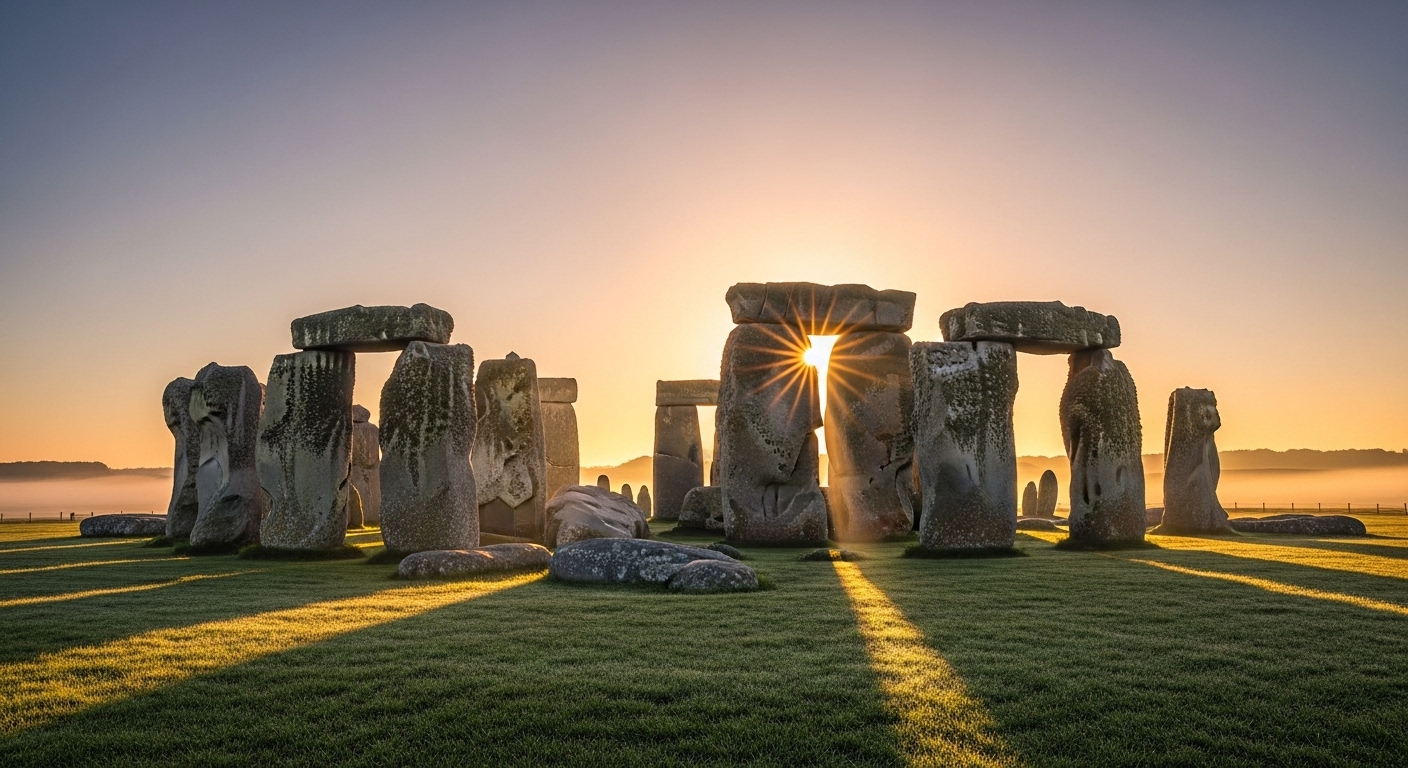
When people think of ancient astronomy sites, Stonehenge almost always comes to mind. This ring of massive stones, set against the rolling green fields of Salisbury Plain, aligns perfectly with the sunrise of the summer solstice and the sunset of the winter solstice. Thousands still gather there every June to witness the sun rise between the stones — just as ancient Britons did nearly 5,000 years ago.
But Stonehenge wasn’t just an astronomical calendar. Archaeologists believe it was a ceremonial center, a burial site, and perhaps even a form of early observatory that connected sky movements to agricultural cycles. Standing there today, you can almost feel the pulse of the past — as if time itself orbits those stones.
Newgrange, Ireland: A Tomb of Light
Older than Stonehenge and the Great Pyramids, Newgrange in Ireland is one of the most enchanting prehistoric observatories on Earth. Built around 3,200 BCE, it’s a massive passage tomb aligned with the rising sun of the winter solstice. For just a few minutes each year, a beam of golden light enters the narrow entrance and illuminates the chamber deep within.
Imagine the power of that moment thousands of years ago — light returning after the darkest day, symbolizing rebirth and renewal. To witness it now, you need to enter a lottery (yes, it’s that special). But even outside the solstice, Newgrange’s intricate carvings and perfect geometry reveal a civilization deeply attuned to the heavens.
Chichén Itzá, Mexico: The Maya’s Celestial Pyramid
In Mexico’s Yucatán Peninsula lies one of the most remarkable ancient astronomy sites in the Americas: El Castillo, or the Temple of Kukulcán. Built by the Maya, this pyramid is an astronomical masterpiece. During the spring and autumn equinoxes, the setting sun creates the illusion of a serpent slithering down the pyramid’s steps — an effect caused by the play of light and shadow on the precisely angled structure.
The Maya were expert astronomers who tracked Venus, predicted eclipses, and developed one of the world’s most accurate ancient calendars. Visiting Chichén Itzá isn’t just seeing ruins — it’s stepping into a cosmic temple where architecture and astronomy merge seamlessly.

Abu Simbel, Egypt: A Pharaoh’s Solar Throne
Deep in southern Egypt, near the banks of the Nile, the temple of Abu Simbel stands as both an artistic and astronomical marvel. Built by Pharaoh Ramses II around 1,200 BCE, it was engineered so that twice a year — on February 22 and October 22 — sunlight penetrates the temple’s inner sanctum, illuminating the statues of Ramses and the gods seated beside him.
This alignment marks what many believe were Ramses’ birthday and coronation day. The ancient Egyptians didn’t just honor the gods with stone — they built monuments that moved with the sun. To witness this solar event even today is breathtaking, a reminder that ancient architects were also sky watchers of genius precision.
Chaco Canyon, USA: The Astronomers of the Desert
In the heart of New Mexico’s high desert lies Chaco Canyon, once home to the Ancestral Puebloans. Their buildings — known as Great Houses — were aligned with lunar and solar cycles. At the famous site called “Fajada Butte,” spiral petroglyphs mark sunlight patterns that change with the solstices and equinoxes. This ancient rock calendar, often called the “Sun Dagger,” is one of North America’s most fascinating ancient astronomy sites.
Imagine living in a place where architecture itself was a calendar — where light and shadow dictated planting, harvest, and ceremony. That’s what makes Chaco Canyon so profound: it was not just a city, but a cosmic observatory spread across an entire landscape.
Goseck Circle, Germany: Europe’s Oldest Solar Observatory
Discovered only in the late 20th century, Goseck Circle in Germany dates back to around 4,900 BCE — making it one of the oldest known solar observatories in the world. Circular ditches and wooden palisades once formed gateways aligned with the winter solstice sunrise and sunset. While it may not look as dramatic as Stonehenge, it’s equally significant, proving that sky-watching was deeply rooted in Neolithic Europe.
Visiting the reconstructed site today offers an eerie yet enlightening experience. Standing in the middle, surrounded by silent wooden posts, you can imagine ancient farmers observing the sun’s path, marking the return of longer days, and celebrating life’s renewal.
Machu Picchu, Peru: The Inca’s Heavenly City
High in the Andes, Machu Picchu is famous for its stunning views and mysterious ruins, but it’s also an astronomical treasure. The Intihuatana Stone, often called the “Hitching Post of the Sun,” aligns with the cardinal directions and the movements of the sun during solstices and equinoxes. The Inca used it to predict agricultural seasons and conduct solar ceremonies.
Climbing to the top and standing beside the Intihuatana is like standing in a place where the Earth literally meets the sky. It’s one of those moments where you realize the ancients weren’t just looking at the stars — they were listening to them.

Nabta Playa, Egypt: Africa’s Oldest Stone Circle
Older than Stonehenge, Nabta Playa lies in Egypt’s Nubian Desert and dates back over 7,000 years. This lesser-known site features megaliths aligned with the summer solstice sunrise, possibly marking seasonal changes vital to survival in the harsh Sahara climate. Some researchers even believe Nabta Playa reflects early star alignments — making it one of the world’s earliest evidence of organized astronomy.
Standing here, surrounded by silence and endless desert, you can almost sense the ancient astronomers who once charted the heavens in this very spot, seeking meaning in the vastness above.
Tips for Exploring Ancient Astronomy Sites
- Time your visit: Visit during solstices or equinoxes for a truly magical experience when alignments come to life.
- Join local guides: Many indigenous or local communities preserve oral histories that bring these sites to life beyond scientific explanations.
- Travel sustainably: These fragile sites deserve respect. Stick to designated paths and avoid climbing on ancient structures.
- Visit at night: Some sites, like Chaco Canyon or Newgrange’s nearby fields, offer incredible stargazing experiences even today.
Why These Sites Still Matter Today
In a world full of skyscrapers and satellites, it’s easy to forget that humans once built in harmony with the stars. Visiting ancient astronomy sites reminds us that curiosity about the universe is one of our oldest instincts. These monuments stand as proof that we’ve always been explorers — long before rockets, we used stone and sunlight to reach the heavens.
As you travel between these places, you’re not just visiting ruins. You’re retracing the earliest footprints of science, spirituality, and human imagination — all written in the language of the stars.
Have You Been to Any Ancient Astronomy Sites?
Which site left you starstruck — Stonehenge, Machu Picchu, or Chichén Itzá? Tell us your story in the comments! We’d love to hear how ancient observatories inspired your travels and what cosmic destinations are next on your bucket list. If you enjoy discovering the world’s hidden histories and celestial travel spots, make sure to follow us on our social media platforms for more cosmic adventures and travel inspiration from every corner of the globe.
Catch up on the top stories and travel deals by subscribing to our newsletter!