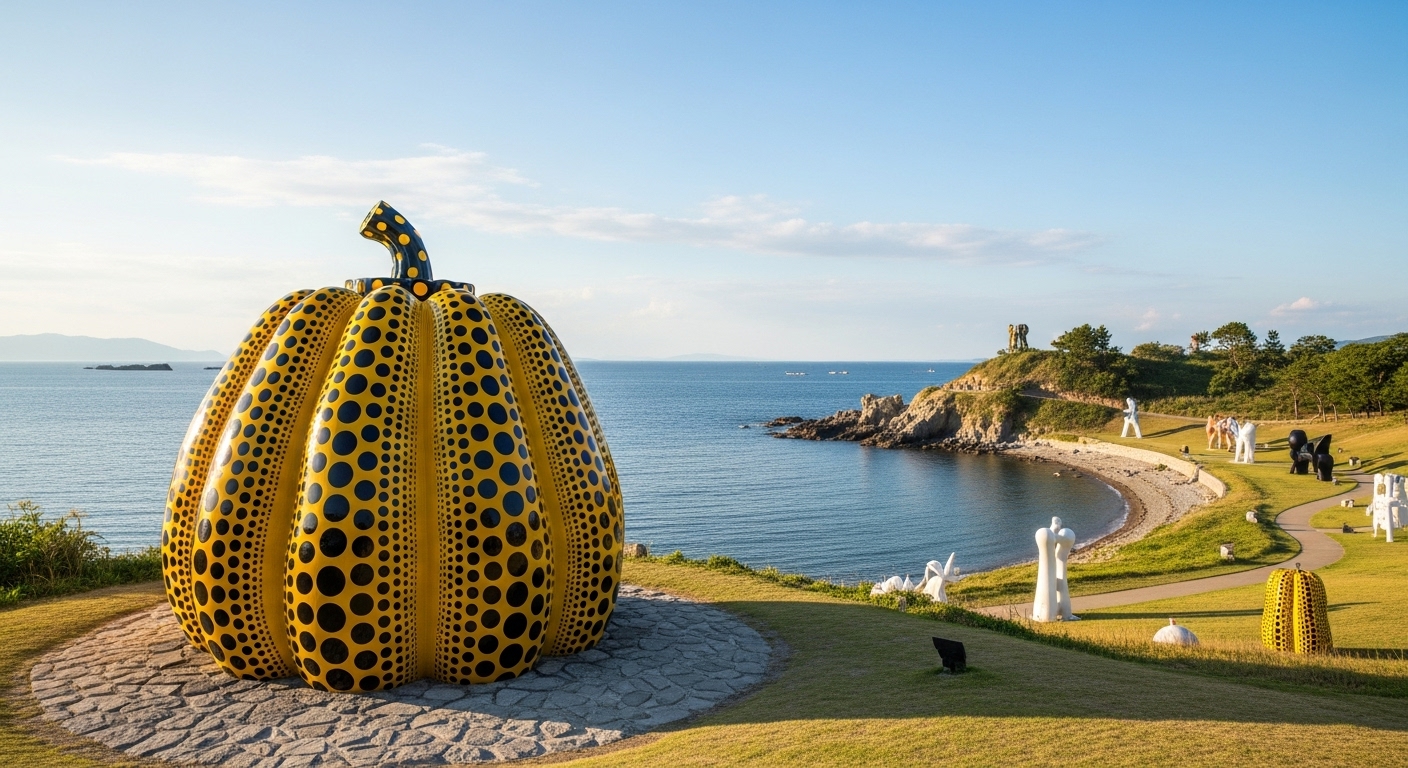
Imagine standing on a windswept hilltop overlooking the sea, with a sculpture glinting in the distance and waves echoing against cliffs. Now imagine walking a little further — another artwork emerges, this time carved from the rock itself. That’s the magic of Art Islands & Open-Air Museums You Can Hike Between — destinations where art isn’t confined to galleries but lives under open skies.
There’s something thrilling about combining the freedom of a hike with the wonder of an art discovery. Each step becomes part of a journey through human imagination and natural beauty. The trail isn’t just about reaching the summit; it’s about finding creativity in unexpected corners — forest clearings, beaches, mountain ridges, and even tiny islands connected by ferry or footpath.
These art islands and open-air museums prove that culture doesn’t have to live behind walls. So lace up your boots, charge your camera, and prepare for a walking adventure that will feed both your body and your soul.
Where Nature and Art Become One
The concept of outdoor art is ancient — think of the petroglyphs and rock carvings left by early civilizations. But the modern idea of art trails and open-air museums took off in the 20th century, when artists began rebelling against the sterility of white-walled galleries. They wanted their work to breathe, to weather, to coexist with nature.
Today, that spirit lives on in some of the world’s most extraordinary destinations — places where art isn’t a static exhibit but an experience that changes with the light, the season, or even the tide. The journey becomes as important as the destination itself.
1. Naoshima, Japan – The Island Where Art Meets Everyday Life
Few places capture the essence of “art island” like Naoshima. Once a quiet fishing island in Japan’s Seto Inland Sea, it’s now a pilgrimage site for art lovers. Yet it never feels touristy — the art blends seamlessly into local life. You’ll find Yayoi Kusama’s famous pumpkin sculpture by the pier, its bright yellow dots contrasting beautifully with the calm sea. Nearby, Tadao Ando’s architectural masterpieces — the Chichu Art Museum and Benesse House — integrate light, concrete, and landscape in ways that feel spiritual.
But what makes Naoshima truly special is how walkable it is. You can wander from coastal trails to traditional villages, discovering site-specific installations along the way. The entire island feels curated — not by curators, but by nature and community.
2. Gotland, Sweden – The Island of Stone and Sculpture
On the rugged shores of the Baltic Sea lies Gotland — Sweden’s largest island and one of Europe’s most underrated art destinations. Its limestone cliffs and medieval towns provide a dramatic backdrop for contemporary sculpture and craft. The island hosts several outdoor art trails, including the Baltic Art Walk, where modern works rise among wildflowers and sea grass.
Gotland’s open-air art culture grew organically from its landscape — local artists use stone, driftwood, and iron salvaged from the sea. Hike along the coastal paths, and you’ll stumble upon mysterious stone figures, steel arcs, and wind-chimes sculpted by the ocean breeze.
3. Storm King Art Center, USA – Nature as a Gallery
Just an hour north of New York City, the Storm King Art Center sprawls across 500 acres of rolling hills and meadows. Here, massive sculptures by artists like Richard Serra and Maya Lin feel as natural as trees and streams. Every bend in the trail offers a new perspective — sometimes you’ll spot a giant iron arc through fog, other times a bright red sculpture glowing under sunlight.

Storm King is a hike, a meditation, and a conversation between nature and art. There’s no prescribed route — you make your own path. It’s the kind of place where you can spend hours simply observing how art interacts with landscape, shadow, and silence.
4. Skulptur Projekte Münster, Germany – A City-Wide Open-Air Gallery
Every ten years, the quiet German city of Münster transforms into one of the world’s largest open-air art exhibitions. The Skulptur Projekte invites artists to install temporary works throughout the city — in parks, lakes, courtyards, and even on rooftops. What’s fascinating is that many sculptures remain after the exhibition ends, creating a permanent outdoor museum that can be explored by foot or bike.
Walking through Münster feels like flipping through a living art book. One moment you’re passing a minimalist steel structure; the next, a sound installation hums from beneath a bridge. It’s a true blend of urban discovery and artistic surprise.
5. Isle of Bute, Scotland – The Hidden Outdoor Gallery
Off the west coast of Scotland, the Isle of Bute combines wild nature with a growing reputation for outdoor art. Local artists have turned abandoned barns, forests, and beaches into impromptu exhibition spaces. The Bute Arts Trail is a scenic walk linking murals, mosaics, and sculptures that celebrate Scottish folklore and island life.
Here, art feels deeply connected to community. You might meet the artist tending their garden, or stumble upon a weathered sculpture that’s half-swallowed by ivy. It’s an experience that reminds you art doesn’t have to be polished — it just has to be alive.
6. Chianti Sculpture Park, Italy – Tuscany’s Outdoor Gem
Tucked into the Tuscan hills, the Chianti Sculpture Park is a harmony of art and landscape. Created by contemporary artists from around the world, the works are designed specifically for their surroundings — glass installations reflecting sunlight through trees, marble sculptures echoing the shapes of nearby hills, and pathways lined with mosaic stones.
The park’s trail winds gently through forests and vineyards, offering both aesthetic and sensory delight. If you’re traveling through Tuscany, this is a must-stop — a place where art, wine, and nature blend seamlessly.
Why Hike Between Art Spaces?
There’s a unique joy in slowing down your journey between art destinations. Hiking allows time to absorb the landscape, to notice textures, colors, and moods that you’d miss from a car or bus. Between installations, the path itself becomes part of the artwork — a transition between imagination and reality.
Art hiking also fosters mindfulness. You’re not rushing from exhibit to exhibit; you’re breathing, observing, and connecting with both nature and creativity. It’s an antidote to the “checklist tourism” mentality. Instead of “I’ve seen it,” the question becomes “How did it make me feel?”
Art Islands: The New Creative Pilgrimages
In recent years, “art islands” have emerged as modern pilgrimage sites. They attract travelers not just for beaches or nightlife, but for immersive, meaningful encounters with art and nature. Places like Japan’s Setouchi Islands, Finland’s Vallisaari, and Greece’s Hydra are pioneering sustainable cultural tourism — where art installations revitalize local economies without overwhelming them.
These islands aren’t about mass tourism; they’re about quiet discovery. Each sculpture, mural, or installation becomes a conversation — between artist and visitor, land and sea, past and future.
7. Kråkeslottet Senja, Norway – Art at the Edge of the World
On Norway’s dramatic island of Senja, an old fishing wharf has been transformed into a creative sanctuary known as Kråkeslottet (The Crow’s Castle). Each summer, artists gather to create site-specific works inspired by the wild landscape — think sculptures made of driftwood, sound installations echoing ocean waves, and surreal murals that mirror the midnight sun.
You can hike from one installation to another, crossing rocky shores and wooden bridges. The setting is raw and elemental — perfect for travelers who love art with a touch of adventure.
8. Arte Sella, Italy – The Forest of Creativity
Deep in the mountains of northern Italy lies Arte Sella, one of Europe’s most enchanting outdoor art trails. Here, artworks are made entirely from natural materials — branches, stones, leaves, and vines. They evolve and decay with time, reminding visitors of nature’s cycles.

Hiking through Arte Sella feels almost spiritual. You’ll encounter monumental wooden cathedrals, woven tunnels, and quiet installations that hum with life. It’s an open-air museum that never stays the same — each visit is a new experience.
Travel Tips for Visiting Art Islands & Outdoor Museums
Planning to explore these creative landscapes? Keep a few things in mind:
- Wear comfortable shoes: Trails may be uneven or long — part of the fun, but come prepared.
- Check ferry schedules: Many art islands operate limited transport — timing is everything.
- Pack light but smart: Bring water, snacks, and a camera (you’ll need it).
- Be respectful: Many installations are delicate and designed to weather naturally — look, but don’t touch.
- Go off-season: You’ll have more space to experience the art in peace.
Art as a Journey, Not a Destination
Maybe the best part about visiting art islands and open-air museums is that they remind us that art isn’t a product — it’s a process. It’s the walk between sculptures, the pause by a lake, the conversations sparked by curiosity. It’s about how you feel when the wind carries a scent of salt and soil and you realize that creativity can exist anywhere.
These destinations blur the line between artist and audience. As you walk, you become part of the art — your footprints, your thoughts, your time in that space all contribute to its story. The experience is fleeting but unforgettable. We’d love to hear from you! Have you ever visited an open-air museum or hiked between art installations? Did any piece move you or surprise you along the way?
Share your experiences in the comments — your favorite art trails, islands, or hidden gems. And if you haven’t explored one yet, maybe this is your sign t Follow us on our social media platforms for more travel inspiration — from artistic landscapes to offbeat cultural adventures around the world.
Catch up on the top stories and travel deals by subscribing to our newsletter!