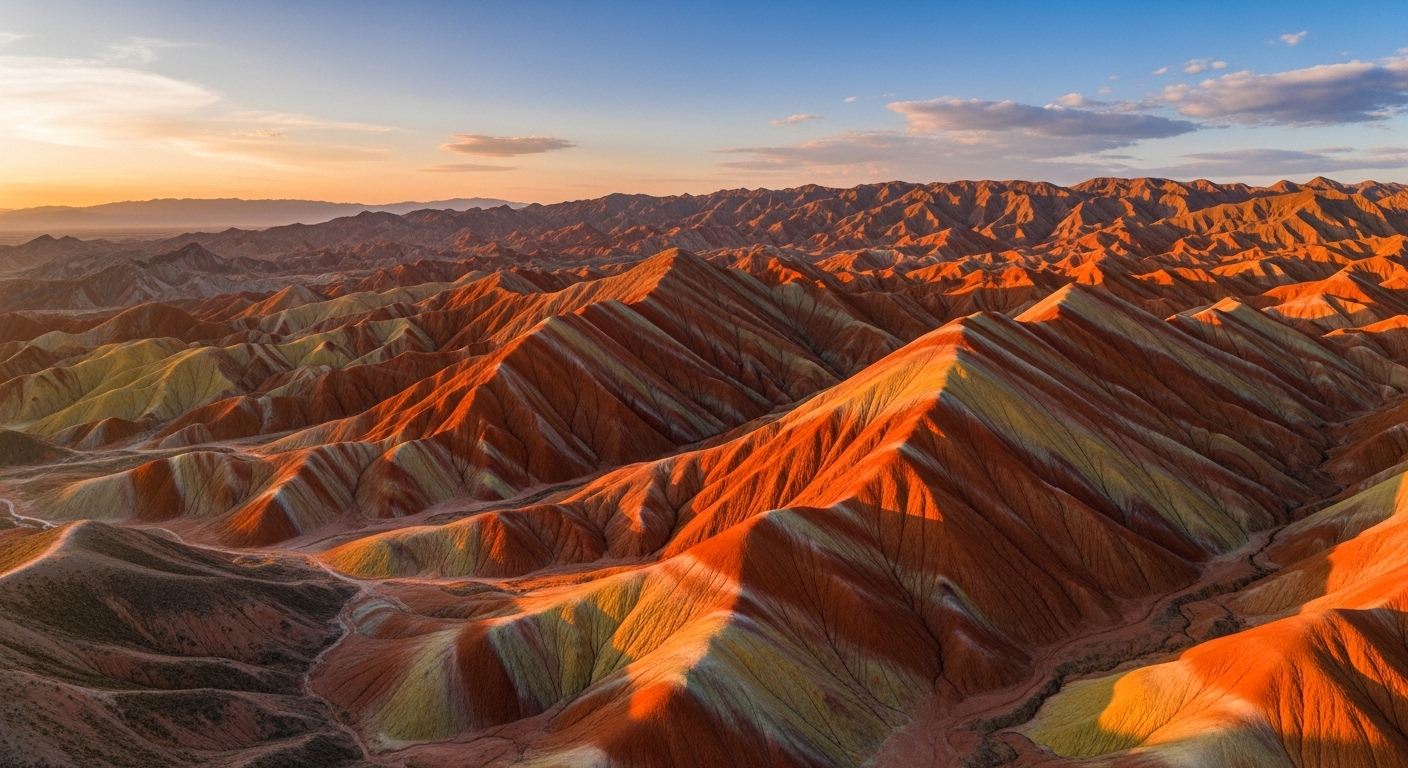
Have you ever looked at a landscape and thought, “There’s no way that’s real”? That’s exactly how most travelers feel when they first see the rainbow mountains—those surreal, color-streaked ridges that look like nature’s own watercolor paintings. These natural masterpieces seem almost too vivid to exist, yet they’re scattered around the world, waiting to be explored by curious adventurers like you.
In this guide, we’ll uncover the most breathtaking rainbow mountains and painted hills you can actually visit—places that transform hiking trails into art galleries and make even the most seasoned travelers gasp in wonder. Whether you’re chasing pastel peaks in China, ochre-toned cliffs in Peru, or crimson-striped deserts in the United States, these vibrant geological wonders promise journeys unlike any other.
The Science Behind the Colors
Before diving into where to find them, let’s talk about what makes these rainbow mountains so spectacular. Their mesmerizing colors come from millions of years of geological layering—different minerals, sediments, and environmental conditions blending over time. Iron oxide gives reds and yellows, chlorite adds greens, and limonite contributes earthy browns. When tectonic forces lift and twist these layers, erosion exposes a visual symphony of hues that seem painted by a celestial artist.
So, when you stand before these striped giants, you’re not just looking at pretty rocks—you’re staring at eons of Earth’s history written in color.
China’s Zhangye Danxia: The Original Rainbow Mountain
Let’s start with the most famous of them all—Zhangye Danxia Landform Geological Park in China. Located in Gansu Province, this UNESCO-listed site is often the image that pops up when you search “rainbow mountains” online. The layered sandstone mountains look unreal at sunrise or sunset when the colors glow like fire. The best way to see them? Take the park’s shuttle bus and walk the scenic platforms for panoramic views that shift with the light.
It’s a photographer’s paradise, but also a spiritual place—locals believe the colors represent balance between heaven and earth. If you go, bring water, good shoes, and your sense of awe, because this landscape feels like another planet.
Peru’s Vinicunca: The Rainbow Mountain Trek
In the Andes, near Cusco, lies Vinicunca (also known as Montaña de Siete Colores). This is not just a photo stop—it’s an adventure. The trek takes you through thin air (the peak is over 5,000 meters above sea level), winding trails, and herds of alpacas grazing against surreal rainbow-colored slopes.
Each stripe tells a geological story—pink from red clay, green from chlorite, and lavender from volcanic rock. But beyond science, Vinicunca is deeply cultural. Local Quechua communities consider it sacred, and you’ll often find small stone offerings left by hikers paying respect to the mountain spirits.
Would you hike through thin air just to see something that looks painted by the gods? Many travelers say it’s worth every breathless step.

Oregon’s Painted Hills: The American Dreamscape
Closer to home for North American adventurers, Oregon’s Painted Hills are proof that you don’t need a passport to find a rainbow mountain. These rolling hills in the John Day Fossil Beds National Monument are an artist’s palette of reds, golds, and blacks. The layers reveal ancient climate changes—each hue representing different eras of vegetation and volcanic ash.
The Painted Hills aren’t towering peaks but rather a serene, meditative landscape. The Painted Cove Trail is an easy boardwalk walk that lets you admire the colors up close. Visit during the golden hour when the sun’s low rays turn the hills into liquid gold—it’s an unforgettable sight.
Argentina’s Hill of Seven Colors: Purmamarca’s Pride
In northern Argentina, the village of Purmamarca is famous for its Cerro de los Siete Colores—the Hill of Seven Colors. Picture a small town tucked beneath a mountain that looks airbrushed in layers of rose, violet, and ochre. The morning light reveals new shades with every minute, and the best view is from the town’s Mirador hilltop.
Local artisans sell colorful textiles echoing the hues of their landscape. It’s easy to see why—living beneath a rainbow mountain would make anyone want to bring its palette home.
Namibia’s Damaraland: Desert Stripes in Africa
When you think of Africa, you might imagine vast golden savannahs—but Namibia’s Damaraland breaks that stereotype. Here, rust-red mountains cut through arid deserts, and iron-streaked rocks glow under the setting sun. While not as vividly colored as Vinicunca or Zhangye, these formations show subtle rainbow gradients that blend into the desert sky.
Travelers often pair Damaraland with wildlife safaris, combining natural beauty with adventure. Imagine watching elephants wander beneath glowing red hills—it’s a scene that feels almost cinematic.
Spain’s Las Médulas: The Golden Rainbow of Europe
In northwestern Spain, Las Médulas offers an unusual kind of painted landscape. Once a massive Roman gold mine, the area’s cliffs and caves now shimmer in tones of orange and gold. The colors may be manmade—formed from centuries of mining—but they’ve become part of nature’s palette now, reclaimed by green vegetation and wildflowers.
Visitors can explore walking trails that weave between jagged orange peaks, offering spectacular views from the Orellán viewpoint. It’s proof that even history’s scars can become beautiful with time.
Tips for Visiting Rainbow Mountains
Before packing your camera, here are a few tips to make the most of your rainbow mountain adventures:
- Time your visit: Early morning or late afternoon light enhances the colors dramatically.
- Pack for altitude: Many of these sites sit at high elevations—bring water, rest often, and acclimate if needed.
- Respect local customs: Some mountains are sacred—avoid loud music or drones in restricted areas.
- Stay eco-conscious: Stick to marked trails to prevent erosion that can damage these fragile formations.
Hidden Gems: Lesser-Known Painted Hills
While the big names attract crowds, there are hidden rainbow mountains scattered across the globe. Australia’s Painted Desert near Coober Pedy glows under sunset light, while Kyrgyzstan’s red mountains near Jeti-Ögüz are often overlooked gems. Even in Iceland, rhyolite hills in Landmannalaugar burst into yellow, green, and purple after rain.
It’s worth asking: how many of these colorful wonders are still undiscovered by the mainstream traveler? Maybe your next trip will be the one to uncover the next big “Instagram-famous” spot before it trends.
The Emotional Pull of Rainbow Landscapes
There’s something profoundly human about our attraction to color. Standing before a rainbow mountain makes you feel small—but also deeply connected to the planet. It’s like witnessing the Earth smile. Travelers often describe these places as spiritual or healing. Maybe it’s because their beauty feels effortless, untouched, and ancient.
Would you travel halfway across the world to see a mountain painted by time itself? Or does knowing such places exist simply make you see your own world in more color?
From the windswept deserts of Namibia to the frosty peaks of Peru, rainbow mountains remind us that the Earth doesn’t need filters to be extraordinary. These landscapes prove that patience, time, and natural forces can create art beyond human imagination. They’re not just destinations—they’re invitations to slow down, to look deeper, and to rediscover wonder.
If you’ve visited one of these natural masterpieces—or dream of doing so—share your thoughts in the comments below. Which rainbow mountain would you visit first? And what colors would you most want to see painted across the horizon? Follow us on our social media platforms to stay inspired and discover more hidden natural wonders from around the world.
Catch up on the top stories and travel deals by subscribing to our newsletter!