Have you ever stood in a strong breeze and felt energized instead of annoyed? In several parts of the world, communities don’t battle the wind—they celebrate it. These towns that celebrate the wind with festivals transform invisible air into living art, movement, and tradition. Instead of closing windows and shutting nature out, residents open their skies and invite the wind to become the star of the season.
Across coastlines, deserts, islands, and mountain crossings, towns gather every year to honor this powerful force. Some do it with massive kite festivals that turn the sky into a moving canvas. Others celebrate with sailing, sand racing, music, and athletic competitions driven entirely by wind. Through these traditions, people don’t merely observe nature—they participate in it.
In today’s world of constant screens, controlled temperatures, and artificial comfort, towns that celebrate the wind with festivals offer something rare. They offer connection. As you continue reading, ask yourself this: when was the last time you truly noticed the wind?
Why Towns That Celebrate the Wind With Festivals Are So Rare and Special
Modern cities usually treat wind as a problem that needs control. Architects block it. Engineers redirect it. Designers silence it. In contrast, towns that celebrate the wind with festivals take a completely different path. They build their identity around movement rather than resistance.
Most of these towns exist in places where wind arrives daily, not occasionally. Coastal cliffs, open deserts, and mountain corridors experience steady air currents year-round. Instead of seeing this as a burden, generations of residents learned how to live with it. Over time, survival turned into sport. Sport turned into tradition. Tradition eventually became celebration.
Because of this deep-rooted relationship, wind festivals in these towns feel authentic rather than staged. They grow naturally out of daily life instead of being added later for tourism alone.
The Meaning Behind Wind Festivals in These Towns
In towns that celebrate the wind with festivals, people rarely treat wind as ordinary weather. Instead, many view it as a symbol of freedom, energy, renewal, and spiritual movement. Since wind cannot be seen or owned, it represents a force greater than control.
As a result, festivals often take place in open skies rather than enclosed spaces. Streets become natural galleries for flying art. Rooftops turn into viewing decks. The rhythm of the wind shapes the rhythm of the celebration itself.
Rather than scheduling every moment rigidly, these towns allow the wind to guide the experience. Strong gusts elevate the drama. Gentle breezes soften the mood. In this way, nature becomes the main performer.
Famous Towns That Celebrate the Wind With Festivals Around the World
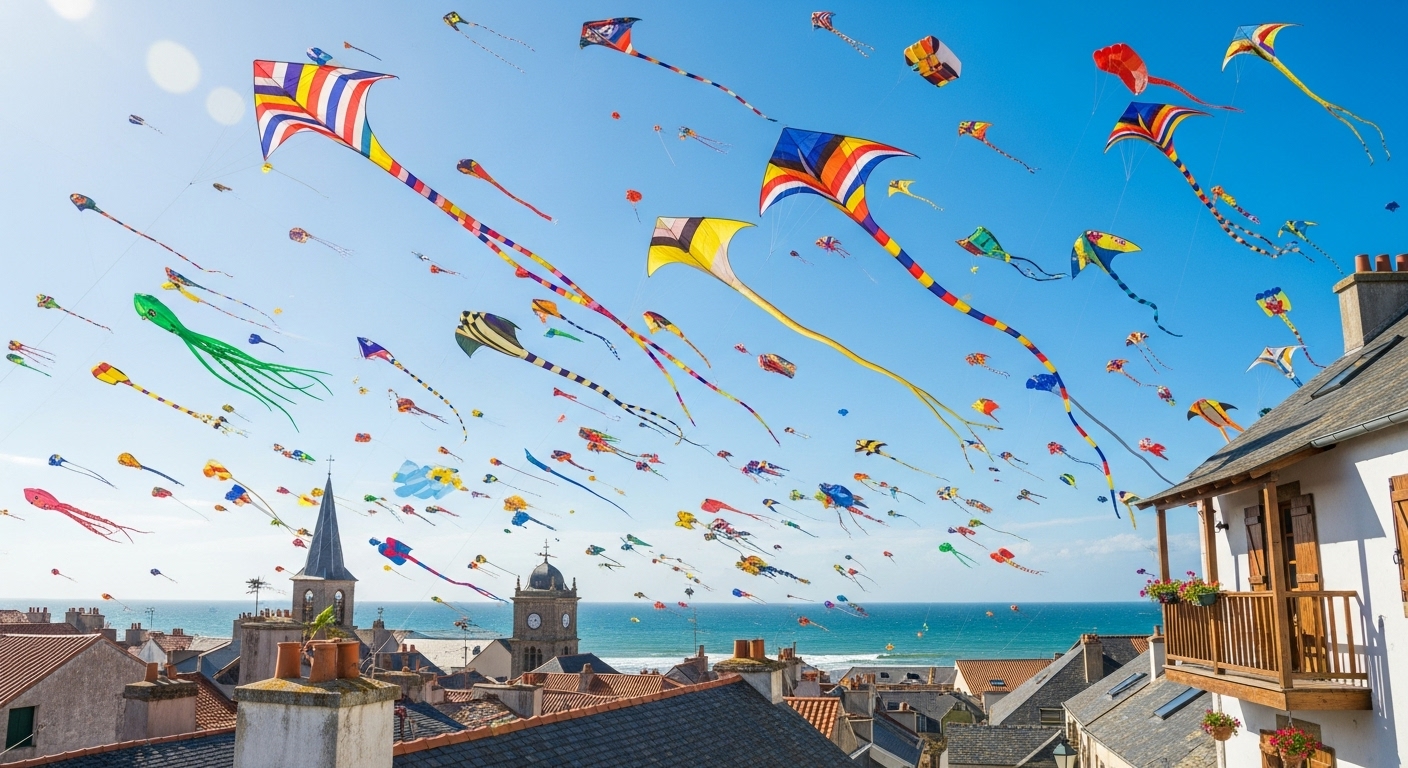
Several remarkable destinations have become globally known for celebrating wind in spectacular ways. Along the northern coast of France, wide beaches transform into runways for enormous artistic kites. Many of these creations stretch wider than buildings. As they rise together, the sky turns into a shifting mural of color and motion.
In Japan, certain coastal communities launch gigantic hand-crafted kites during windy seasons. Teams work together for months to build and fly these massive structures. The entire town participates, turning preparation into a ritual of unity. Across parts of India, seasonal winds bring rooftop kite competitions that fill the air with lines, angles, and strategy. From sunrise to sunset, the sky becomes a duel of skill and precision.
Island towns across the Atlantic and Pacific celebrate wind through sailing, windsurfing, and airborne sports that turn open water into a moving arena.
What It Feels Like to Attend a Wind Festival
Stepping into a town that celebrates the wind with festivals feels immediately different. First, you hear the sound of movement—fabric snapping, lines tightening, poles vibrating. Then, as you look up, the sky reveals layer upon layer of floating shapes.
Color fills the air. Giant sculptures drift slowly overhead. Smaller kites dart and twist in sharp patterns. Ground-level activity never stops as children learn to steer, elders coach from shaded balconies, and musicians time their beats with the gusts.
Visitors soon realize that the wind shapes every moment. Conversations pause when something massive lifts into the air. Crowds instinctively shift with changing currents. Even food stalls angle their banners toward approaching gusts.
In these moments, the environment feels alive rather than passive.
The Economic Impact of Wind Festivals on Small Towns
Towns that celebrate the wind with festivals often rely heavily on seasonal tourism. During festival weeks, visitor numbers multiply rapidly. Hotels fill first. Homestays follow. Restaurants operate at full capacity from morning to night.
Beyond accommodation and food, income spreads through equipment rentals, guided experiences, transportation services, and local artisans. Instead of flowing into corporate chains, most revenue stays within the community.
For many towns, a successful wind festival funds public projects for the entire year. Schools improve. Roads receive maintenance. Cultural programs stay alive through shared effort.

Wind as Sport Rather Than Obstacle
In these towns, people do not fear the wind. Instead, they train with it. Competitive kite battles require skill, timing, and constant awareness. Windsurfers rely on precision. Sand yacht racers balance speed with control.
These sports develop naturally from the environment. Children grow up reading gusts the way others read traffic. Every movement becomes a conversation between human strength and natural force. Through this partnership, residents learn that control does not come from domination. It comes from cooperation.
How Architecture Adapts in Wind-Celebrating Towns
The design of towns that celebrate the wind with festivals reflects generations of adaptation. Buildings guide air instead of blocking it. Courtyards channel cooling breezes. Narrow passageways prevent uncontrolled gusts.
Roofs remain reinforced. Walls angle purposefully. Streets often align with prevailing wind paths. As a result, the town itself becomes a tool for managing movement. During festivals, this architectural harmony becomes even more visible. Sound carries differently. Flags stretch in perfect symmetry. Temporary installations flex rather than resist.
The Psychological Impact of Celebrating the Wind
Celebrating an invisible force shapes the mindset of the people who live with it. Since no one controls the wind, residents develop patience, awareness, and flexibility.
Over time, this relationship builds emotional resilience. Instead of reacting with frustration when plans change, people learn to adapt. They expect movement. They welcome uncertainty. As a result, daily life in these towns feels less rigid and more intuitive.

Tourism and the Challenge of Protecting Tradition
As towns that celebrate the wind with festivals gain international attention, challenges naturally appear. Large crowds strain infrastructure. Commercial sponsorships threaten authenticity. Cultural dilution becomes a risk.
However, many towns protect their roots by keeping festivals community-led. Locals remain organizers. Families pass down techniques. Rules limit over-commercialization.
When residents protect ownership of their traditions, the festivals retain meaning rather than turning into spectacles alone.
The Role of Wind Festivals in a Changing Climate
In the age of climate change, wind now carries deeper meaning. It brings both opportunity and warning. Many festivals now include environmental education, renewable energy installations, and sustainability workshops.
Rather than ignoring modern challenges, towns integrate awareness directly into celebration. In this way, joy and responsibility move together.
How Visitors Change After Experiencing These Festivals
Many visitors arrive expecting simple entertainment. Most leave with a new perspective. Watching thousands of eyes fixed on the sky breaks modern habits of isolation. People talk to strangers. They analyze clouds. They feel shifts in air pressure. After returning home, many notice the wind differently. It becomes presence rather than background noise.
The Future of Towns That Celebrate the Wind With Festivals
The future of these towns will balance innovation with heritage. Wind-powered light installations, renewable energy showcases, and digital sky art already appear in some festivals. Yet the core will remain unchanged. Wind predates everything human-built. As long as people live within its reach, they will continue to celebrate its movement.
Towns that celebrate the wind with festivals show us that not everything powerful needs to be controlled. Some forces deserve cooperation instead of conquest. In these places, the sky becomes a shared stage. The wind becomes both story and storyteller. Would you travel to a place where nature leads the celebration? Have you ever felt transformed by a festival shaped entirely by the environment? We would love to hear your thoughts and experiences.
If you enjoyed exploring these wind-powered traditions, make sure to follow WentWorld on our social media platforms for more extraordinary destinations, hidden cultures, and meaningful travel stories from around the globe.
Catch up on the top stories and travel deals by subscribing to our newsletter!