Most people think of rivers as open, flowing bodies of water cutting through landscapes in plain sight. However, beneath some of the world’s most famous cities, entire rivers flow silently in darkness, hidden below layers of concrete and centuries of history. Even more astonishing is the fact that in several locations, these underground rivers are not only real—but fully navigable by canoe. Cities with underground rivers you can canoe offer one of the most surreal travel experiences imaginable.
At first thought, it may sound impossible. After all, cities are known for traffic, skyscrapers, and noise, not hidden waterways beneath their streets. Yet, across the globe, rivers that once flowed freely on the surface now exist below ground due to urbanization, geological formations, or historical engineering projects. As a result, an entirely different world now exists underneath bustling city life.
Before diving deeper, pause for a moment and ask yourself: would you ever imagine paddling a canoe beneath a city while people walk, drive, and live their daily routines just meters above your head? If that idea sparks your curiosity, you are about to discover how breathtaking these hidden waterways truly are.
How Underground Rivers Exist Beneath Modern Cities
To understand how underground rivers came to exist beneath cities, it is important to look at the natural and historical forces that shaped urban environments. In many cases, rivers were once open and visible but became buried over time as populations expanded and infrastructure grew.
As cities developed, rivers were often redirected into tunnels to prevent flooding, improve sanitation, or create more space for roads and buildings. Additionally, natural limestone formations in certain regions created underground cave systems through which rivers continued to flow beneath the surface.
Because of these geological and engineering changes, cities with underground rivers you can canoe now exist as unique intersections of nature and human development.
Why Canoeing Underground Is Unlike Any Other Travel Experience
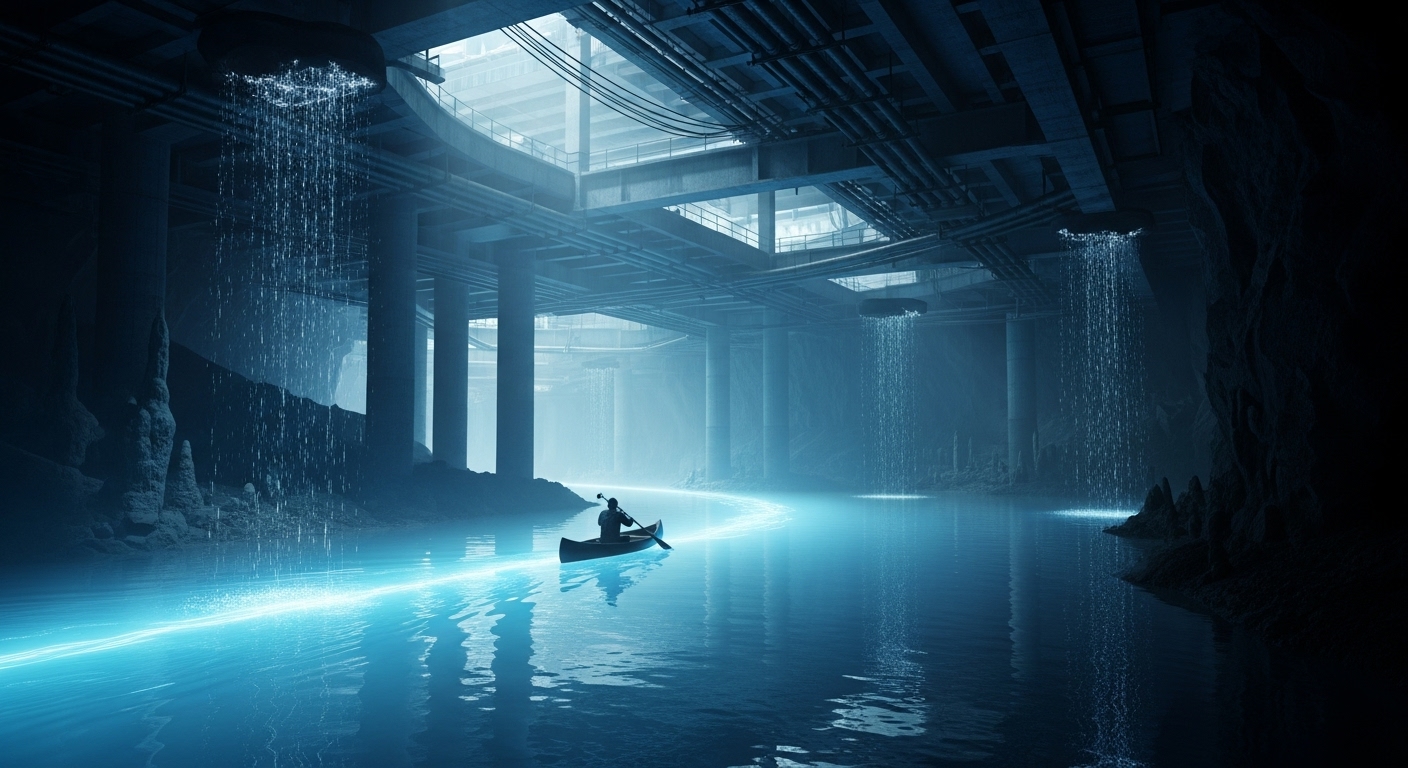
Canoeing on a normal river is already a peaceful and immersive activity. However, paddling through an underground river completely changes the experience. Instead of open skies, you glide through echoing tunnels, illuminated caverns, and ancient rock formations shaped over thousands of years.
Moreover, the sensation of silence is intensified underground. Sound behaves differently, water reflections dance along cave walls, and every paddle stroke feels magnified. Consequently, the experience becomes as much spiritual as it is adventurous.
For travelers seeking something beyond landmarks and sightseeing, cities with underground rivers you can canoe offer an unusual way to explore both natural geology and urban history at the same time.
One of the World’s Most Famous Underground Rivers: Mexico City
Mexico City is one of the largest urban areas in the world, built on what was once a vast lake system used by the Aztec civilization. Over time, much of this water was drained to make room for urban expansion. Nevertheless, remnants of those ancient waterways still remain beneath the city.
In certain regions, underground canal systems can be explored through guided canoe and kayak tours. These experiences reveal how water once shaped the entire city. Furthermore, travelers gain insight into how historical water management continues to impact modern infrastructure.
As a result, Mexico City stands as one of the most fascinating examples of cities with underground rivers you can canoe.
The Mystical Subterranean River of Paris
Paris is admired worldwide for its romantic streets, art, and architecture. However, beneath its elegance lies an extensive underground world that includes forgotten rivers and ancient quarry tunnels.
The Bièvre River, once an important waterway for medieval Paris, now flows largely underground. Although much of it is inaccessible, portions of this network have been used for specialized underground exploration experiences that resemble controlled canoe excursions in water-filled tunnels.
Meanwhile, the surrounding underground catacombs and drainage passages heighten the mystery, giving Paris an entirely hidden aquatic identity beneath its streets.

London’s Lost Rivers Beneath the City
London, another ancient metropolis, was once home to numerous natural rivers flowing openly across its terrain. Over centuries of urban growth, many of these rivers were gradually covered and turned into sewer or drainage systems.
Rivers such as the Fleet, Tyburn, and Westbourne now run almost entirely underground. While regular canoeing is limited due to safety considerations, guided water-based explorations and controlled conditions do allow researchers and select visitors to navigate these hidden waters.
Therefore, London qualifies historically and structurally as one of the cities with underground rivers you can canoe under specialized supervision.
Palawan’s Puerto Princesa Underground River City
While not fully urban in the traditional sense, Puerto Princesa in the Philippines offers one of the most iconic underground river experiences in the world. The city is home to a UNESCO-listed underground river that flows through a massive cave system.
This subterranean river is entirely navigable by boat and canoe, stretching for kilometers beneath limestone mountains. Travelers drift through enormous chambers filled with stalactites, stalagmites, and cathedral-like rock formations.
Although the river runs beneath a natural landscape rather than city streets, Puerto Princesa still remains one of the most famous destinations associated with the idea of cities with underground rivers you can canoe.
The Underground River Tours of Austin, Texas
Austin is known for its music, culture, and green spaces. However, beneath the city lies a network of karst limestone caves and underground waterways formed through natural erosion.
Some of these water-filled caves are explored using controlled kayak and canoe tours operated by professional cave explorers. Participants can witness how groundwater carved passages through stone beneath the modern city.
As urban development continues above ground, these subterranean river systems remain untouched, offering a powerful contrast between modern life and ancient geology.
Why Cities Covered Their Rivers in the First Place
Covering rivers was once considered a practical solution to several urban problems. During the Industrial Revolution, open rivers became polluted with waste and industrial runoff. As a result, many cities decided to enclose rivers underground to improve public health.
Additionally, open waterways took up significant space. By diverting rivers into subterranean channels, cities created room for new roads, buildings, and transportation systems.
Consequently, while rivers disappeared from sight, they continued flowing beneath the urban surface—eventually giving rise to cities with underground rivers you can canoe.
The Unique Ecology of Underground Rivers
One often overlooked element of underground rivers is their unique ecosystem. Unlike surface rivers, these environments receive little to no sunlight, resulting in specialized life forms adapted to darkness.
Blind fish, translucent crustaceans, and specialized microorganisms thrive in these underground habitats. Moreover, water quality is often exceptionally pure due to natural filtration through layers of rock.
For canoeists, this creates an experience unlike any surface river, as the water appears crystal-clear and eerily calm.
The Emotional Impact of Canoeing Beneath a City
Travelers frequently describe underground canoeing as deeply emotional. The silence, the darkness, and the awareness of an entire city functioning above them create a powerful sense of contrast.
In many ways, it feels like stepping outside of time. Above you exists traffic, noise, deadlines, and modern stress. Below you exists only flowing water, stone, and ancient earth.
This emotional duality is precisely what makes cities with underground rivers you can canoe so profoundly memorable.
Safety Measures for Underground Canoe Experiences
Safety is naturally a major concern when navigating any subterranean waterway. For this reason, underground canoeing is almost always conducted through licensed tour operators.
Travelers are provided with helmets, life jackets, guided navigation, and emergency lighting. Additionally, tours are scheduled during seasons with stable water levels to avoid flooding risks.
With proper supervision, underground river canoeing remains both safe and highly rewarding.

How Climate Change Is Affecting Underground Waterways
Climate change is beginning to impact underground rivers just as it affects surface water systems. Rising groundwater levels, seasonal flooding, and changes in rainfall patterns can alter underground river behavior.
Consequently, some underground canoe routes are now monitored more carefully than ever before. In some locations, access is restricted during certain months to ensure safety.
Nevertheless, conservation efforts aim to preserve these hidden water systems for both ecological stability and responsible tourism.
Why Underground River Tourism Is Growing
Modern travelers increasingly seek experiences that go beyond traditional sightseeing. As a result, underground river tourism is growing steadily in popularity.
Unlike crowded tourist attractions, these experiences offer privacy, tranquility, and adventure combined. Additionally, they appeal to those who enjoy geology, exploration, and unconventional travel.
Therefore, cities with underground rivers you can canoe are gradually becoming niche global travel highlights.
The Psychological Fascination With Hidden Worlds
Humans are naturally fascinated by hidden places. Underground spaces, in particular, trigger curiosity, exploration instincts, and a sense of mystery.
Canoeing through these environments combines movement, water, darkness, and discovery into a single immersive experience. Consequently, it creates lasting psychological impact.
This fascination is also why underground tourism continues to expand worldwide.
The Future of Urban Underground River Exploration
As technology improves, more underground waterways may become safely accessible for exploration. Advanced lighting, real-time monitoring, and improved water testing may allow new routes to open under major cities.
Meanwhile, urban planners are also reconsidering the value of restoring buried rivers to the surface where possible. However, those that remain underground may become even more prized as rare adventure tourism sites.
In this way, the concept of cities with underground rivers you can canoe will continue evolving.
Your Role as a Curious Traveler
Every traveler who chooses responsible underground exploration contributes to conservation, research, and sustainable tourism. By supporting regulated tours, you help protect delicate underground ecosystems while keeping these extraordinary places accessible. At the same time, your curiosity encourages cities to value their hidden natural assets rather than ignore them.
Would you ever feel brave enough to canoe beneath an entire city? Does the idea excite you or make you nervous? Which city mentioned here would you most like to explore underground?
Your thoughts and perspectives add depth to this global conversation. Share what inspires you about underground rivers and hidden cities. Cities with underground rivers you can canoe reveal a dimension of travel that most people never see. They combine geology, history, mystery, and adventure into one unforgettable experience.
While millions walk above unaware, entire rivers flow silently below. For those willing to explore beneath the surface, the world becomes far more extraordinary than it first appears. If stories like these fascinate you, stay connected with WentWorld across our social platforms for more rare travel discoveries and hidden global wonders.
Catch up on the top stories and travel deals by subscribing to our newsletter!