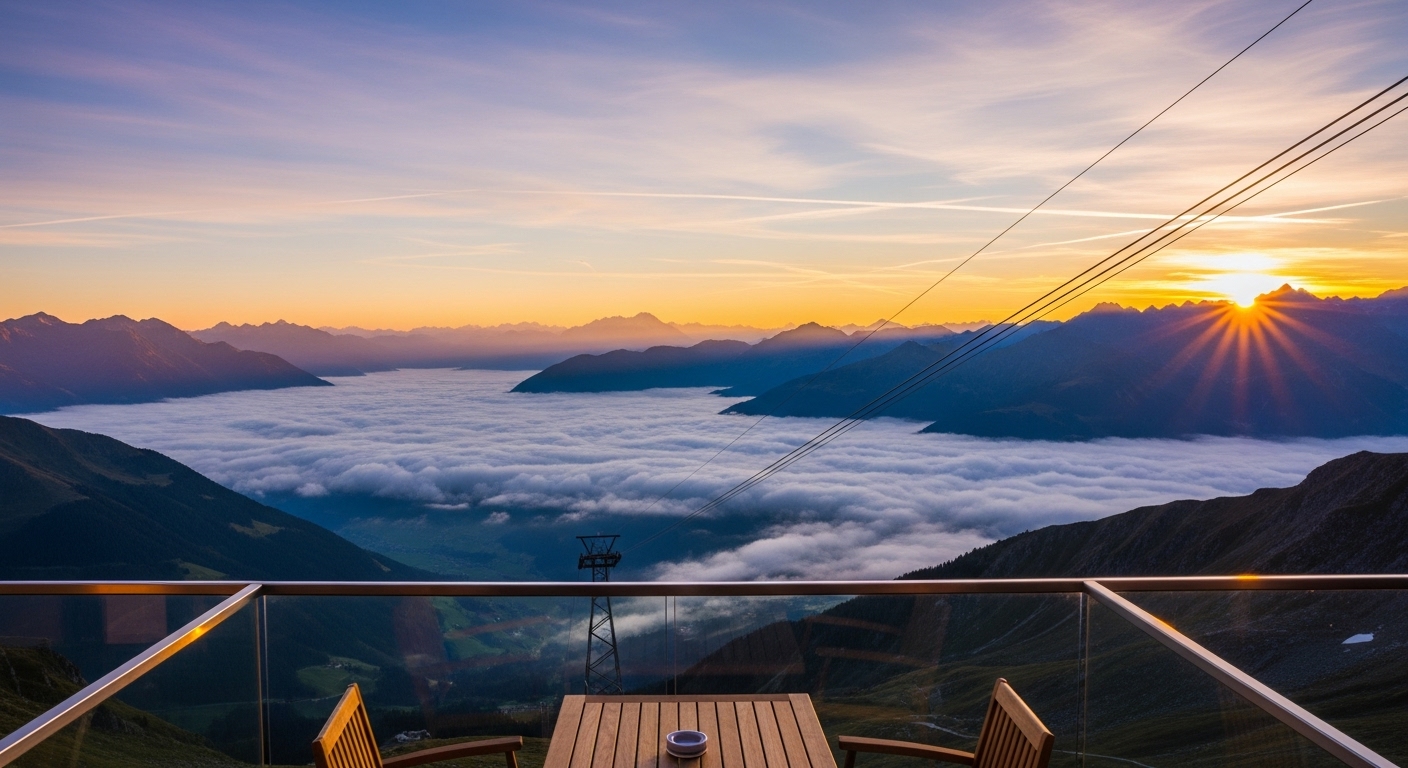
High above the noise, deadlines, and endless notifications of modern life, mountain hotels accessible only by tram exist as a quiet rebellion against speed and stress. From the very first moment a traveler steps into a suspended cable car, something changes internally. The ground slowly disappears, the valley opens beneath, and suddenly the journey itself becomes a sacred pause between routine and wonder.
Unlike ordinary resorts that feel reachable at any moment, these mountain retreats demand intention. Because of that, the experience feels earned rather than rented. Eventually, as the tram climbs higher, even time itself begins to feel different. Meanwhile, worries grow smaller, conversations become softer, and anticipation replaces exhaustion.
So what truly makes mountain hotels accessible only by tram so mesmerizing? Is it the height, the silence, the exclusivity, or the emotional transformation that begins long before arrival? More importantly, what does this rising travel trend reveal about how people now seek peace?
The emotional magnetism of mountain hotels accessible only by tram
Long before the room key is handed over, the emotional journey has already begun. At the tram station, travelers leave behind roads, vehicles, and the illusion of constant control. With each slow mechanical pull upward, however, the mind begins to loosen its grip on pressure.
At high elevation, silence behaves differently. Instead of emptiness, it carries depth. Wind whispers across cliffs, distant birds echo through valleys, and the faint hum of cables becomes a rhythmic calm. As a result, guests often find that their breathing changes without conscious effort.
Interestingly, this form of escape feels chosen, not forced. Because departure requires effort, arrival gains meaning. Would modern travelers value silence as deeply if it were instantly available?
Why tram-only access reshapes the entire guest experience
Most hotel check-ins mark the beginning of a stay. In contrast, at mountain hotels accessible only by tram, the experience begins miles before arrival. The ascent filters not just visitors, but perspectives as well. Those who board the tram have already accepted uncertainty, heights, and isolation.
Because of this shared threshold, guests often feel connected without words. Conversations arise naturally on viewing platforms. Meanwhile, strangers exchange knowing smiles as clouds drift past glass windows. That silent agreement — we came here on purpose — reshapes social energy entirely.
For example, cable systems in Zermatt, Switzerland and Chamonix, France are not just transport networks but emotional gateways into a slower reality.
Where these sky-bound mountain hotels exist around the world
By necessity, mountain hotels accessible only by tram are geographically rare. Their presence requires steep topography, advanced cable engineering, and strict environmental control. Therefore, most of these destinations sit in regions where both nature and infrastructure are treated with unusual respect.
Switzerland remains the global icon of tram-access mountain hospitality, particularly near the Matterhorn and Jungfraujoch. Meanwhile, France, Austria, Italy, Germany, Japan, and parts of Canada also host breathtaking examples. Additionally, New Zealand and select South American regions offer remote cable-access lodges surrounded by untouched wilderness.
Travel research platforms such as Lonely Planet, Booking.com, Switzerland Tourism, Expedia, and National Geographic Travel continue to document the growing fascination with vertical-access destinations.
How the tram ride becomes the first luxury experience
Unlike standard hotel transfers, tram journeys redefine luxury through anticipation. Slowly lifting above forests and cliffs, travelers witness shifting light patterns across snow, stone, and sky. Meanwhile, altitude reveals perspectives unseen from roads below.
Children often press against glass panels in awe. Couples fall into quiet hand-holding. Solo travelers feel a rare humility settle in their chest. As a result, the tram ride becomes not transport, but transformation.
When was the last time your hotel arrival felt unforgettable before you even unlocked the door?

The architectural reality of building without road access
Every brick inside a mountain hotel accessible only by tram arrives through calculated transport. There are no delivery trucks, no casual repairs, and no spontaneous renovations. Consequently, design becomes deeply intentional.
Rooms favor smart spatial use over size. Windows expand views rather than walls. Furthermore, energy systems rely on solar, hydro, and thermal efficiency. Waste removal follows carefully timed schedules that protect fragile ecosystems below.
In this way, mountain hotels do not conquer nature. Instead, they negotiate coexistence.
The psychology of guests at extreme elevation
At altitude, human biology shifts. Oxygen levels change. Breathing deepens. Sleep patterns evolve. Appetite recalibrates. As a result, guests often experience heightened emotional awareness.
Small details grow vivid. Coffee steam in cold air feels cinematic. Snow crunch beneath boots sounds amplified. Night skies appear deeper. Consequently, memory formation becomes intense and long lasting. This explains why even short stays in tram-access hotels generate lifelong emotional recall.

Isolation without loneliness: the romance of vertical seclusion
Unlike private islands that separate guests horizontally, mountain hotels accessible only by tram isolate vertically. Villages remain visible below, yet unreachable. Traffic noise vanishes while visual connection remains intact.
This unusual balance creates calm without fear. People feel protected rather than trapped. As a result, these hotels attract honeymooners, writers, meditation retreat seekers, and digital detox travelers.
Seasonal transformations that completely redefine the experience
Each season reshapes tram-access hotels into entirely new worlds. During winter, thick snow absorbs sound and turns landscapes into quiet monochrome. Fireplaces dominate social spaces. Ski tracks carve temporary streets through white infinity.
By contrast, summer brings alpine flowers, wildlife encounters, and endless daylight. Hiking becomes social currency. Meanwhile, autumn delivers cinematic gold, silence, and introspection. Spring then rewakes waterfalls, rivers, and color itself.
As a result, one room becomes four different emotional environments across a single calendar year.
Modern technology hidden inside ancient landscapes
Although they appear remote, mountain hotels accessible only by tram often lead hospitality innovation. Satellite internet, geothermal heating, smart energy distribution, and AI-managed weather monitoring quietly operate under wooden beams and stone walls.
At the same time, tradition remains fiercely protected. Wood-fired kitchens, regional recipes, handwoven fabrics, and oral mountain storytelling preserve generational identity. Therefore, technology and heritage coexist rather than compete.
What travelers should truly expect regarding cost and comfort
Logistics raise operational costs. Staff rotations, emergency systems, food storage, and supply transport all demand precision. Therefore, pricing naturally reflects these realities.
However, luxury does not always mean marble or marble-priced. Many tram-access hotels offer dorm-style lodging for climbers alongside premium suites for high-end travelers. Ultimately, guests pay not only for comfort but for altitude, access, silence, and story.
Which holds more lasting value — shopping or stillness?
Who should experience mountain hotels accessible only by tram at least once?
This form of travel suits seekers rather than spectators. Burned-out professionals find nervous system restoration. Creatives discover clarity. Families introduce children to untouched nature. Couples rediscover slowness.
However, those who fear loss of control, depend on constant connectivity, or struggle with heights may find the experience difficult. Therefore, self-awareness becomes a key part of the decision.
What this rising trend reveals about modern travel psychology
Instant bookings, instant delivery, instant gratification dominate daily life. In contrast, mountain hotels accessible only by tram demand patience. Anticipation replaces urgency. Effort restores meaning.
As a result, their growing popularity reflects emotional fatigue with speed itself. Travelers no longer crave only destinations. They crave emotional recalibration. Have you felt that internal exhaustion even after vacations?
The future direction of sky-based hospitality
As sustainability becomes non-negotiable, vertical access resorts offer environmental advantages. Cable systems disturb less land, protect wildlife corridors, and reduce long-term carbon footprints. Therefore, future eco-resorts may prioritize altitude rather than asphalt. Eventually, tram-access hotels may serve not only tourism but also environmental research, climate observation, and conservation missions.
Mountain hotels accessible only by tram are not simply accommodations. They are emotional thresholds between noise and quiet, speed and stillness, routine and presence. They slow the nervous system. They humble the mind. They transform effort into beauty. Perhaps in a world obsessed with reaching faster, the most meaningful direction left is upward.
We invite you to share your perspective with us. Would you choose to stay in a mountain hotel accessible only by tram? Which part calls to you most — the journey, the silence, the isolation, or the altitude itself? Your thoughts shape our future stories.
If meaningful journeys speak to your curiosity, follow WentWorld on social media for rare travel concepts, hidden destinations, and stories that go far beyond ordinary tourism.
Catch up on the top stories and travel deals by subscribing to our newsletter!