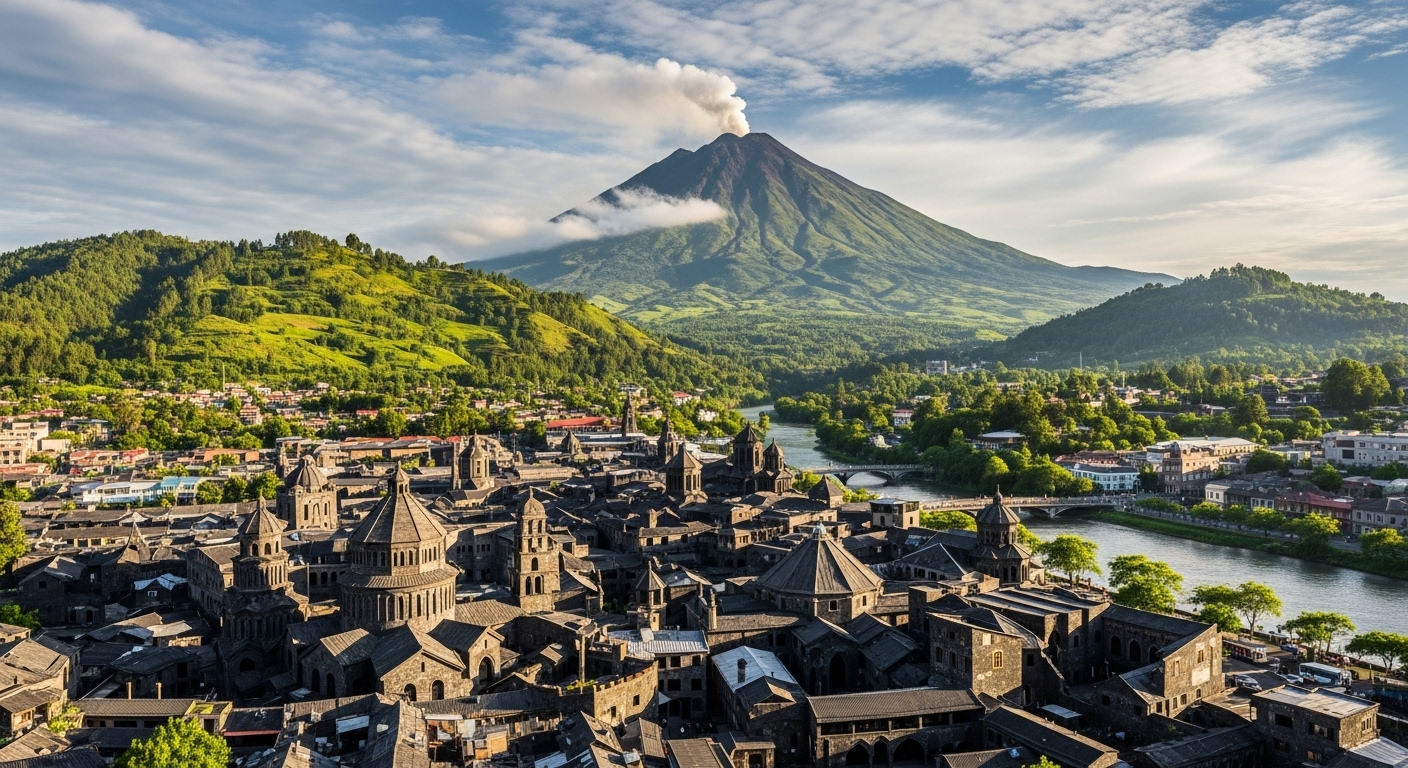
There is something undeniably captivating about cities built entirely on volcanic rock. These places feel different the moment you arrive—older, more mysterious, more deeply connected to the earth beneath them. You notice it in the texture of the streets, the colors of the buildings, and the way entire neighborhoods seem carved rather than constructed. Cities built entirely on volcanic rock often look like time capsules shaped by lava, ash, history, and human resilience. Although modern skylines tend to highlight glass and steel, these cities proudly display their geological roots in every corner.
If you have ever wondered what it would feel like to walk through an ancient alleyway made from hardened lava or live in a home carved directly into basalt cliffs, then you are about to enter a world that blends geology, architecture, culture, and storytelling. These cities built entirely on volcanic rock offer not just beauty but lessons about survival, adaptation, and creativity. Moreover, they reveal how humans have always found ways to transform even the harshest landscapes into places of community and life.
Throughout this journey, we will explore the features that make these cities extraordinary, the geological forces that shaped them, the cultures that developed around volcanic landscapes, and the reasons these destinations continue to capture the imagination of travelers. While reading, consider this question: Would you want to live in a city carved from volcanic stone, or would the rugged beauty feel too different from traditional urban life?
The Volcanic Foundation That Shapes Entire Cities
Cities built entirely on volcanic rock are rare, but they share a fascinating origin story. Long before any human settlement existed, eruptions shaped the landscapes we see today. Massive lava flows cooled into dense basalt. Layers of volcanic ash compressed into tuff. Over centuries, wind and water carved unusual formations. Eventually, early civilizations discovered these unique terrains and found ways to build homes, roads, and religious structures directly into the volcanic material.
Because volcanic rock varies in hardness and texture, it influences not only the look of these cities but also the lifestyle, economy, and culture of the people who live there. In many places, the stone is soft enough to carve yet durable enough to last for centuries. Additionally, volcanic soil in surrounding areas often supports farming, which shaped early communities and allowed them to thrive despite challenging environments.
This combination of natural artistry and human innovation is exactly what makes cities built entirely on volcanic rock so memorable. They are living examples of how people adapt creatively to the land beneath them.
Global Examples of Volcanic Rock Cities
Several remarkable cities and towns around the world were built on volcanic foundations. For instance, the ancient city of Matera in Italy sits on layers of volcanic rock, with homes carved directly into the cliffs. It has become a UNESCO World Heritage Site and remains one of the oldest continuously inhabited human settlements. Additionally, the city of Quito in Ecuador was constructed on volcanic soils and surrounded by dramatic volcanic peaks, which continue to define its skyline and culture. According to UNESCO, Quito’s unique architecture and volcanic geography contributed to its recognition as the world’s first Cultural Heritage Site.
Another compelling example is the town of Catania, located at the base of the active Mount Etna volcano. Much of its architecture features black lava stone from historic eruptions. Even today, buildings, sidewalks, and fountains reflect the glossy darkness of basalt. Furthermore, the island of Lanzarote in Spain showcases entire villages constructed with volcanic rock, designed to withstand the climate and preserve the natural landscape. Visitors can still explore Timanfaya National Park, managed by the Spanish Ministry of Ecological Transition, which outlines the geology that shaped the island’s settlements.

In Turkey, the region of Cappadocia provides a dramatic example of volcanic stone architecture. Although not a single city, its towns, such as Göreme and Ürgüp, are carved into soft tuff rock produced by ancient eruptions. People built homes, monasteries, and entire underground cities within the stone layers. These destinations demonstrate how volcanic geology can shape not just buildings but entire communities.
Additionally, the Hawaiian city of Hilo on the Big Island stands upon layers of volcanic history. While not carved into stone like some European examples, its land has been shaped by multiple eruptions from Mauna Loa and other volcanoes. Local culture still reflects this deep geological influence, and institutions such as the U.S. Geological Survey continue to study the volcanic activity that affects the region.
How Volcanic Rock Shapes Architecture and Urban Design
Volcanic rock affects everything from construction styles to street layouts. Basalt and tuff are two of the most commonly used volcanic stones, and their properties determine how buildings look and feel. Basalt, for example, is extremely strong and dense. As a result, cities that rely on basalt often feature darker, heavier-looking structures that remain incredibly durable. In contrast, tuff is lighter, softer, and easier to carve. This makes it ideal for cave dwellings, carved facades, and intricate stonework.
The streets of cities built entirely on volcanic rock also tell stories of their origins. In many places, the stone was not imported but taken directly from the surrounding ground. Roads, stairs, arches, and even drainage systems come from the same geological layers that support the city. Because volcanic landscapes are rarely flat, many of these cities include steep pathways, narrow alleys, and terraced homes. Over time, this created a uniquely compact and organic layout.
Furthermore, volcanic rock has natural thermal properties. Homes carved into tuff stay cool in summer and warm in winter. In volcanic islands like the Azores, rock structures help protect against strong winds and sudden climate shifts. These architectural advantages are part of the reason populations continued to grow in these locations despite natural risks.
Culture and Life in Volcanic Rock Cities
Cities built entirely on volcanic rock often develop cultures deeply connected to the land. Because the landscape is so striking, it naturally shapes traditions, stories, and community identity. Folklore frequently includes legends about ancient eruptions, protective deities, or spirits of the mountains. Festivals may honor volcanic gods or rituals designed to protect the city from natural disasters.
Additionally, residents tend to be resilient and resourceful. Living near volcanoes requires awareness of nature’s rhythms, so communities often show strong emergency preparedness practices. Yet alongside caution, there is pride—people who grow up in these cities feel a strong bond with the dramatic landscape that shaped their history.
Food culture is also influenced by volcanic surroundings. Fertile soils around volcanoes support vineyards, orchards, and rich agricultural traditions. For example, wine regions in Italy and Spain owe much of their flavor to volcanic minerals. Restaurants in these cities often highlight locally grown produce and dishes that reflect the earth’s richness.

The Risks of Living in a Volcanic Rock City
Although these cities are beautiful, they come with unavoidable risks. Ongoing volcanic activity can affect air quality, land stability, and nearby ecosystems. Earthquakes may accompany eruptions, and volcanic ash can interrupt travel, agriculture, and public health. Because of this, monitoring organizations such as the National Oceanic and Atmospheric Administration and global volcano observatories closely study regions built on volcanic foundations.
Despite potential dangers, millions of people continue to live in these cities. Many communities have evacuation routes, emergency shelters, and education programs to help residents stay safe. Meanwhile, local governments conduct regular geological assessments to minimize long-term risks.
Why Travelers Are Drawn to Volcanic Rock Cities
Travelers often find these cities irresistibly intriguing. The stark contrast between ancient stone and modern life creates a visual identity found nowhere else. Streets made from basalt, homes carved into cliffs, and natural colors ranging from black to deep red make these destinations feel like living museums. Beyond architecture, travelers enjoy the sense of authenticity these cities offer. Because the structures reflect centuries of adaptation, they provide a genuine look at how people once lived—and still live today.
Additionally, volcanic rock cities frequently offer stunning natural surroundings. Views of volcanic peaks, dramatic cliffs, and expansive valleys create perfect settings for photography, hiking, and cultural exploration. Many travelers say these cities feel more memorable than typical urban destinations because they tell stories of both destruction and renewal.
Now that you have explored the many layers behind cities built entirely on volcanic rock, we would love to hear your perspective. Would you like to visit a city carved from centuries-old lava flows? Does the combination of geological history and cultural richness appeal to you? Or would living near volcanic landscapes feel too unpredictable? Share your thoughts, experiences, or dream destinations in the comments. Your feedback always inspires our next travel stories.
If you enjoy discovering unique destinations and the fascinating landscapes that shape them, follow us on our social platforms for more travel insights, guides, and hidden-world explorations.
Catch up on the top stories and travel deals by subscribing to our newsletter!