Imagine planning a trip to a town that vanishes before the year ends. Streets that fill with life for a few short months, homes that stand empty the rest of the year, and entire communities that only exist under very specific conditions. Around the world, there are extraordinary destinations where life is temporary by design. These are places defined by climate, nature, industry, and tradition. Traveling to Towns That Only Exist in One Season offers a rare opportunity to experience a way of life that exists outside the normal rules of permanence.
Some towns bloom during summer when ice melts and roads open. Others come alive only in winter when snow and ice make them accessible. A few exist for festivals, fishing seasons, or agricultural cycles. Have you ever wondered what it feels like to visit a place knowing that soon, everyone will leave and silence will return?
Why Do Seasonal Towns Exist?
Seasonal towns exist because humans adapt to nature rather than trying to control it. Extreme weather, remote geography, and limited resources make year-round living impractical in some regions. Instead of abandoning these areas completely, people return only when conditions allow.
Traveling to Towns That Only Exist in One Season reveals how communities organize life around natural cycles. These towns challenge our modern idea that cities must operate continuously to be successful.
In many cases, seasonal towns are deeply connected to specific industries such as fishing, mining, tourism, or agriculture. When the season ends, so does the town’s purpose.
Ice Roads and Winter-Only Towns in Canada
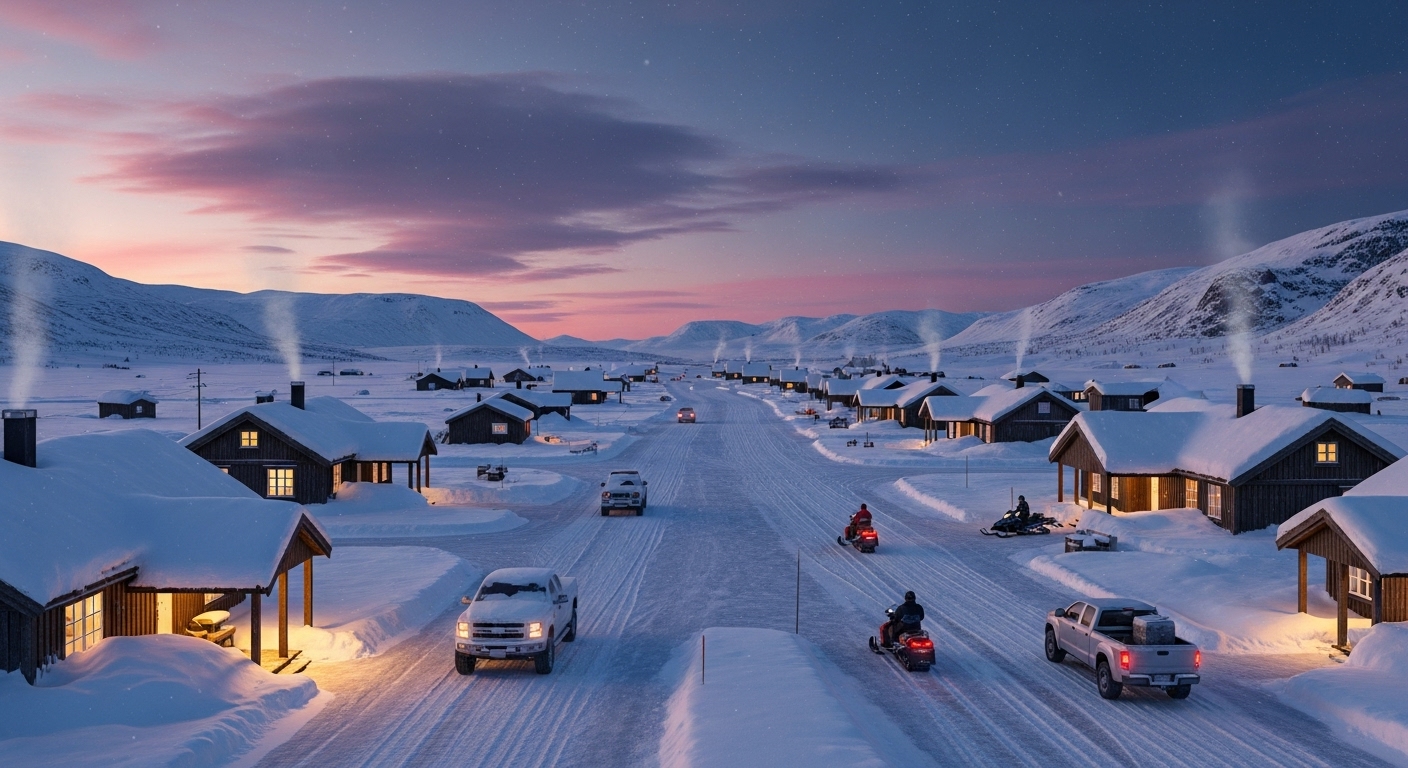
In northern Canada, winter transforms the landscape into a network of frozen highways. Ice roads connect remote communities and industrial camps that are otherwise inaccessible. Some towns and work camps only operate during these cold months.
Places like winter mining settlements in Manitoba and the Northwest Territories rely on frozen lakes and rivers to transport supplies. When spring arrives, the ice melts, roads disappear, and the towns shut down.
Travelers visiting during winter witness a rare phenomenon: fully functioning towns that simply cannot exist once temperatures rise. Learn more about Canada’s ice roads through The Canadian Encyclopedia.
Alaskan Fishing Towns That Sleep Half the Year
Along Alaska’s rugged coastline, fishing towns surge with activity during specific seasons. Places like Bristol Bay come alive during salmon runs, drawing thousands of seasonal workers.
During peak fishing months, these towns are bustling hubs of boats, processing facilities, and temporary housing. Once the season ends, populations drop dramatically, leaving behind quiet harbors and empty streets.
Alaska’s seasonal towns reflect a rhythm dictated by nature rather than calendars. Airlines like Alaska Airlines adjust routes to match these seasonal surges in population.

Monsoon Villages in India
In parts of India, certain villages transform entirely depending on the monsoon season. Some settlements become inaccessible during heavy rains and are temporarily abandoned, while others only function during monsoon months due to agricultural cycles.
In regions like Maharashtra, seasonal farming villages host families only during planting and harvesting periods. When the rains stop, residents migrate to nearby cities for work.
Travelers visiting during these active months gain insight into a lifestyle shaped by centuries of environmental adaptation.
Desert Festival Towns That Vanish Overnight
Some seasonal towns exist not because of nature alone, but because of human celebration. Temporary towns emerge in deserts for festivals and events, then disappear completely.
The most famous example is Black Rock City in Nevada, created annually for the Burning Man festival. For one week, it becomes one of Nevada’s largest cities before vanishing without a trace. Learn more at burningman.org.
While these towns are intentionally temporary, they demonstrate how infrastructure, governance, and community can exist briefly and intensely.

European Ski Towns With Two Lives
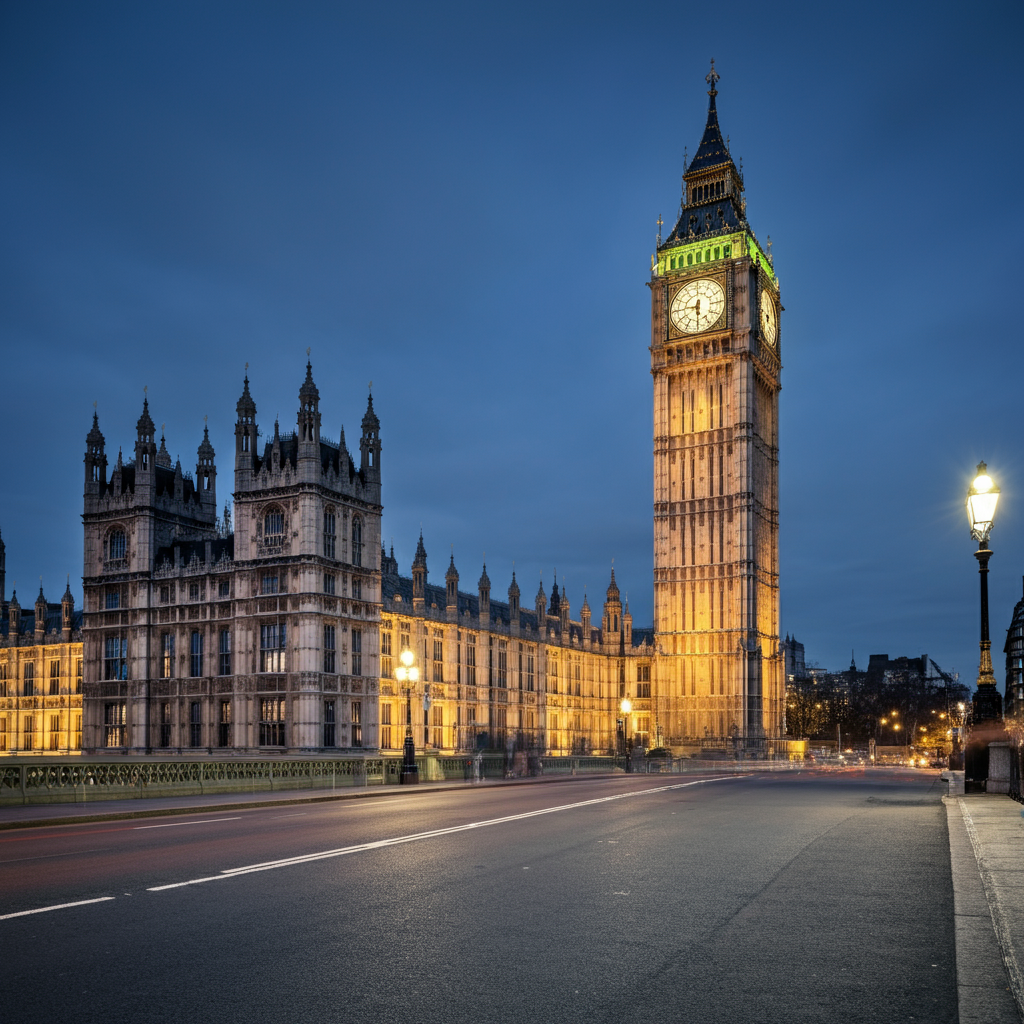
In the European Alps, many ski towns experience dramatic seasonal transformations. During winter, towns like St. Anton in Austria or Zermatt in Switzerland are crowded with skiers. In off-seasons, populations shrink significantly.
Some mountain villages close almost entirely during spring thaw, when ski slopes are unsafe and hiking trails are not yet accessible. Hotels, shops, and restaurants shut down until conditions improve.
These towns don’t fully disappear, but their social and economic life does—making them feel like entirely different places depending on when you visit.
Floating Towns of the Amazon Floodplains
In parts of the Amazon Basin, entire communities adjust to seasonal flooding. Some towns are built on stilts or floating platforms and only function during certain water levels.
When rivers rise, homes and markets float into place. When waters recede, residents relocate temporarily. This seasonal existence has shaped architecture and culture for generations.
These communities highlight how humans can coexist with nature rather than resist it.
Tourism in Seasonal Towns
For travelers, seasonal towns offer something rare: urgency. You can’t postpone the trip indefinitely because the town may not exist when you return.
Traveling to Towns That Only Exist in One Season encourages mindful travel. Visitors become more present, aware that their experience is fleeting.
However, tourism must be handled carefully. Seasonal towns often lack year-round infrastructure, making sustainability and respect essential.
Challenges Faced by Seasonal Communities
Life in a seasonal town is not easy. Residents face economic uncertainty, limited access to healthcare, and social isolation during off-seasons.
Climate change has made these challenges more severe. Shorter winters, unpredictable rainfall, and extreme weather threaten the delicate balance that allows these towns to exist at all.
Many communities are now adapting by diversifying industries or extending tourism seasons where possible.
What Travelers Should Know Before Visiting
Visiting a seasonal town requires planning and flexibility. Transportation may be limited, accommodations temporary, and services basic.
Respect for local routines is crucial. These towns are not theme parks; they are working communities operating under strict environmental constraints.
Have you ever visited a place knowing it would soon be gone? That awareness changes how you experience every moment.
Why Seasonal Towns Fascinate Us
Seasonal towns challenge our obsession with permanence. They remind us that not everything needs to last forever to be meaningful. Traveling to Towns That Only Exist in One Season offers perspective on adaptability, resilience, and the beauty of temporary existence. These towns prove that life doesn’t need to be constant to be rich.
Seasonal towns exist at the intersection of nature, culture, and necessity. They appear when conditions allow and vanish when they don’t. Visiting them is not just about travel—it’s about understanding how humans live in harmony with time and environment.
If disappearing destinations fascinate you, follow us on our social media platforms for more rare travel stories. And tell us—would you plan a trip to a town knowing it might not exist next season?
Catch up on the top stories and travel deals by subscribing to our newsletter!