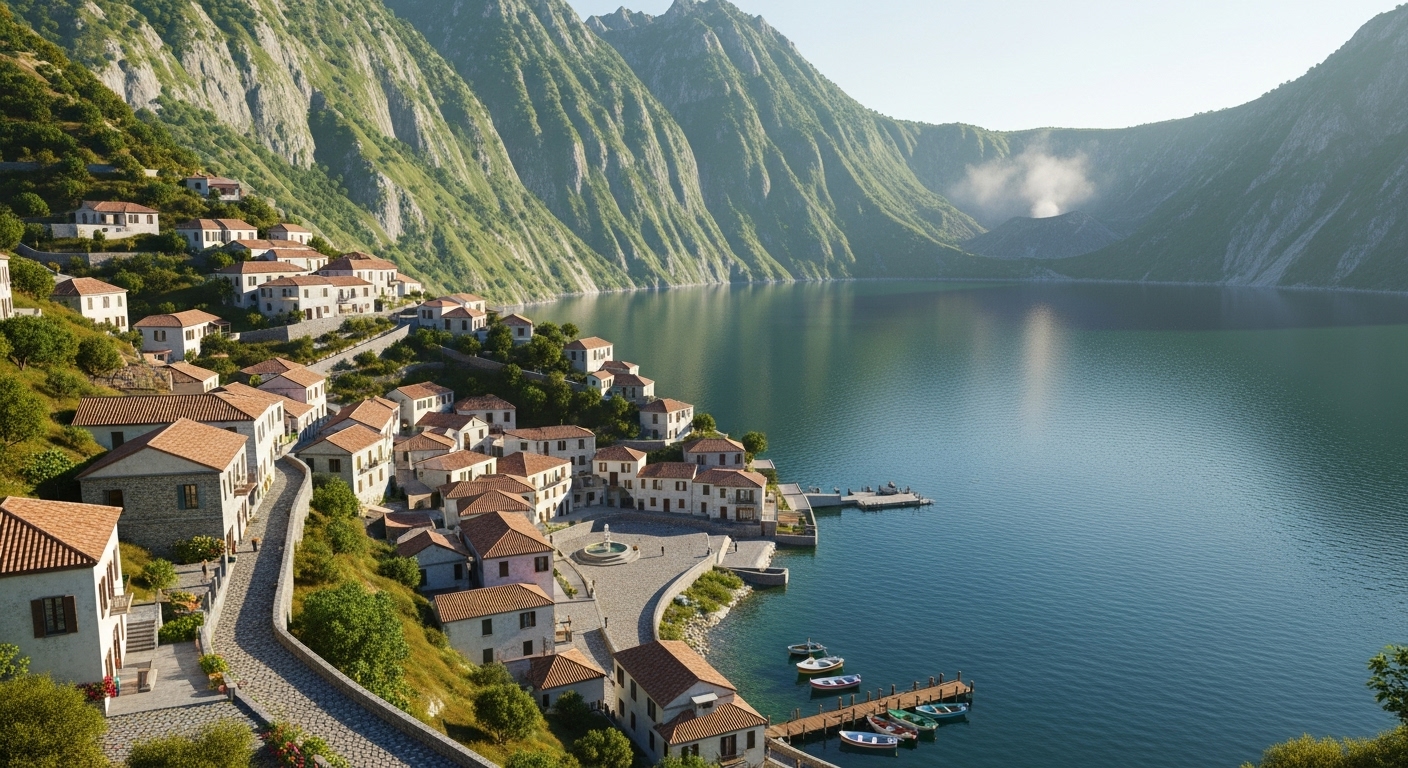
Hidden towns inside crater lakes feel like something pulled straight from a fantasy novel. Calm waters, steep crater walls, and quiet communities tucked inside what were once violent volcanic explosions. These places exist because humans have always adapted to nature’s extremes, even when the land itself was shaped by fire. Today, these rare settlements offer travelers an experience that feels peaceful, surreal, and deeply connected to Earth’s ancient history.
At WentWorld.com, we love uncovering destinations that challenge expectations. Crater lakes usually evoke images of untouched wilderness, not villages, farms, or daily life. Yet across the world, people have built homes inside volcanic craters filled with water, creating some of the most visually striking and culturally unique towns on the planet. Have you ever imagined waking up surrounded by water and cliffs, knowing your home sits inside a volcano?
Exploring hidden towns inside crater lakes invites curiosity. Why did people settle here? How do they manage resources like food, transportation, and safety? Most importantly, would you feel comfortable living in a place formed by ancient eruptions?
Why Crater Lake Towns Exist at All
Volcanic craters often create fertile environments once eruptions cease. Over time, rainwater fills the crater, forming lakes rich in nutrients. The surrounding volcanic soil becomes ideal for agriculture. As a result, early settlers found these areas surprisingly livable. Protection from harsh winds, natural boundaries, and access to freshwater made crater lakes appealing rather than dangerous.
Additionally, isolation played a key role. Communities inside crater lakes often developed strong cultural identities due to limited outside contact. This isolation fostered traditions, languages, and lifestyles distinct from surrounding regions. Consequently, visiting these towns feels like stepping into a parallel world shaped by geography.
Lake Toba, Indonesia: Life Inside a Supervolcano
Indonesia is home to one of the most famous hidden towns inside crater lakes. Lake Toba, the world’s largest volcanic crater lake, formed after a massive supereruption around 74,000 years ago. At its center lies Samosir Island, a large landmass hosting multiple towns and villages surrounded entirely by the lake.
Samosir is not just a settlement; it is a cultural heartland for the Batak people. Traditional houses, rituals, and music thrive here, preserved through generations. Fertile volcanic soil supports farming, while fishing sustains local livelihoods. The calm lake waters contrast sharply with the violent history that created them.
Travelers can reach Lake Toba via Medan, with regional guidance available through Indonesia Travel. Standing on Samosir Island, many visitors reflect on how life continues inside one of Earth’s most powerful volcanic scars.
Lake Atitlán, Guatemala: Towns Among Volcanoes
Guatemala’s Lake Atitlán is often described as one of the most beautiful lakes in the world. Formed in a massive volcanic crater, the lake is surrounded by towering volcanoes and home to several towns along its shores. While the towns sit on the inner edges rather than the lake’s center, they remain fully enclosed within the crater environment.
Villages such as Panajachel, San Juan La Laguna, and Santiago Atitlán showcase vibrant Mayan culture. Each town maintains its own traditions, clothing styles, and languages. The crater walls create a sense of enclosure, making the lake feel like a world of its own.
The region’s volcanic soil supports coffee farming and agriculture, while the lake itself remains central to daily life. Information for visitors is available via Visit Guatemala.
Lake Bolsena, Italy: Ancient Life Inside a Volcanic Basin
Italy offers a quieter example of hidden towns inside crater lakes at Lake Bolsena. This volcanic lake, formed over 370,000 years ago, now hosts several historic towns along its inner rim, including Bolsena and Montefiascone. Over time, the once-active volcano transformed into a serene setting for human settlement.

The lake’s calm waters and fertile surroundings supported Etruscan and Roman communities. Today, medieval architecture, narrow streets, and lakeside promenades define life here. The volcanic origin is subtle but ever-present, influencing soil quality and local agriculture.
Travelers exploring central Italy can learn more through Italia.it, which highlights the region’s historical and natural significance.
Lake Taupō, New Zealand: Settlements on a Volcanic Giant
New Zealand’s Lake Taupō sits within a massive volcanic caldera created by one of the most powerful eruptions in recorded history. The modern town of Taupō lies along the lake’s edge, entirely enclosed by the crater landscape. Although the eruption occurred nearly 1,800 years ago, geothermal activity remains visible nearby.
Residents live with an awareness of the lake’s volcanic origin, yet daily life feels peaceful. Tourism, fishing, and outdoor activities thrive. The region balances natural beauty with geological significance, reminding visitors that calm surfaces often hide dramatic pasts.
Official travel guidance is available through New Zealand Tourism.
How Daily Life Works Inside Crater Lakes
Life in hidden towns inside crater lakes revolves around adaptation. Transportation often depends on boats or limited road access. Agriculture benefits from nutrient-rich volcanic soil, while fishing provides consistent food sources. Communities develop strong local economies because isolation encourages self-sufficiency.
Safety planning also plays a role. Volcanic monitoring, early warning systems, and evacuation routes are essential, especially in regions with active or dormant volcanoes. Despite this, residents often express deep attachment to their surroundings, viewing the crater not as a threat but as a home.
Would you feel safer living surrounded by water and crater walls, or would the isolation make you uneasy?
Cultural Identity Shaped by the Crater
Geography strongly influences culture in these towns. Festivals, myths, and spiritual beliefs often reference the lake or volcano. Many communities view the crater as sacred, believing it protects them or provides life-sustaining resources.

This deep connection to the land fosters respect for nature. Visitors frequently notice how traditions emphasize balance rather than dominance over the environment. As a result, hidden towns inside crater lakes feel harmonious rather than restrictive.
Why These Towns Fascinate Travelers
Hidden towns inside crater lakes captivate travelers because they represent survival, adaptation, and beauty born from destruction. These settlements remind us that even the most violent natural events can create spaces for life to flourish.
Walking through these towns feels different. The quiet water, enclosed landscapes, and awareness of geological history encourage reflection. Travelers often leave with a renewed appreciation for how humans coexist with powerful natural forces.
Have you ever visited a town inside a crater lake, or is it now on your travel bucket list? Which destination fascinates you most, and why? We would love to hear your thoughts and experiences.
For more unique travel stories and hidden destinations, follow WentWorld.com on our social media platforms. We share inspiring journeys, rare places, and stories that go beyond the usual travel guides.
Catch up on the top stories and travel deals by subscribing to our newsletter!