Cities that host annual flower carpet festivals offer one of the most breathtaking urban experiences in the world. For a few magical days each year, ordinary streets, squares, and plazas disappear beneath millions of fresh flowers arranged into massive living artworks. These floral carpets are not just decorative displays. They represent tradition, community effort, cultural identity, and a deep appreciation for nature.
At WentWorld.com, we love uncovering experiences that feel almost unreal, and cities that host annual flower carpet festivals fit perfectly into that category. Imagine walking through a city where the ground beneath your feet is covered in vibrant petals instead of stone. Have you ever seen a city street completely transformed into a work of art made entirely from flowers?
These festivals combine craftsmanship, teamwork, and creativity. Artists, volunteers, and local communities work together for months to prepare designs that only last a few days. Their temporary nature makes them even more special, reminding us to slow down and appreciate beauty while it exists.
Why Flower Carpet Festivals Exist
Flower carpet festivals often originate from religious celebrations, historical events, or seasonal harvest traditions. Over time, they evolved into large-scale cultural festivals that attract visitors from around the world. Flowers symbolize renewal, joy, and unity, making them powerful tools for public celebration.
Unlike permanent monuments, flower carpets are meant to fade. This impermanence teaches appreciation and mindfulness. Cities that host annual flower carpet festivals embrace this idea, turning streets into short-lived masterpieces that live on through memory and photography.
Brussels, Belgium: The World’s Most Famous Flower Carpet
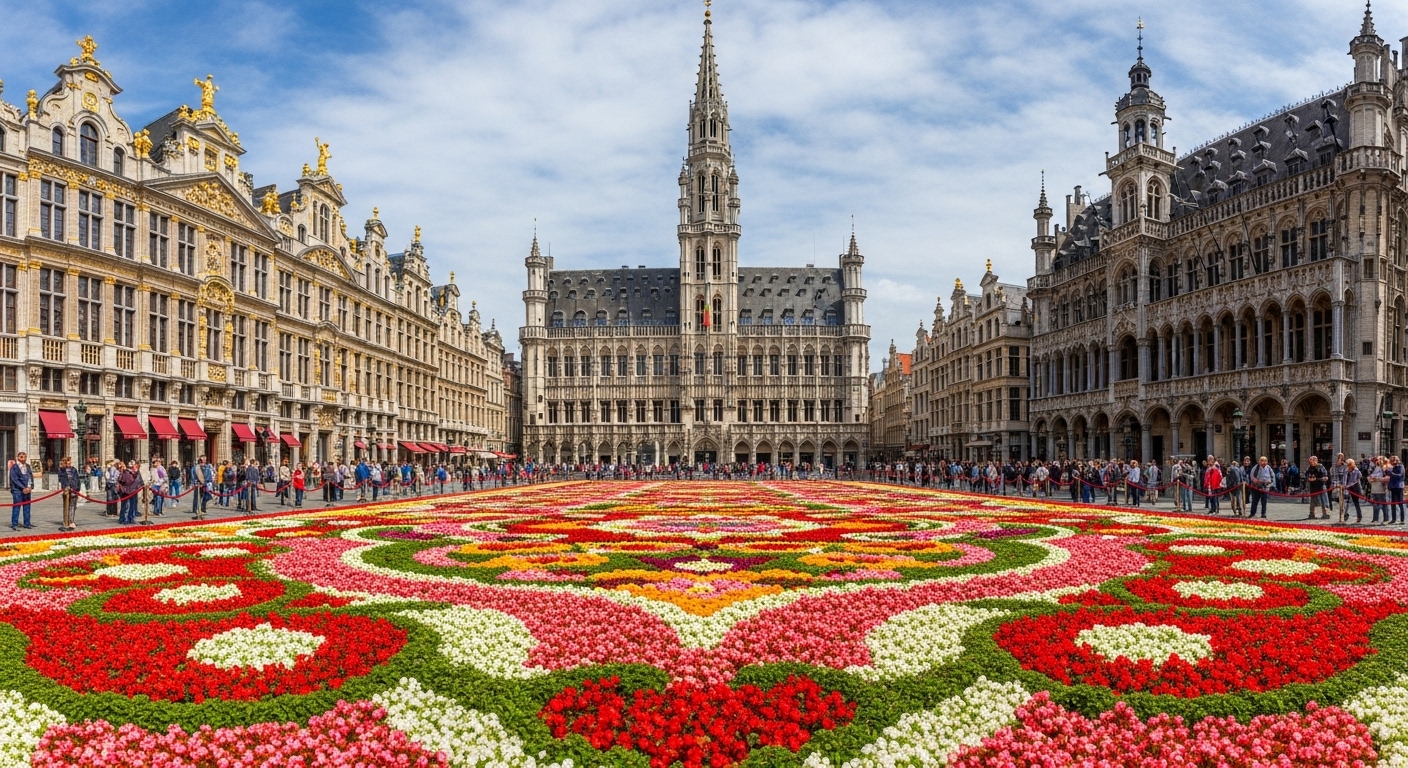
Brussels is home to one of the most iconic flower carpet festivals in the world. Every two years, the Grand Place is covered with over 600,000 begonias arranged into intricate patterns. This tradition began in 1971 and has since become a symbol of Belgian artistry and horticultural excellence.
The design changes each year, often reflecting cultural themes or international influences. According to Visit Brussels, the entire carpet is assembled in just a few hours by hundreds of volunteers. The result is a stunning floral mosaic surrounded by historic architecture.
Would you travel just to see a city square completely covered in flowers?
Infiorata di Genzano, Italy: Floral Storytelling
In Italy, the town of Genzano di Roma hosts the Infiorata festival, where streets are decorated with detailed flower carpets depicting religious scenes, folklore, and artistic motifs. This tradition dates back to the 18th century and remains one of Italy’s most cherished floral celebrations.
Local artists carefully place petals by hand, transforming entire streets into open-air galleries. The festival reflects Italy’s deep connection to art, religion, and community. More details about this tradition can be found via Visit Lazio.

Madeira, Portugal: A Celebration of Spring
Madeira’s Flower Festival takes place every spring, filling the streets of Funchal with elaborate floral carpets, parades, and displays. While the festival includes floats and performances, the flower carpets remain one of its most admired elements.
These carpets symbolize hope and renewal, especially significant after winter months. According to Visit Madeira, thousands of flowers are used each year, attracting visitors from across Europe and beyond.
Hasselt, Belgium: A Smaller Yet Stunning Display
Beyond Brussels, other Belgian cities like Hasselt also host flower carpet events. These festivals may be smaller in scale but remain rich in detail and local pride. Streets and town squares are decorated with floral patterns inspired by regional heritage.
These events highlight how cities that host annual flower carpet festivals can range from major capitals to smaller towns, all united by creativity and community participation.

Guanajuato, Mexico: Floral Streets During Festivals
In parts of Mexico, flower carpets appear during religious festivals such as Corpus Christi and Holy Week. Cities like Guanajuato decorate streets with petals, seeds, and colored sawdust, blending flowers with other natural materials.
These carpets guide religious processions and serve as offerings of devotion. The tradition reflects how flower carpets can carry deep spiritual meaning while remaining visually stunning.
How These Carpets Are Created
Creating a flower carpet is a race against time. Teams begin with detailed sketches, marking outlines on streets before placing petals by hand. Flowers are often grown specifically for the event, ensuring freshness and color consistency.
Volunteers work through the night to complete the designs before sunrise. By the time visitors arrive, streets have transformed into vibrant masterpieces. Knowing how much effort goes into these displays makes witnessing them even more meaningful.
The Role of Community
Cities that host annual flower carpet festivals rely heavily on community involvement. Residents volunteer their time, donate flowers, and help preserve traditions passed down through generations. Schools, artists, and families all play roles in preparation.
This shared effort strengthens community bonds and fosters pride. For locals, the festival is not just about tourism but about identity and belonging.
Why Travelers Are Drawn to Flower Carpet Festivals
Flower carpet festivals appeal to travelers seeking beauty, culture, and authenticity. Unlike permanent attractions, these events feel intimate and rare. Missing them means waiting another year.
Travelers often describe a sense of wonder when walking across streets transformed into living art. The blend of fragrance, color, and craftsmanship creates an experience that photos can’t fully capture.
Challenges of Preserving Temporary Art
Weather poses a constant challenge. Rain, wind, or heat can damage delicate petals. Cities must plan carefully, monitoring forecasts and adjusting schedules. Despite these risks, festivals continue, proving how deeply communities value these traditions.
Would you still create something so beautiful knowing it will disappear in days?
The Emotional Impact of Floral Streets
There is something profoundly moving about walking on flower-covered streets. It slows people down. Conversations become quieter. Photos become more thoughtful. Cities that host annual flower carpet festivals temporarily change how people interact with public space.
These festivals remind us that cities are not just concrete and steel. They can bloom, even briefly.
Have you ever attended a flower carpet festival, or is there one you dream of seeing? Which city’s floral streets impressed you the most? Share your thoughts and travel experiences with us.
For more stories about unique festivals, cultural wonders, and extraordinary urban experiences, follow WentWorld.com on our social media platforms and stay inspired.
Catch up on the top stories and travel deals by subscribing to our newsletter!