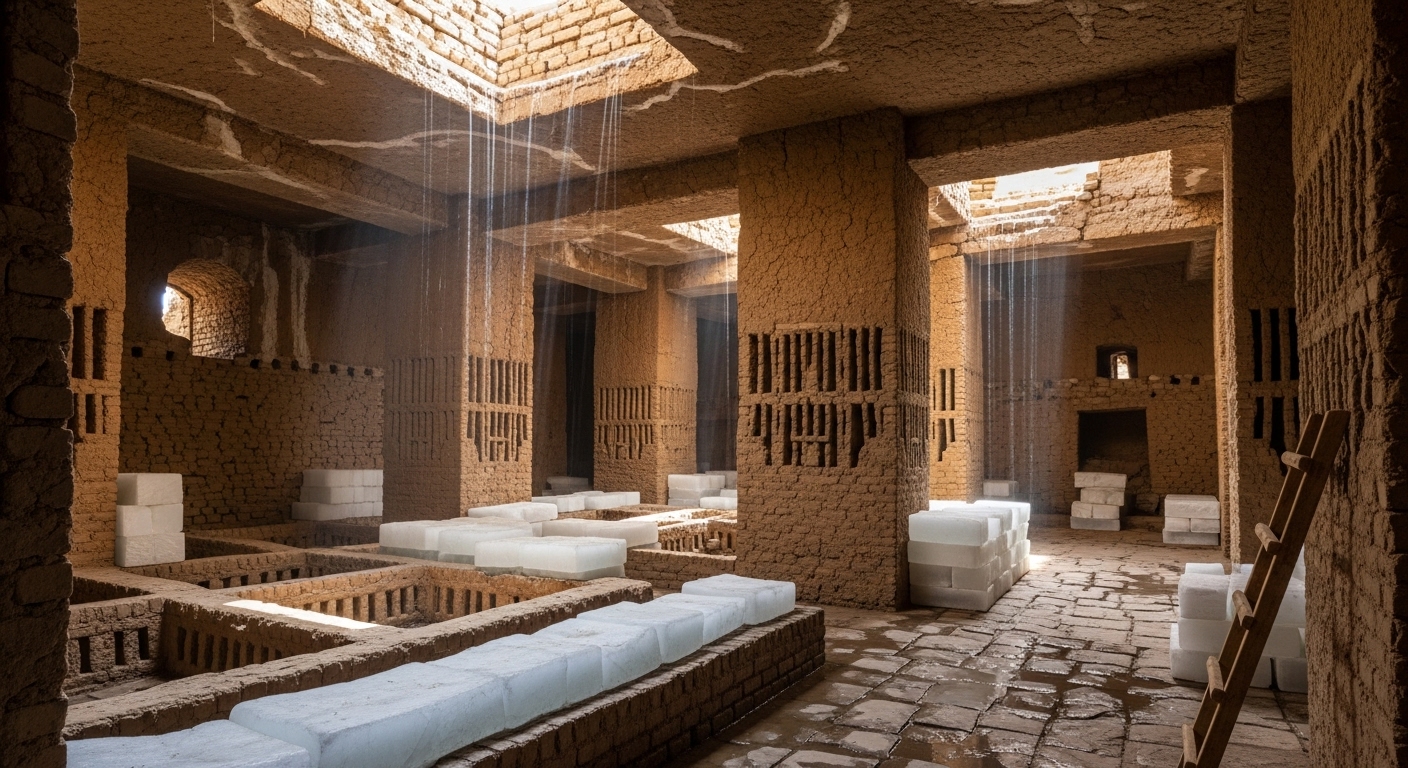
When we think of deserts, ice is usually the last thing that comes to mind. Endless sand, blazing sun, and scorching temperatures seem incompatible with anything frozen. Yet history tells a very different story. Across the world, several desert villages with ice storage architecture from centuries ago developed brilliant systems to produce, store, and preserve ice long before electricity existed.
At first, this sounds almost impossible. How could ice survive in places where summer temperatures soar above 40°C? However, ancient engineers, builders, and villagers understood airflow, insulation, evaporation, and thermal mass far better than we often assume. As a result, they created structures that kept ice frozen for months, even through brutal desert heat.
So how did these civilizations do it? And why are these ancient cooling systems still relevant today? Let’s explore the desert villages where human ingenuity outsmarted the climate centuries ago.
Why Ice Storage Was Essential in Desert Regions
In arid regions, ice was not a luxury—it was survival technology. First, ice preserved food longer in extreme heat. Second, it provided cooling for living spaces. Third, it helped store medicines and cool drinking water. Therefore, desert communities invested heavily in long-term ice storage solutions.
Because importing ice from mountains was costly and unreliable, local innovation became necessary. Consequently, villages designed architectural marvels that used natural physics rather than energy consumption.
How Ancient Ice Storage Architecture Worked
Although designs varied by region, most ice storage structures shared similar principles. Thick mud-brick or stone walls blocked heat transfer. Underground chambers reduced exposure to sunlight. Windcatchers directed cool air inside. Additionally, evaporative cooling lowered internal temperatures further.
Most importantly, builders positioned these structures carefully. Orientation, depth, and surrounding materials played a crucial role in maintaining freezing conditions.
Desert Villages With Ice Storage Architecture From Centuries Ago
Across the Middle East, Central Asia, and parts of North Africa, several remarkable examples still exist today.
1. Yakhchal Villages of Iran
Perhaps the most famous examples come from Iran, where ancient desert villages built structures called Yakhchals. These massive domed buildings date back over 2,000 years. From the outside, they resemble giant beehives rising from the desert.
Inside, however, lies a deep underground chamber capable of storing ice year-round. During winter nights, villagers froze water in shallow pools. Later, they transferred the ice into the Yakhchal for summer use. Because of thick insulating walls and clever airflow, the ice remained frozen even during extreme heat.
Today, several Yakhchals still stand near Yazd and Kashan. Learn more via Visit Iran.

2. Desert Settlements Around Yazd, Iran
Yazd is often called the world’s first sustainable city. Beyond Yakhchals, desert villages here integrated ice storage into entire urban systems. Windcatchers (badgirs) funneled cool air into ice chambers and homes alike.
As a result, ice storage became part of daily life rather than a separate structure. Even today, Yazd’s architecture influences modern sustainable design worldwide.
3. Ice Houses of Central Asia
In parts of Uzbekistan and Turkmenistan, ancient desert communities built ice houses using thick adobe walls. These villages relied on cold desert nights to freeze water during winter. Later, they stored ice underground for summer months.
Although fewer structures survive today, historical records confirm their widespread use along Silk Road settlements. These villages proved that even trade hubs in harsh climates could maintain food freshness and comfort.
4. Qanats and Ice Storage in Persian Desert Villages
Some desert villages combined ice storage with qanat systems—underground water channels that transported cool groundwater across long distances. Ice chambers connected directly to qanats, allowing cold air and water to circulate naturally.
This integration created microclimates that supported agriculture, storage, and habitation in otherwise hostile environments.
5. North African Desert Ice Chambers
In parts of Morocco and Algeria, historical records describe underground ice pits used by desert villages near mountain ranges. During winter, villagers transported ice down from higher elevations and stored it in insulated chambers.
Although many structures have collapsed, remnants still exist near ancient caravan routes. More regional history can be explored via Visit Morocco.

Why These Structures Worked So Well
The success of these systems relied on understanding physics rather than technology. Thick walls slowed heat transfer. Underground placement stabilized temperatures. Nighttime freezing took advantage of desert temperature swings.
Moreover, builders used locally available materials, making construction sustainable and affordable. In contrast, modern cooling systems often consume massive energy resources.
Lessons for Modern Architecture
Today, architects and climate researchers increasingly study desert villages with ice storage architecture from centuries ago to design energy-efficient buildings. Passive cooling techniques inspired by Yakhchals now appear in eco-friendly projects worldwide.
Instead of fighting the climate, ancient builders worked with it. That philosophy is becoming more important as cities face rising temperatures.
Visiting These Ancient Ice Storage Villages
Travelers interested in architectural history can still visit many of these sites. Airlines such as Emirates and Qatar Airways connect to major hubs near historic desert regions.
Once there, guided tours provide deeper insight into how these structures functioned. Accommodation platforms like Airbnb offer stays near heritage towns.
These ancient ice storage systems remind us that innovation doesn’t always require advanced technology. Instead, it requires observation, patience, and respect for natural systems.
Would you expect centuries-old desert villages to outperform modern cooling methods? Or could these forgotten techniques inspire future solutions? Follow us on our social media platforms for more forgotten engineering marvels, hidden travel stories, and fascinating destinations from around the world.
Catch up on the top stories and travel deals by subscribing to our newsletter!