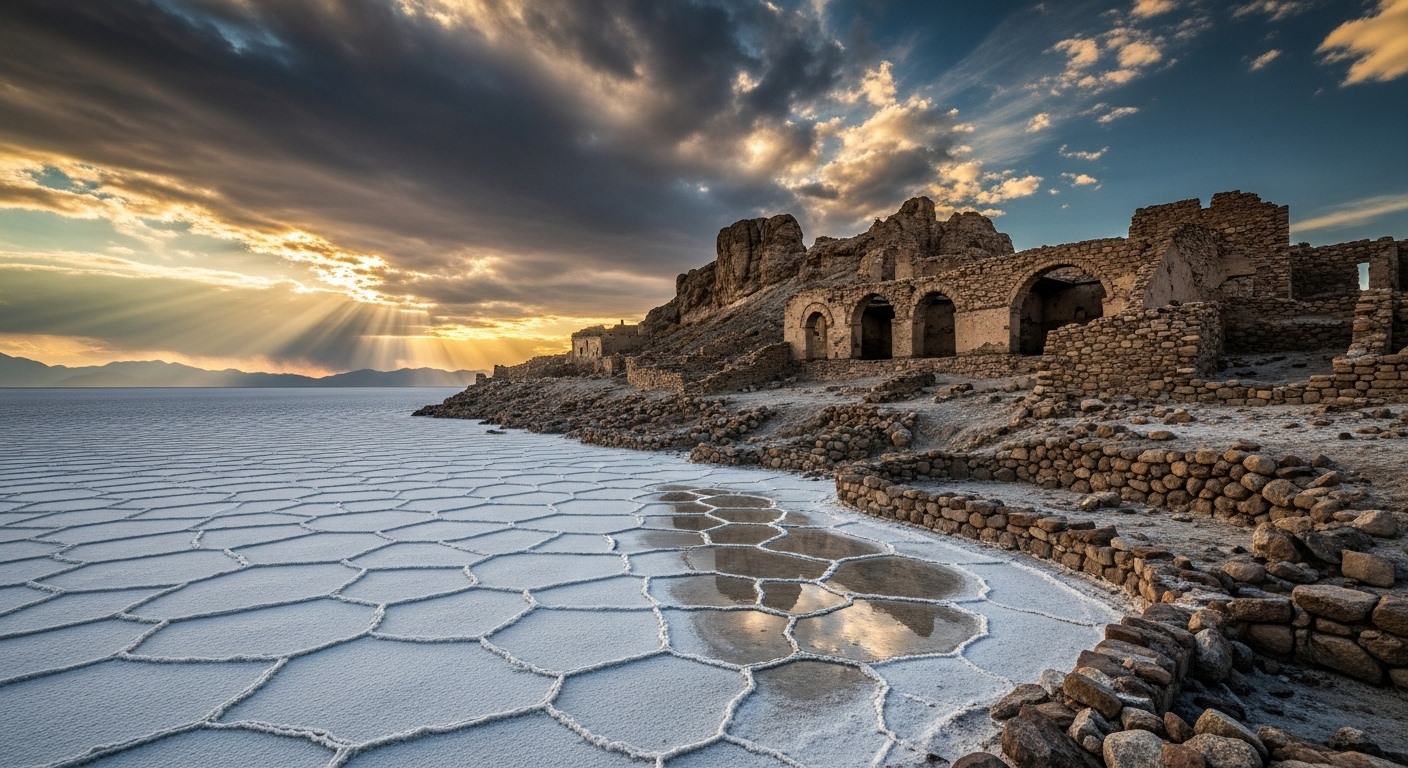
Ancient cities built on salt flats may sound impossible at first. Salt flats are harsh, reflective, waterless, and seemingly inhospitable. Yet history tells a different story. Across continents, ancient civilizations not only survived on salt flats but turned these challenging landscapes into strategic, prosperous urban centers. These cities stand as proof that human ingenuity can flourish even in the most unforgiving environments.
At WentWorld.com, we love uncovering places where geography and human ambition collide. Ancient cities built on salt flats reveal how early societies adapted to extreme conditions using intelligence, trade, and engineering rather than modern technology. Have you ever wondered why anyone would choose to build a city on a vast sheet of salt?
Salt was once more valuable than gold in many cultures. It preserved food, supported trade, and powered economies. Building cities on or near salt flats often meant controlling one of the world’s most essential resources.
Why Salt Flats Attracted Ancient Civilizations
Salt flats formed natural trade hubs long before modern transportation existed. Caravans crossed these flat expanses easily, allowing goods to move efficiently across regions. Cities built near salt flats often became commercial centers, connecting distant civilizations.
Salt itself was currency. Ancient states taxed it, traded it, and fought wars over it. Settlements near salt flats controlled production and distribution, giving them economic power and political influence.
Additionally, salt flats provided natural defense. The blinding white terrain, lack of water, and extreme temperatures made invasions difficult. For many ancient rulers, the salt flat was both a resource and a protective barrier.
Tiwanaku: The Andean Civilization Near Salar de Uyuni
Near Bolivia’s Salar de Uyuni—the largest salt flat on Earth—lies the ancient city of Tiwanaku. While not built directly on the salt flat, Tiwanaku thrived in its shadow, benefiting from the trade routes and mineral wealth the region offered.
Tiwanaku’s builders mastered agriculture at high altitudes by creating raised fields that retained heat and moisture. These innovations allowed the civilization to flourish despite harsh environmental conditions.
Archaeologists believe salt trade played a major role in Tiwanaku’s expansion. Today, Salar de Uyuni remains one of South America’s most iconic landscapes. More details are available through UNESCO World Heritage.
Timbuktu and the Saharan Salt Routes
Timbuktu is often remembered as a city of gold and knowledge, but salt was just as crucial to its success. The city thrived along trans-Saharan trade routes that crossed vast salt flats and deserts.
Salt slabs mined from areas like Taoudenni were transported across salt flats by camel caravans to Timbuktu. These slabs were exchanged for gold, manuscripts, and textiles.
The city’s location near salt-rich desert zones made it one of the most powerful trade centers in medieval Africa. Learn more about Timbuktu’s historical importance at Encyclopaedia Britannica.
Ancient Salt Cities of the Iranian Plateau
On the Iranian Plateau, ancient cities developed near salt flats such as Dasht-e Kavir. These cities relied on sophisticated water management systems called qanats to survive.
Salt mining supported local economies, while flat terrain enabled long-distance trade across Persia. Merchants transported salt, spices, and silk through these regions, connecting East and West.
Despite extreme heat and limited water, these settlements persisted for centuries, demonstrating remarkable environmental adaptation.

Uyuni Region Settlements and Indigenous Knowledge
Indigenous communities around the Uyuni salt flat have lived in harmony with the salt landscape for generations. Their settlements relied on salt harvesting, llama caravans, and seasonal migration.
Homes were often constructed using salt blocks themselves, creating insulation against extreme temperatures. This tradition continues today in small villages surrounding the salt flat.
Salt was not just an economic resource but a cultural foundation.
China’s Ancient Salt Cities
In ancient China, salt production shaped entire cities. Places like Zigong became powerful urban centers due to underground salt wells and brine extraction.
Salt taxes funded imperial projects, armies, and infrastructure. Cities near salt flats and salt springs held immense strategic value.
The importance of salt in Chinese civilization is well documented by institutions such as China Highlights.
Life Challenges in Ancient Cities Built on Salt Flats
Living on salt flats was never easy. Fresh water was scarce, temperatures were extreme, and soil was unsuitable for farming. Ancient cities overcame these obstacles through trade, engineering, and social organization.
Water was transported or stored carefully. Food often came from distant regions. Salt wealth financed these logistics, allowing cities to survive where others could not.
Would modern cities survive with such limited resources?
Architecture Adapted to Salt Landscapes
Buildings in ancient salt-flat cities were designed to handle intense sunlight and temperature swings. Thick walls, reflective materials, and narrow streets helped regulate heat.
Some structures incorporated salt directly into construction, taking advantage of its insulating properties. These designs reveal deep environmental understanding.
Why Many Salt Flat Cities Declined
Climate shifts, trade route changes, and political instability caused many salt-based cities to decline. When alternative trade routes emerged or salt lost its monopoly value, cities lost their economic foundation.
However, their ruins remain powerful reminders of human adaptability and ambition.

Visiting Ancient Salt Flat Cities Today
Many ancient salt flat cities and their remains are now major tourist attractions. Visitors explore ruins, salt deserts, and nearby museums to understand how civilizations once thrived there.
Responsible tourism is essential to protect these fragile environments. Travelers should respect local communities and conservation guidelines.
Why These Cities Matter Today
Ancient cities built on salt flats teach us about sustainability, resilience, and resource management. They show that thriving doesn’t require abundance, only innovation.
At WentWorld.com, we believe these places challenge modern assumptions about where cities can exist.
Would you visit an ancient city built on a salt flat? Which one fascinates you most? Share your thoughts, experiences, or questions with us—we love learning from fellow explorers.
Follow WentWorld.com on our social media platforms for more stories about extraordinary places, forgotten civilizations, and destinations that redefine how humans live.
Catch up on the top stories and travel deals by subscribing to our newsletter!