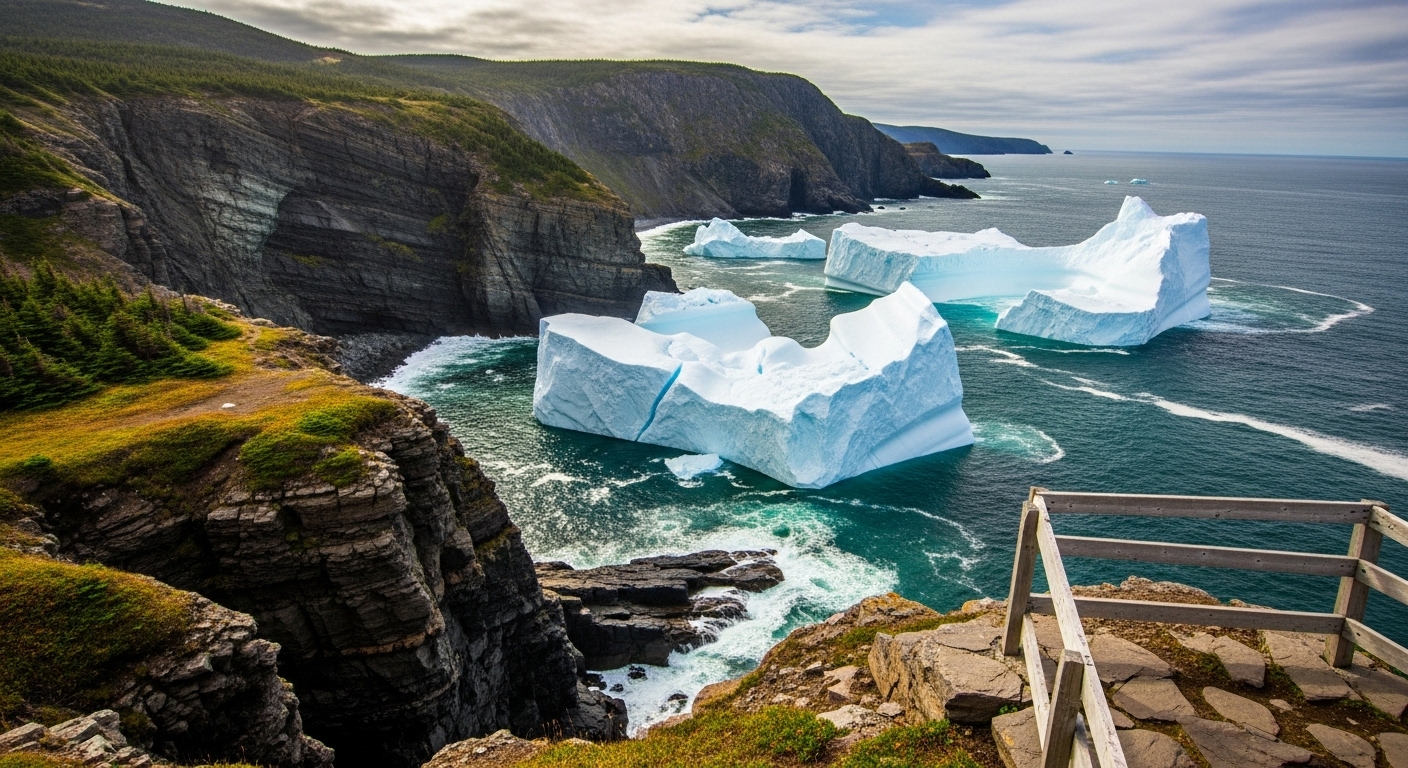
Picture a sparkling sea dotted with massive, luminous icebergs drifting gracefully past rugged cliffs. If this scene excites you, you’re not alone. Iceberg Alley voyages: shore spots for safe viewing allow travelers to experience this spectacle without venturing into dangerous waters.
Iceberg Alley, a stretch of Atlantic coastline in eastern Canada, attracts icebergs that break off from Greenland’s glaciers. Each spring, these floating giants make their way south, creating a natural parade visible from select coastal towns. The best part? You don’t need a ship to get close — safe shore locations provide incredible vantage points.
Have you ever wondered how massive chunks of ice can drift silently along the ocean, visible from a quiet coastline? Or what it feels like to see blue-tinged ice, shaped over centuries, reflecting sunlight against the horizon? Let’s explore the top destinations for iceberg viewing along this famous corridor.
Why Iceberg Alley is a Must-See
Iceberg Alley spans the Labrador Sea down to Newfoundland’s eastern coast. Each year, thousands of icebergs arrive, offering a fleeting window to witness nature’s frozen artistry. Shore-based viewing provides safety while still allowing you to marvel at the scale, color, and movement of these floating giants.
Visitors are often amazed at the sheer size — some icebergs tower higher than multi-story buildings. Shore access also allows photographers and travelers to capture these sights without the need for guided boat tours.
Twillingate, Newfoundland: The Iceberg Capital
Known as the “Iceberg Capital of the World,” Twillingate offers multiple coastal lookout points ideal for shore-based observation. The town hosts iceberg festivals each spring and offers guided walking tours along cliffside trails.
Twillingate’s visitor center provides information about iceberg origins and safe viewing tips. Learn more via Twillingate Tourism.
St. Anthony, Newfoundland: Northern Vantage Points
St. Anthony lies closer to the icebergs’ arrival point from Greenland. From elevated shore points, travelers can safely view massive icebergs as they drift past the coast.
The town also offers interpretive signs and binocular stations, making it easy for families and casual travelers to enjoy the spectacle. For details on travel and accommodations, check Newfoundland & Labrador Tourism.
Green Island Cove, Labrador: Remote and Majestic
Green Island Cove is less frequented but offers dramatic iceberg vistas. The area features gently sloping cliffs that provide safe observation points with minimal risk of falling or being too close to the water.

Hiking trails along the coast lead to multiple lookout spots, making it a favorite for adventurous photographers and nature enthusiasts.
Quirpon Island, Newfoundland: Lighthouse Views
Quirpon Island combines iceberg viewing with a historic lighthouse setting. From the shore, visitors can see icebergs gliding past, framed by the Atlantic and the lighthouse’s architecture.
Guided tours often include local history, wildlife spotting, and cultural anecdotes, making this stop both scenic and educational. More information can be found at Newfoundland & Labrador Tourism.
Fogo Island, Newfoundland: Artistic Shorelines
Fogo Island is renowned for its combination of traditional settlements and modern architecture. Shore spots here provide safe access to iceberg views while also offering cultural experiences, like local art studios and hospitality houses.
The icebergs appear especially dramatic against the island’s rugged coastline, offering endless photographic opportunities. Learn more at Fogo Island Inn.
Why Shore-Based Viewing is the Best Choice
While boat tours can bring you closer to icebergs, they also carry inherent risks such as unstable ice, rough waters, and sudden weather changes. Shore-based observation provides safety, accessibility, and comfort while still offering breathtaking views.
Families, solo travelers, and photographers alike benefit from elevated lookouts, walking trails, and guided shore tours. You can take your time capturing shots, enjoy snacks, or simply sit and watch the iceberg parade.
Best Time to Visit Iceberg Alley
Iceberg season typically runs from March through June. Early season visitors may see smaller bergs or ice floes, while peak season in May often delivers the largest, most photogenic icebergs.
Weather can be unpredictable, so dressing in layers, bringing waterproof gear, and checking local conditions are essential. Platforms like Booking.com list nearby accommodations that make shore access convenient.
Tips for Photographing Icebergs Safely
Use a zoom lens to capture detail without approaching water edges. Polarizing filters can reduce glare and enhance blue tones. Early morning or late afternoon often provides the best lighting.
Respect local safety signs and avoid climbing rocks or getting too close to the shoreline, as currents can be dangerous.

Preserving Iceberg Alley
Climate change affects iceberg numbers, size, and timing. Visiting responsibly, following local guidelines, and supporting conservation efforts helps ensure that future travelers can enjoy these natural wonders.
Iceberg Alley voyages: shore spots for safe viewing are a perfect example of enjoying extreme natural beauty responsibly, combining adventure, safety, and awe-inspiring scenery.
Have you ever seen icebergs from shore or dreamed of visiting Iceberg Alley? Which coastal lookout would you choose for your first viewing? Share your thoughts and travel plans!
For more extraordinary natural spectacles, hidden gems, and adventure travel ideas, follow WentWorld on our social media platforms and keep exploring beyond the ordinary.
Catch up on the top stories and travel deals by subscribing to our newsletter!