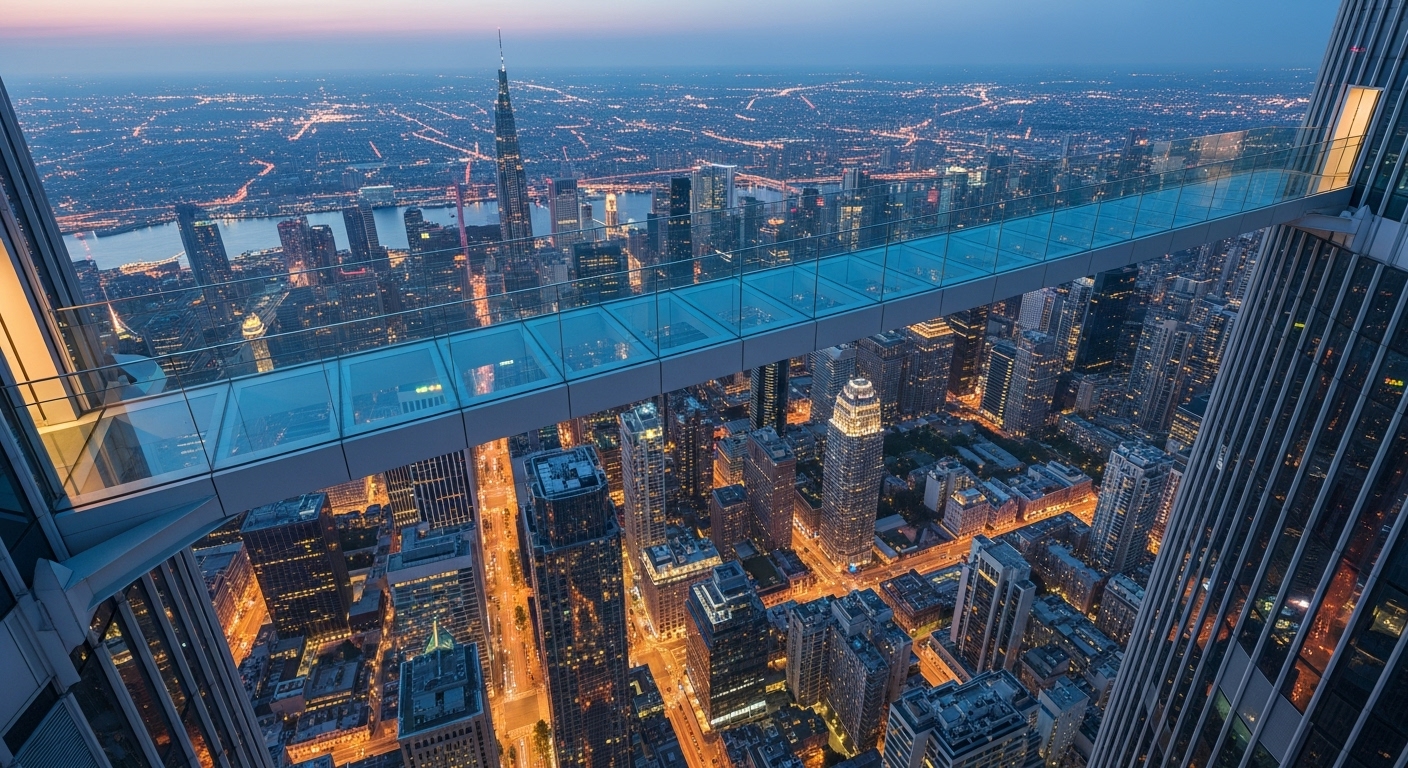
Imagine crossing from one skyscraper to another without ever touching the street below. In several global cities, this futuristic experience is already a reality. Cities with skybridges linking skyscrapers have transformed how people move, work, and even socialize in dense urban environments.
Skybridges were once considered architectural experiments. Today, they serve practical purposes while adding drama to city skylines. They connect offices, hotels, shopping centers, and residential towers, allowing people to move efficiently while enjoying panoramic views.
Would you feel excited or nervous walking dozens of floors above traffic? And do these elevated pathways change how we experience cities? Let’s explore the places where skybridges have become part of everyday urban life.
Why Cities Are Building Skybridges
As cities grow taller and denser, ground-level space becomes crowded. Skybridges offer a solution by shifting pedestrian movement upward. They reduce congestion, improve accessibility, and create sheltered walkways protected from weather.
Architects also use skybridges to enhance structural stability and energy efficiency. In many cases, these bridges allow buildings to share resources such as climate control and emergency access.
In cities with skybridges linking skyscrapers, urban life expands vertically rather than horizontally.
Kuala Lumpur: A Skybridge Icon
Kuala Lumpur is home to one of the world’s most famous skybridges: the Petronas Twin Towers Skybridge. Suspended between the towers, it allows visitors to walk high above the city while enjoying uninterrupted views.
The bridge also serves a safety function, enabling evacuation between towers if needed. Malaysia’s tourism board Malaysia.travel highlights the Petronas Skybridge as a must-see attraction.
This structure helped popularize skybridges as both functional and symbolic features.
Singapore: Integrated Urban Connectivity
Singapore has embraced skybridges as part of its integrated urban planning. Developments like Marina Bay Sands feature elevated walkways connecting towers, hotels, and entertainment spaces.
These skybridges often include gardens, observation decks, and leisure areas. According to Visit Singapore, elevated connectivity improves pedestrian flow while enhancing the city’s green design goals.
Here, skybridges feel less like shortcuts and more like destinations.

Bangkok: Navigating Above the Streets
Bangkok’s intense traffic congestion led to creative solutions above ground. Skywalks and skybridges connect shopping malls, office towers, and transit hubs across busy roads.
Areas like Siam and Sukhumvit rely heavily on elevated walkways to keep foot traffic moving smoothly. Tourism Thailand TourismThailand.org often features these networks as part of the city’s modern infrastructure.
For visitors, these skybridges provide safe, shaded routes with surprising city views.
Hong Kong: Vertical Living at Its Peak
Hong Kong’s limited land has pushed development upward. Skybridges connect commercial towers, hotels, and residential complexes, especially in Central and Admiralty districts.
Some bridges link directly to elevated parks and transit stations, creating multi-level pedestrian ecosystems. Hong Kong Tourism Board DiscoverHongKong.com highlights how these systems improve walkability.
In Hong Kong, walking above street level often feels more efficient than staying below.
Shanghai: Futuristic Sky Networks
Shanghai’s skyline features several skybridge-linked skyscrapers, particularly in the Lujiazui financial district. These bridges enhance connectivity between business centers and luxury hotels.
Glass floors and transparent walls add visual drama, making even a short walk feel like an event. China’s official tourism site TravelChina.org.cn showcases these developments as symbols of modern urban design.
The result is a city that feels both fast-moving and visually striking.
How Skybridges Change Daily Life
Skybridges reduce reliance on street crossings, elevators, and vehicles. Office workers move between meetings faster, shoppers avoid heat and rain, and residents enjoy quieter elevated routes.
Many skybridges now include cafés, art installations, and seating areas. This turns them into social spaces rather than simple corridors.
For cities, these bridges reshape how people experience distance and height.
Safety and Engineering Considerations
Building skybridges requires advanced engineering. Designers must account for wind movement, seismic activity, and thermal expansion. Flexible joints allow bridges to move independently from the towers they connect.
Regular inspections and strict safety standards ensure stability. When properly designed, skybridges are as safe as ground-level walkways.
This technical precision allows cities with skybridges linking skyscrapers to function smoothly.

Skybridges as Tourist Attractions
Some skybridges attract visitors as much as observation decks. Glass floors, city panoramas, and dramatic heights make them unforgettable experiences.
Unlike observation decks, skybridges create movement and interaction, offering a dynamic way to engage with cityscapes.
The Future of Elevated Urban Travel
As cities continue to grow vertically, skybridges will likely become more common. Future designs may include green corridors, cycling paths, and smart navigation systems.
Urban planners increasingly view skybridges as essential infrastructure rather than luxury additions.
Would you enjoy commuting through the sky instead of at street level? Which city’s skybridge network fascinates you most? Share your thoughts and experiences.
For more stories about innovative cities, hidden infrastructure, and unusual travel experiences, follow WentWorld on our social media platforms and keep exploring how the world connects.
Catch up on the top stories and travel deals by subscribing to our newsletter!