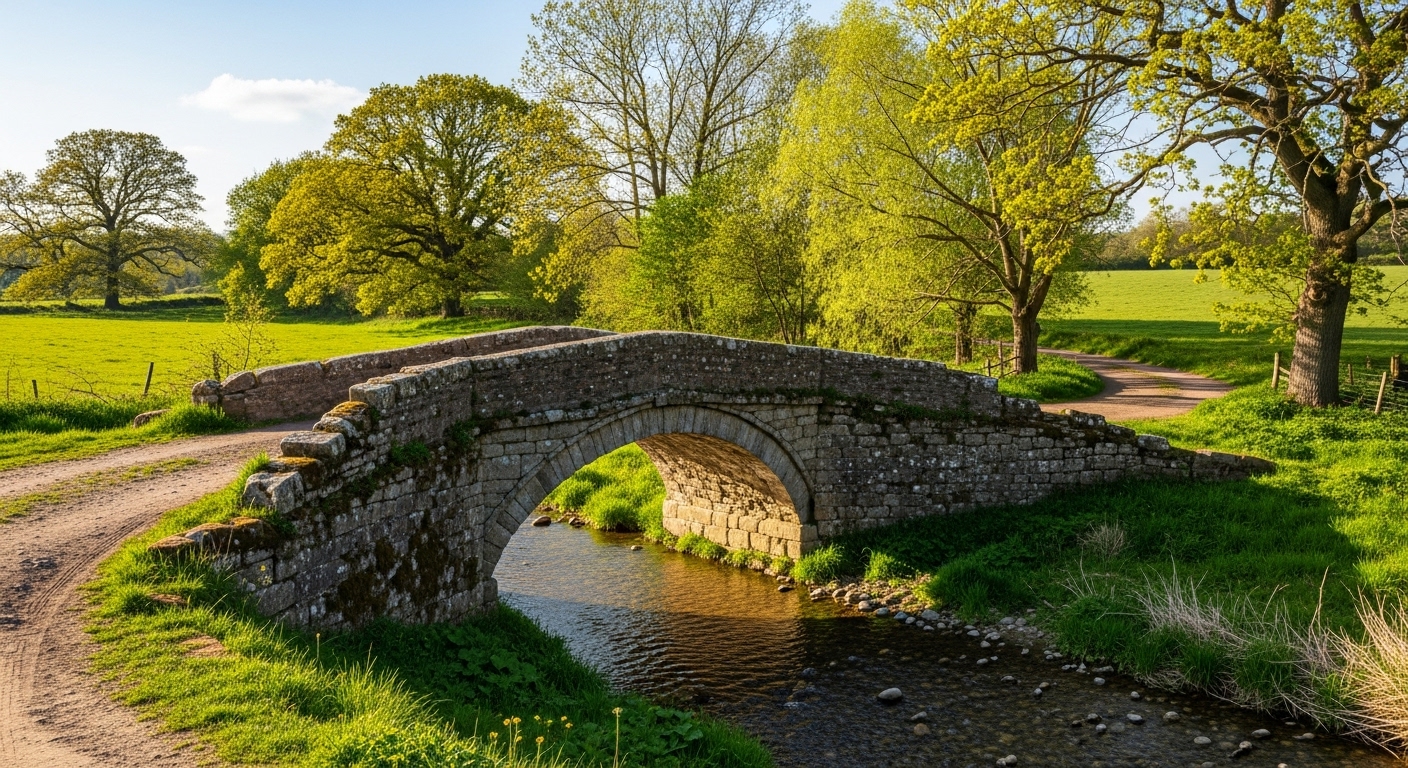
Have you ever been driving or cycling down a quiet country lane and suddenly found yourself crossing a stone bridge that looks centuries old? These moments feel unexpected, almost cinematic. Across the world, ancient stone bridges on country lanes continue to serve everyday travelers while quietly preserving layers of history beneath each step and wheel.
Unlike grand landmarks that demand attention, these bridges blend into their surroundings. Fields stretch on either side, rivers flow gently below, and life continues much as it has for generations. Because of this subtle presence, crossing an ancient bridge often feels more personal than visiting a famous monument.
Why Ancient Stone Bridges Were Built on Rural Routes
Historically, country lanes served as vital trade routes connecting villages, farms, and market towns. Builders constructed stone bridges to ensure year-round passage across streams and rivers. Stone offered durability, especially in regions where wood decayed quickly.
As a result, many of these bridges outlasted the roads themselves. While modern paving replaced dirt paths, the original stone structures remained. Today, they continue to guide travelers along routes shaped by centuries of movement.
England’s Countryside: A Network of Medieval Stone Bridges
England’s rural landscape contains hundreds of ancient stone bridges tucked into rolling countryside. Many date back to medieval times and still carry foot traffic, bicycles, and even cars. Narrow arches and weathered stones tell stories of pilgrims, traders, and farmers who once crossed them daily.
One notable example is Tarr Steps in Exmoor, a prehistoric clapper bridge built from massive stone slabs. Though simple in design, it has endured floods and time itself. Walking across it feels like stepping into a living timeline.
Learn more about historic bridges in England here:
English Heritage
France’s Rural Stone Bridges and Roman Influence
In rural France, ancient stone bridges often trace their origins to Roman engineering. Even small country crossings reflect principles of symmetry, arch strength, and careful stone placement. These bridges connected agricultural regions long before modern infrastructure existed.
Today, cyclists and hikers frequently encounter these structures while exploring back roads. Because traffic remains minimal, travelers can pause to admire moss-covered stones and quiet waterways without interruption.
Explore France’s historic countryside routes here:
France Tourism
Italy’s Stone Bridges Through Vineyards and Hills
Italy’s countryside offers some of the most picturesque examples of ancient stone bridges on country lanes. From Tuscany to Umbria, narrow roads wind through vineyards and olive groves before crossing graceful stone arches.
Many of these bridges date back to Roman or medieval periods. Despite their age, they remain structurally sound thanks to precise stonework. At sunset, warm light enhances their texture, making even a short crossing feel memorable.
For regional travel inspiration, visit:
Italia Tourism

Scotland’s Hidden Stone Crossings
Scotland’s rural stone bridges often appear in the most unexpected places. Tucked between hills or spanning narrow burns, these structures reflect practical design rather than ornamentation. Nevertheless, their simplicity adds to their charm.
Because many lanes remain lightly traveled, these bridges feel untouched. Travelers frequently encounter sheep grazing nearby or mist rising from the water below. Consequently, each crossing feels deeply connected to the surrounding landscape.
Discover Scotland’s countryside heritage here:
Visit Scotland
How These Bridges Shaped Daily Life
For centuries, ancient stone bridges determined how communities functioned. They controlled access to markets, neighboring villages, and religious centers. Without reliable crossings, trade and communication would have suffered.
Even today, their placement influences modern routes. Roads often curve naturally toward these historic crossings, preserving movement patterns established long ago.
Why They Continue to Fascinate Travelers
Travelers feel drawn to these bridges because they represent continuity. Cars, bicycles, and walkers all share the same stone paths once used by horses and carts. This shared use across time creates a sense of connection rarely found elsewhere.
Additionally, their quiet settings encourage reflection. Unlike crowded tourist sites, country lanes offer space to pause and appreciate craftsmanship without distraction.
Preservation and Modern Challenges
Despite their durability, ancient stone bridges face challenges from modern traffic and environmental changes. Increased vehicle weight and extreme weather events place stress on structures never designed for such conditions.
Fortunately, preservation organizations work to protect these bridges. By limiting heavy traffic and maintaining stonework, communities ensure these crossings remain functional for future generations.

Experiencing Them as a Traveler
Exploring ancient stone bridges works best at a slow pace. Walking or cycling allows time to observe details such as tool marks, lichen growth, and arch design. Photographers often find early morning or late afternoon ideal for capturing texture and light.
Travelers should respect local regulations and avoid climbing or altering structures. Preservation depends on mindful visitation.
Why These Bridges Leave Lasting Impressions
Long after trips end, many travelers remember the moment they crossed a quiet stone bridge more clearly than major attractions. The combination of simplicity, history, and landscape creates strong emotional memories.
Because these bridges still serve everyday life, they feel authentic rather than staged. That authenticity gives them lasting appeal.
Have you ever stumbled upon an ancient stone bridge while exploring a country lane? Did it change how you saw the landscape around you? Share your experiences and favorite discoveries in the comments.
If hidden history and slow travel inspire you, follow WentWorld on our social media platforms. We share remarkable places that quietly shape how the world moves.
Catch up on the top stories and travel deals by subscribing to our newsletter!