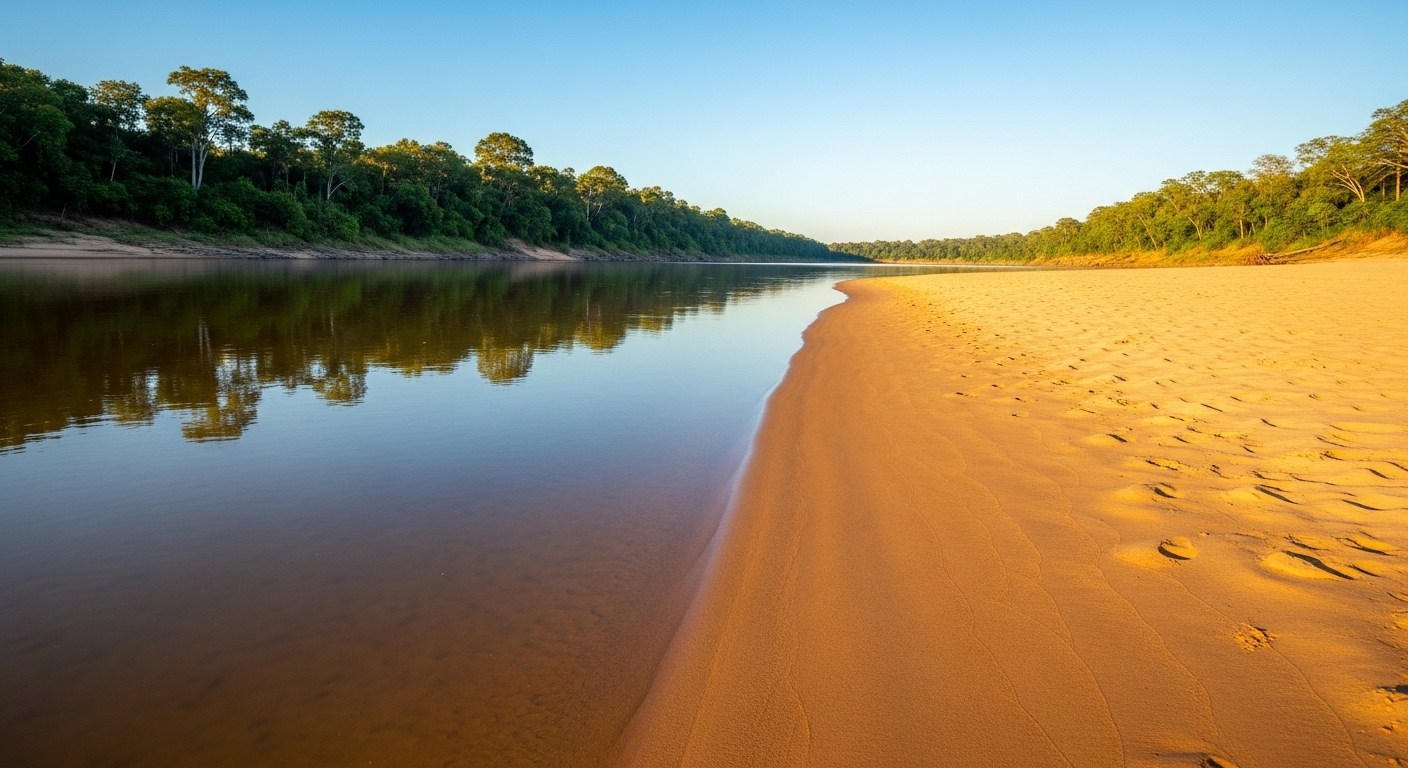
Rivers with seasonal sandbars are one of nature’s quiet surprises. One month, a river flows wide and uninterrupted. The next, pale ribbons of sand rise from the water, forming temporary beaches that feel almost secret. These pop-up landscapes don’t announce themselves with signs or fences. They simply appear — shaped by current, rainfall, and time.
What makes rivers with seasonal sandbars so fascinating is their impermanence. Unlike ocean beaches that remain year after year, these river beaches exist on borrowed time. Visit too early and they’re underwater. Visit too late and they’ve already washed away. Catch them at the right moment, though, and you’ll find some of the most peaceful and unexpected beaches on Earth.
Across continents, travelers are discovering that rivers can offer beach experiences just as magical as coastlines — sometimes even more so. Quiet mornings, warm sand underfoot, slow-moving water, and not a building in sight. No crowds, no resorts, no noise. Just nature doing what it does best.
What Are Seasonal Sandbars and Why Do They Form?
Seasonal sandbars form when rivers slow down enough to deposit sediment instead of carrying it away. During dry seasons or periods of reduced flow, sand settles in shallow areas, gradually rising above the surface. Over weeks or months, these deposits grow large enough to walk on, lounge on, or even camp on.
Once rainfall increases or snowmelt begins upstream, the river gains strength again. Water levels rise, currents intensify, and the sandbars disappear — reshaped or completely erased. That cycle is what gives rivers with seasonal sandbars their fleeting charm.
Unlike man-made beaches, these pop-up shores are shaped entirely by natural forces. No two seasons look exactly the same. A sandbar that appeared last year may be gone forever, while a new one forms somewhere entirely different.
Why River Pop-Up Beaches Feel So Special
There’s something deeply calming about sitting on a beach that didn’t exist a few months ago. Rivers with seasonal sandbars offer solitude in a way few destinations can. Most are accessible only by foot, canoe, kayak, or small boat, which naturally limits crowds.
The water is often calmer than the ocean, making these beaches perfect for wading, floating, or simply dipping your feet in. Families spread blankets, anglers cast lines nearby, and travelers pause longer than expected — not wanting to disturb the moment.
Have you ever found a place that felt like it belonged only to you, even though you knew it didn’t? That’s the feeling many people describe when discovering a river sandbar for the first time.
Famous Rivers With Seasonal Sandbars Around the World
Some rivers with seasonal sandbars have become legendary, while others remain known mostly to locals.
The Missouri River in the United States forms vast sandbars during low-water seasons, especially in areas managed by the National Park Service. These sandbars stretch for hundreds of meters, creating temporary beaches where wildlife and humans briefly share space.
In Brazil, sections of the Rio Tapajós transform into dazzling white-sand beaches during the dry season. Locals refer to these as “Amazonian beaches,” and they rival coastal destinations in beauty. Travelers often plan visits around river cycles, guided by regional insights shared through platforms like Visit Brasil.
Europe has its own hidden gems as well. The Danube River forms seasonal sandbanks in parts of Austria and Hungary, offering sandy resting spots for kayakers and cyclists exploring nearby trails.
How Long Do These Pop-Up Beaches Last?
The lifespan of a sandbar depends on rainfall patterns, upstream dams, snowmelt, and even wind. Some last a few weeks, others several months. Rivers with seasonal sandbars are constantly reshaped, which makes timing everything.
Locals often know when conditions are right. In many regions, seasonal festivals, informal gatherings, or floating cafés emerge alongside sandbars — disappearing just as quietly when water levels rise again.
This raises an interesting question for travelers: would you rather visit a place guaranteed to exist, or one that might vanish before your next chance to return?
Activities You Can Enjoy on River Sandbars
Despite their temporary nature, rivers with seasonal sandbars support a surprising range of activities. Picnicking is the most popular — simple blankets, local food, and long conversations under open skies.
Kayakers and canoeists often use sandbars as rest stops, pulling boats ashore to stretch or eat. In some regions, anglers favor sandbars because they provide access to deeper channels nearby.
In parts of Africa and South Asia, sandbars even support seasonal markets or grazing areas for livestock, reflecting how closely communities adapt to river rhythms.
Environmental Importance of Seasonal Sandbars
These beaches are more than scenic features. Rivers with seasonal sandbars play a crucial role in ecosystems. Many bird species nest on sandbars, relying on their isolation for protection from predators.
Fish use shallow waters around sandbars as breeding grounds, while insects thrive in warm, slow-moving pools nearby. Disturbing these areas can have ripple effects throughout the food chain.
Organizations such as the World Wildlife Fund emphasize responsible river use, encouraging visitors to observe wildlife respectfully and leave no trace.
Planning a Trip Around Seasonal River Beaches
Visiting rivers with seasonal sandbars requires flexibility. Water levels can change quickly, sometimes overnight. Checking local river gauges, weather forecasts, and community updates is essential.
Many travelers combine river beach visits with regional exploration. Flights operated by carriers like Lufthansa or LATAM Airlines connect major hubs to river-rich regions, making access easier than ever.
Once there, guided tours or local outfitters can help visitors find sandbars safely without disturbing sensitive areas.
Safety Considerations You Shouldn’t Ignore
While peaceful, rivers with seasonal sandbars require awareness. Water levels can rise quickly due to upstream rain, dam releases, or snowmelt.
Experienced visitors keep an eye on the river’s edge and avoid camping too close to waterlines. It’s also wise to avoid sandbars after heavy rainfall, even if skies are clear where you are.
Respecting river dynamics ensures these places remain enjoyable for future visitors — and safe for wildlife.
Why These Temporary Beaches Stay With You
There’s a quiet joy in knowing a place won’t last forever. Rivers with seasonal sandbars teach patience and presence. They reward those who slow down, observe patterns, and accept impermanence.
Long after the sand has washed away, the memory remains — the sound of water slipping past the shore, the warmth of sun-heated sand, the feeling of discovering something fleeting and rare.
Have you ever wished you could revisit a moment, not a destination? That’s what these river beaches often become.
Have you encountered a river beach that appeared unexpectedly? Would you plan a trip around something so temporary, or does that uncertainty excite you?
We’d love to hear your thoughts and stories. Travel is richer when experiences are shared, especially ones that exist only for a short time.
If you enjoy discovering places shaped by nature’s rhythms, follow WentWorld on our social media platforms for more hidden wonders, seasonal destinations, and thoughtful travel insights.
Catch up on the top stories and travel deals by subscribing to our newsletter!