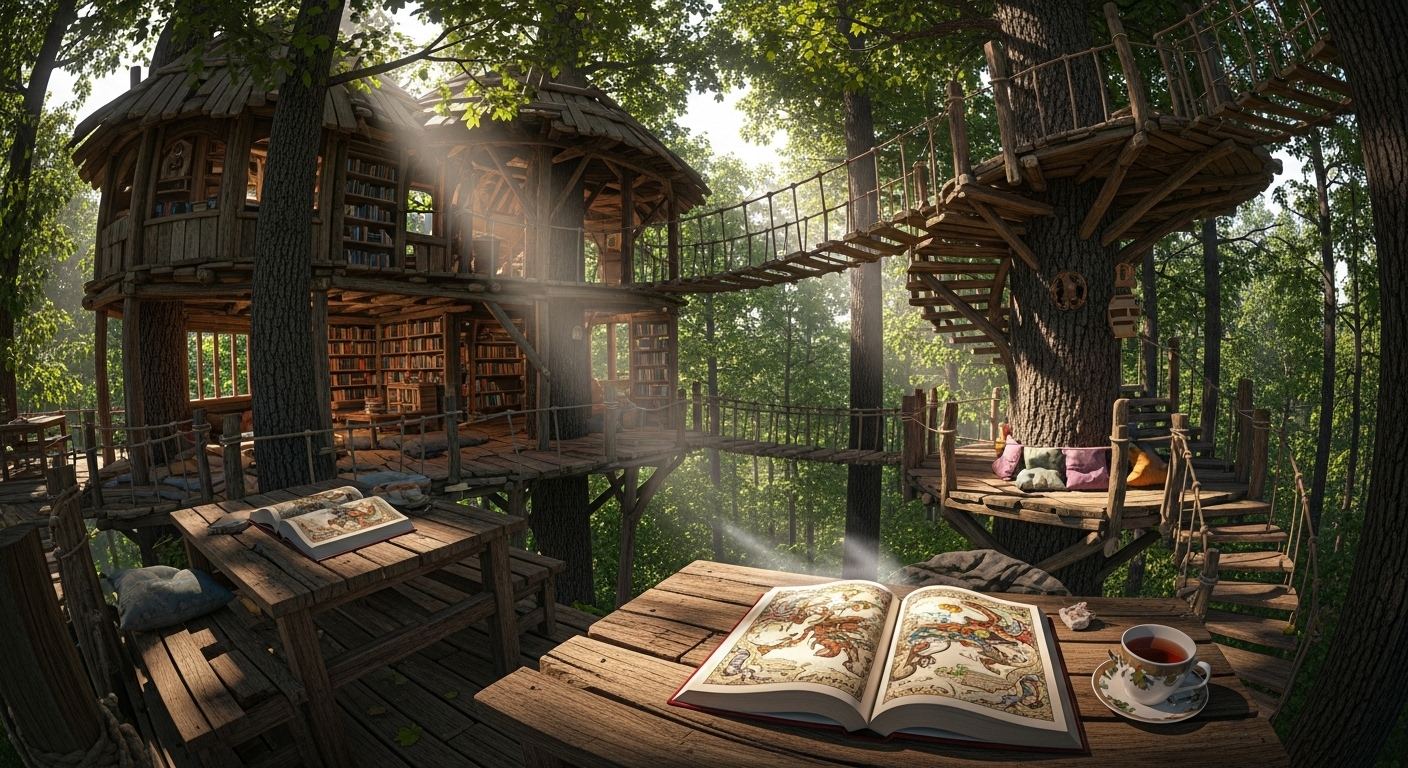
There is something quietly powerful about reading a book while surrounded by trees. The rustle of leaves, filtered sunlight, and earthy scents create a natural calm that no indoor space can replicate. Now imagine taking that experience higher — above the forest floor, among branches and birds. Treetop libraries and forest reading rooms are redefining how and where we read, transforming literature into an immersive outdoor ritual.
These elevated sanctuaries blend architecture, sustainability, and storytelling. Built among trees or deep within forests, they invite readers to slow down, disconnect from digital noise, and reconnect with both nature and imagination. In a world dominated by screens, these spaces feel almost rebellious — and deeply necessary.
Would you choose a quiet desk under fluorescent lights, or a wooden platform where pages turn in rhythm with the wind?
What Makes Treetop Libraries So Special
Treetop libraries are not just buildings placed in forests; they are thoughtfully designed extensions of the environment. Architects often work around living trees rather than removing them, allowing trunks and branches to pass through platforms and walls. The result feels less like a structure and more like a natural hideaway for thought.
Forest reading rooms, on the other hand, may sit closer to the ground but still embrace openness. Glass walls, open-air pavilions, and minimal barriers blur the line between indoor and outdoor reading. Together, treetop libraries and forest reading rooms create spaces where silence is shared with birdsong instead of air conditioners.
Why Reading in Nature Changes the Experience
Reading outdoors affects how we absorb stories. Natural settings reduce mental fatigue, improve focus, and encourage deeper reflection. When surrounded by trees, readers tend to linger longer on paragraphs, reread favorite lines, and feel more emotionally connected to the text.
In treetop libraries and forest reading rooms, this effect is amplified. Height adds perspective — both literally and mentally. Looking out over leaves and sky reminds readers of scale, time, and patience. Stories feel less rushed. Pages turn slower. Thoughts wander productively.
Have you ever noticed how a book feels different when read in silence versus in a place that breathes?
Iconic Treetop Libraries Around the World
In Scandinavia, forest-integrated reading spaces reflect the region’s deep respect for nature. Some Nordic treetop libraries are built entirely from sustainable wood, with reading platforms elevated among pine trees. These spaces are often public, encouraging community reading and quiet reflection. Organizations like Visit Finland highlight forest-based cultural spaces as part of eco-tourism experiences.
Japan offers another fascinating approach. Forest reading rooms near Kyoto and Nara blend traditional architecture with natural surroundings. Tatami floors, sliding wooden panels, and open views of cedar forests create environments where reading becomes a meditative practice. Resources such as Japan Travel often feature these serene spaces.

In Europe, treehouse libraries have emerged in eco-parks and educational retreats. Some are accessible by rope bridges or spiral staircases, adding a gentle sense of adventure to the reading ritual. Others serve as quiet research spaces for writers, students, and nature lovers.
Forest Reading Rooms as Community Spaces
Forest reading rooms are not only personal retreats; they often function as shared cultural hubs. Schools use them for outdoor education. Libraries host reading circles, poetry sessions, and storytelling events among the trees. Families bring children to discover books in environments that encourage curiosity rather than confinement.
Because these spaces feel informal and welcoming, people who may not visit traditional libraries often feel more comfortable engaging with books here. The forest removes pressure. Reading becomes an invitation instead of an obligation.
Design Philosophy Behind Elevated Reading Spaces
Designing treetop libraries requires careful planning and respect for ecosystems. Builders must account for tree growth, wind movement, and wildlife habitats. Platforms are often suspended rather than nailed directly into trees, allowing trunks to grow freely.
Many forest reading rooms use recycled materials, solar lighting, and rainwater systems. Glass is strategically placed to maximize natural light while preventing bird collisions. The goal is harmony, not dominance.
These spaces prove that architecture does not need to overpower nature to be meaningful. Sometimes, the best design is one that listens.
The Emotional Pull of Reading Above Ground
There is a quiet joy in climbing up to read. Ascending into a treetop library feels symbolic — stepping away from everyday stress and into a mental refuge. Height brings solitude without isolation. You are alone, but never lonely.
Readers often describe feeling protected yet free. The forest holds them. Stories unfold differently when your feet are off the ground and the horizon stretches through leaves.
When was the last time a reading space made you feel truly present?
How Travel and Reading Intersect Here
Treetop libraries and forest reading rooms are increasingly becoming travel destinations. Eco-lodges, wellness retreats, and slow-travel experiences incorporate reading spaces as part of the journey. Airlines such as Lufthansa and Air France connect travelers to regions where these experiences thrive.
Travelers often pair reading retreats with hiking, journaling, or nature photography. Instead of rushing through landmarks, they stay longer, read deeper, and leave feeling restored rather than exhausted.

Why These Spaces Matter in a Digital World
As attention spans shorten and digital fatigue grows, treetop libraries and forest reading rooms offer something radical: uninterrupted focus. There are no notifications among branches. No scrolling beneath canopies.
These spaces remind us that reading is not just consumption — it is connection. Connection to ideas, to ourselves, and to the environment that quietly supports us.
Perhaps the future of reading is not louder or faster, but higher and calmer.
Would you climb into the trees for a good book? Would you travel farther to read slower? We’d love to hear your thoughts and experiences with nature-based reading spaces.
For more stories about extraordinary places where travel, creativity, and culture intersect, follow WentWorld on our social media platforms and stay inspired.
Catch up on the top stories and travel deals by subscribing to our newsletter!