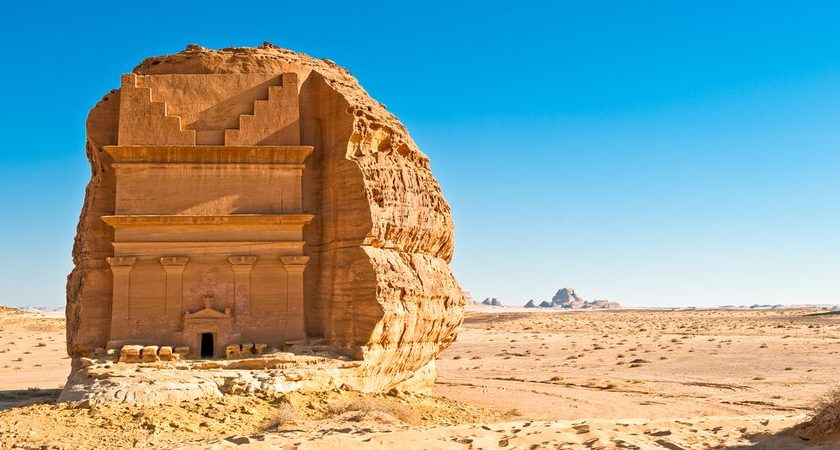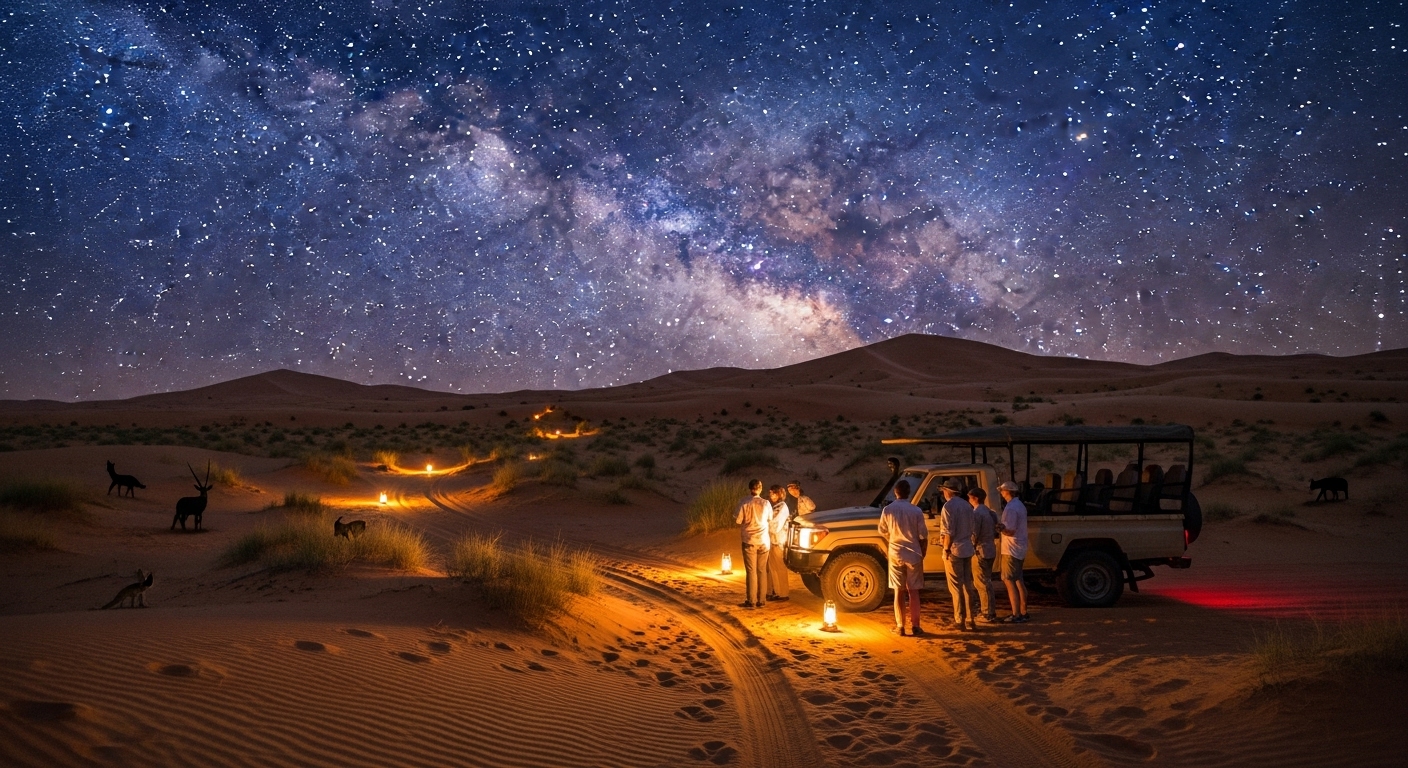
Desert night zoos for cool-hour safaris are redefining how travelers experience wildlife in some of the world’s hottest regions. Instead of enduring scorching daytime temperatures, visitors step into the desert after sunset, when the air cools, stars appear, and animals become active. These nighttime zoos offer a rare chance to see desert life as it truly is—awake, alert, and thriving under the moonlight.
For centuries, deserts have been misunderstood as lifeless landscapes. In reality, they are full of nocturnal creatures that avoid daytime heat. Desert night zoos embrace this natural rhythm, allowing humans to adapt to the environment rather than forcing animals into unnatural schedules.
Why Desert Night Zoos Exist
Deserts experience extreme daytime temperatures, often making traditional zoo visits uncomfortable or even unsafe. As a result, many desert regions developed night zoos to align with cooler evening hours.
By opening after sunset, these zoos protect both visitors and animals. Animals behave more naturally, while guests explore without heat exhaustion. Consequently, night safaris feel calmer, quieter, and far more immersive.
Additionally, darkness enhances the senses. Sounds travel farther, movement feels more dramatic, and every encounter feels intentional.
Dubai: Pioneering Nocturnal Desert Wildlife Experiences
Dubai has become a leader in nighttime desert attractions, including night zoo-style safaris. In protected desert reserves, guided tours begin after dusk, allowing visitors to observe native species such as Arabian oryx, desert foxes, and nocturnal birds.
Instead of traditional enclosures, these experiences focus on conservation zones and open habitats. Soft lighting preserves animal behavior while allowing guests to see clearly.
Learn more about Dubai desert conservation:
Visit Dubai
Arizona: Desert Zoos That Come Alive at Night
In the southwestern United States, desert zoos have embraced nighttime operations during warmer months. Arizona, in particular, offers evening wildlife experiences designed around desert temperatures.
Visitors encounter animals like bobcats, owls, bats, and reptiles that rarely appear during daylight hours. Guided walks explain how desert species survive heat through nocturnal adaptation.
Because lighting remains minimal, the desert sky becomes part of the experience. Stargazing often accompanies animal sightings.
Explore Arizona desert wildlife:
Visit Arizona

Australia: Night Safaris in Arid Landscapes
Australia’s outback hosts some of the world’s most unique nocturnal wildlife. In desert-adjacent reserves, night zoos and safari parks offer guided evening tours.
Visitors may spot kangaroos, wallabies, echidnas, and rare nocturnal marsupials. Red-filtered lights reduce disturbance while maintaining visibility.
These experiences highlight how animals evolved to avoid heat by becoming active after sunset.
Learn more about Australian wildlife tourism:
Australia Travel
Middle East: Cultural Connections to Nighttime Desert Life
In many Middle Eastern cultures, desert life traditionally unfolds at night. Historically, travel, trade, and social gatherings happened after sunset.
Modern desert night zoos reflect this heritage. Visitors often combine wildlife viewing with cultural storytelling, traditional music, or stargazing sessions.
This blend of ecology and culture creates experiences that feel deeply rooted in place.
What Makes Cool-Hour Safaris So Unique
Cool-hour safaris shift focus from spectacle to observation. Without crowds or harsh sunlight, visitors move slowly and listen carefully.
Animals appear more relaxed. Predators hunt, prey forage, and behaviors feel authentic. As a result, encounters feel more meaningful.
Temperature comfort also allows longer visits. Guests stay engaged rather than rushing to escape the heat.
Best Time to Visit Desert Night Zoos
Late spring through early fall is ideal, when daytime heat peaks but nights remain pleasant. Many night zoos operate seasonally for this reason.
Moon phases matter. New moon nights enhance animal visibility near artificial lighting, while full moons create dramatic desert landscapes.
Checking schedules in advance is essential, as night operations often run on limited days.

How Desert Night Zoos Protect Wildlife
Lighting design plays a crucial role. Zoos use low-intensity, directional lighting to avoid disrupting animal behavior.
Pathways remain quiet, and guides enforce respectful distances. These measures reduce stress and support conservation goals.
Education is central. Visitors learn not only what animals do at night, but why nocturnal life matters for desert ecosystems.
What to Expect During a Cool-Hour Safari
Expect slower pacing and guided movement. Silence is encouraged, and groups remain small.
Comfortable walking shoes and light layers are recommended, as desert nights can cool quickly.
Photography rules vary. Flash photography is usually prohibited to protect animals.
Why Travelers Are Choosing Nighttime Wildlife Experiences
As travelers seek responsible tourism, night zoos offer ethical alternatives to traditional wildlife attractions.
They respect animal rhythms while enhancing visitor comfort. Moreover, they encourage appreciation rather than consumption.
This shift reflects a broader trend toward mindful, experience-driven travel.
Desert night zoos for cool-hour safaris reveal a hidden world that daytime travelers rarely see. When temperatures drop and stars emerge, the desert transforms into a place of movement, sound, and life.
Would you explore a desert zoo after sunset? Have you ever experienced wildlife under the stars? Share your thoughts in the comments and follow WentWorld on social media for more unique travel experiences that challenge expectations.
Catch up on the top stories and travel deals by subscribing to our newsletter!