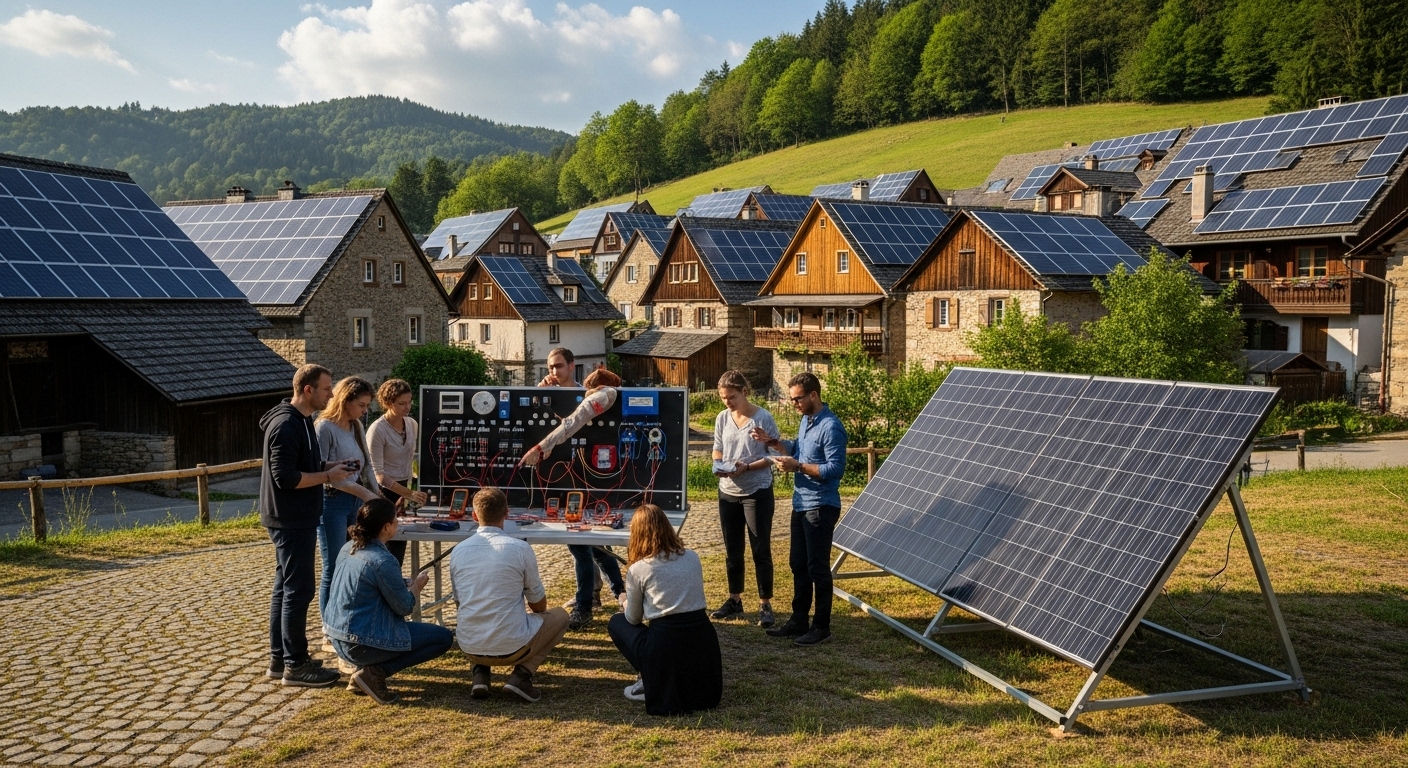
Solar villages offering visitor workshops are quietly reshaping the way people think about energy, community, and travel. These villages don’t just use renewable power—they invite travelers to understand it, touch it, and live with it, even if only for a few days. Instead of sightseeing from a distance, visitors become temporary participants in a sustainable way of life.
Across deserts, mountains, islands, and rural plains, solar villages welcome curious travelers who want more than photos. They offer hands-on workshops, open discussions, and daily experiences that show how communities can thrive using clean energy. As climate awareness grows, these villages feel less like experiments and more like glimpses of a possible future.
What Makes a Solar Village Different
A solar village is not defined by a single panel or project. Instead, it represents a system where solar energy powers homes, schools, workshops, water systems, and public spaces. Energy production becomes visible and shared rather than hidden.
In many solar villages, residents actively participate in maintaining systems. As a result, energy awareness becomes part of daily life. Visitors quickly notice this difference, especially when workshops explain not only how systems work, but why specific choices were made.
Because of this openness, solar villages offering visitor workshops feel educational without being formal. Learning happens naturally through conversation, observation, and participation.
Why Travelers Are Drawn to Solar Villages
Modern travelers increasingly seek meaning alongside adventure. Solar villages meet this desire by offering experiences rooted in purpose. Visitors don’t just consume resources; they learn how to manage them responsibly.
Workshops often include hands-on activities like assembling small solar units, understanding battery storage, or learning energy-efficient building techniques. These experiences feel empowering, especially for travelers interested in sustainability at home.
Moreover, solar villages tend to foster strong community bonds. Visitors often share meals, discussions, and collaborative tasks, creating connections that last beyond the visit.
Freiburg Region, Germany: Community Solar Learning in Action
Germany’s Freiburg region is frequently cited as a global leader in solar living. Several nearby solar-focused communities welcome visitors for guided tours and workshops that explain energy-efficient housing, solar grid integration, and community planning.
Participants often explore solar-powered neighborhoods, passive houses, and shared energy systems. Workshops emphasize practical knowledge, showing how policies, design, and community engagement work together.
Because these villages operate within functioning towns, visitors gain insights into how renewable energy scales beyond isolated projects.
Learn more about Freiburg’s sustainability efforts:
City of Freiburg
India: Solar Villages as Tools for Empowerment
In rural India, solar villages play a transformative role. Many communities adopted solar energy to address unreliable grid access. Today, some of these villages host visitor workshops focused on grassroots innovation.
Workshops often cover solar lantern assembly, water pumping systems, and micro-grid management. Visitors learn directly from local technicians and entrepreneurs who use solar power to support education, healthcare, and livelihoods.
These experiences feel deeply human. Learning happens through stories of problem-solving rather than abstract theory.
Explore India’s solar initiatives:
Incredible India
Africa: Solar Villages Teaching Resilience
Across parts of Africa, solar villages emerged out of necessity. Limited infrastructure pushed communities to innovate locally. Today, several solar-powered villages invite visitors to understand how renewable energy supports water access, education, and communication.
Workshops often focus on solar maintenance, basic electrical skills, and community energy planning. Visitors gain respect for the adaptability and creativity involved.
These experiences challenge assumptions. Solar technology here is not a luxury—it is essential infrastructure.
Learn more about renewable energy in Africa:
UN Africa Renewal

United States: Educational Eco-Villages and Solar Living
In the United States, several eco-villages integrate solar power with sustainable agriculture, natural building, and shared governance. Many offer structured visitor programs and workshops.
Topics range from solar installation basics to off-grid living strategies. Visitors often stay in solar-powered guesthouses, experiencing energy-conscious living firsthand.
These workshops appeal to travelers considering lifestyle changes or community-based living.
Discover U.S. eco-villages:
Foundation for Intentional Community
What Happens During a Visitor Workshop
Workshops typically blend theory with practice. Mornings might involve discussions about energy systems, while afternoons focus on hands-on tasks.
Participants may help install panels, monitor energy output, or learn how solar energy supports daily village functions. The emphasis stays on understanding rather than technical mastery.
Evenings often include group discussions, shared meals, or storytelling sessions that deepen cultural exchange.
How Solar Villages Balance Tourism and Community Life
Solar villages that offer workshops usually limit visitor numbers. This approach protects community rhythms and ensures meaningful engagement.
Rather than entertainment, these experiences prioritize respect and learning. Visitors are encouraged to ask questions, observe quietly, and contribute positively.
This balance ensures tourism supports, rather than disrupts, village life.
Best Time to Visit Solar Villages
Timing depends on location. Dry seasons often provide optimal conditions for outdoor workshops. Many villages schedule programs around solar peak months to demonstrate system performance.
Planning ahead is essential, as workshops often require registration and preparation.
What Visitors Take Home
Beyond knowledge, visitors leave with perspective. Solar villages offering visitor workshops show that sustainability is achievable through cooperation rather than perfection.
Many travelers report lasting changes in habits, energy awareness, and consumption choices after visiting.
Some even return home inspired to start community projects of their own.
Why Solar Villages Represent the Future of Travel
As travel evolves, experiences rooted in learning and responsibility gain value. Solar villages align with this shift by offering purpose-driven journeys.
They replace passive observation with participation. Instead of asking what a place offers, visitors ask what they can learn.
This mindset reflects a broader transformation in global travel culture.
Solar villages offering visitor workshops invite travelers to step into a living classroom powered by the sun. These communities prove that sustainable living is not abstract—it is practical, communal, and deeply human.
Would you spend a few days learning how a village powers itself? Have you visited a community focused on renewable energy? Share your thoughts in the comments and follow WentWorld on social media for more travel stories that illuminate the future.
Catch up on the top stories and travel deals by subscribing to our newsletter!