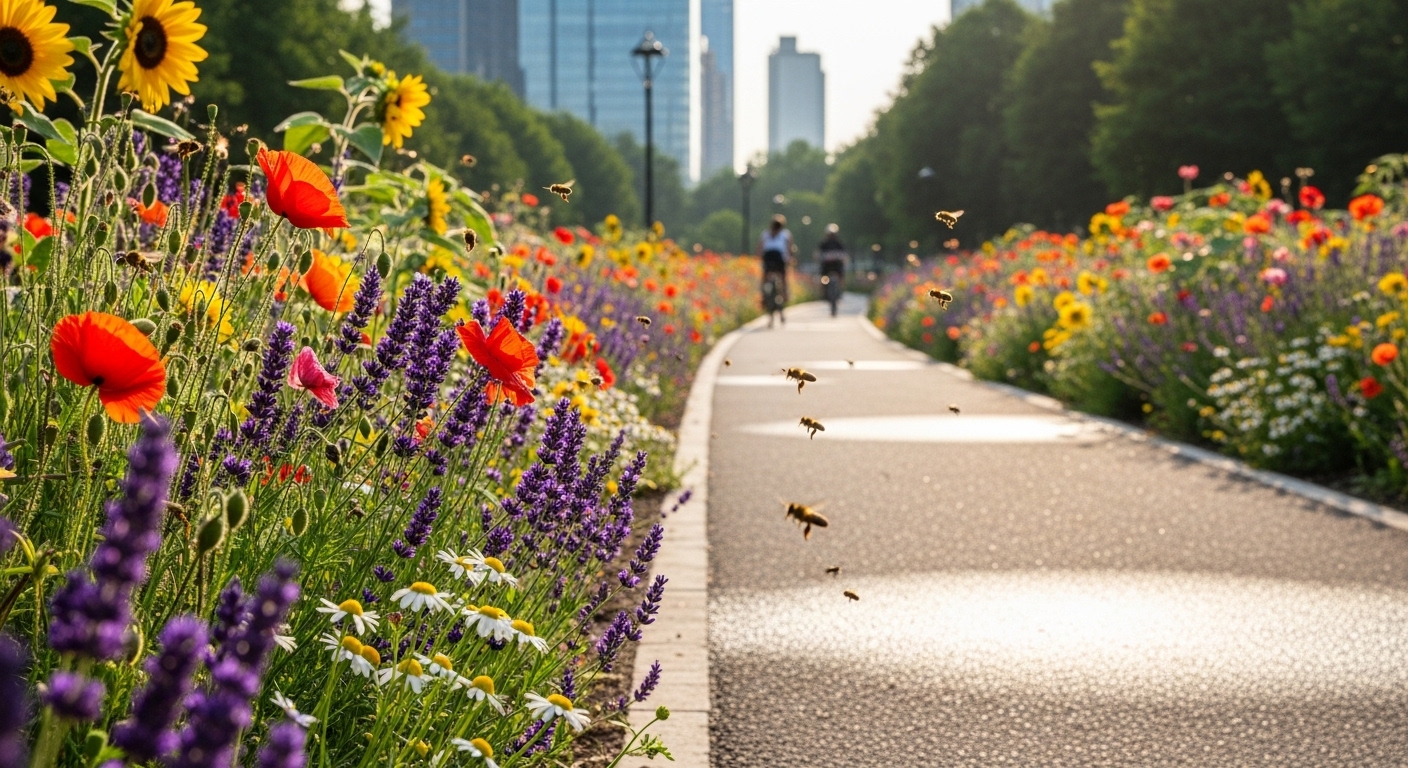
Urban wildflower corridors and pollinator paths are changing how cities look, feel, and function. What once appeared as unused land, roadside edges, or forgotten railway lines is now blooming with native flowers, buzzing with bees, and fluttering with butterflies.
Instead of concrete-only development, cities are reconnecting fragments of nature through carefully planned green routes. These corridors allow pollinators to move safely across urban areas, while residents experience nature in places they least expect it.
Have you noticed more flowers along sidewalks or bike paths lately?
What Are Urban Wildflower Corridors and Pollinator Paths
Urban wildflower corridors and pollinator paths are connected stretches of land planted with native flowering species. They often follow roads, rivers, tram lines, rooftops, and former industrial spaces.
Rather than isolated parks, these corridors form living networks. They help bees, butterflies, birds, and insects travel between feeding and nesting areas without crossing hostile environments.
Why Cities Are Turning to Wildflower Networks
Pollinator populations have declined rapidly due to habitat loss, pesticides, and climate change. Cities, surprisingly, are becoming important refuges.
Urban wildflower corridors and pollinator paths provide food, shelter, and safe movement routes. At the same time, they improve air quality, reduce heat, and enhance mental well-being for residents.
Therefore, what helps insects often helps people too.
How These Corridors Fit Into Urban Life
Unlike traditional parks, pollinator paths do not require large open spaces. They fit into existing infrastructure.
Flower-filled medians replace grass strips. Rail corridors turn into blooming trails. Even rooftops and schoolyards join the network.
As a result, nature becomes part of daily routines rather than a destination.

London’s Pollinator Highways
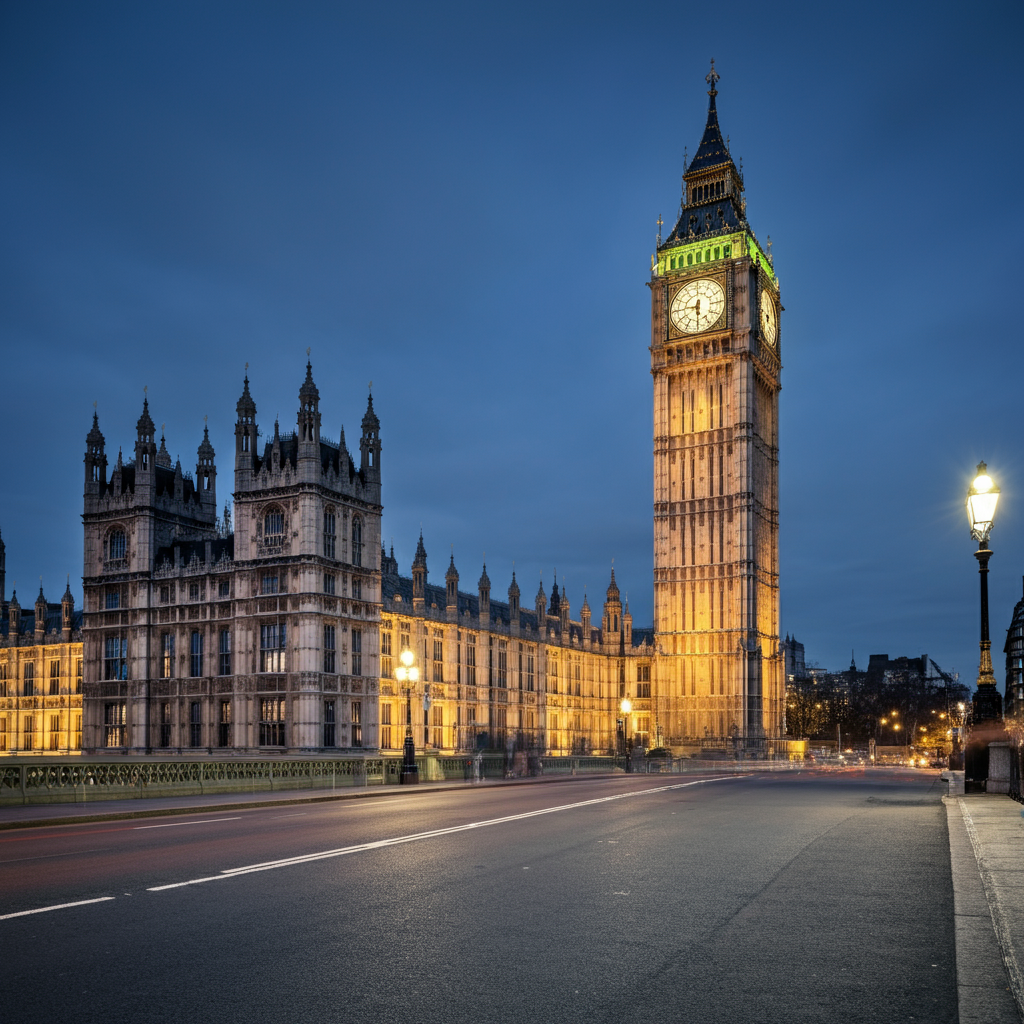
London has introduced pollinator-friendly planting along roads, canals, and railways. These areas connect major green spaces while reducing mowing and maintenance.
Organizations and city planners collaborate to ensure native species thrive. More information about London’s green initiatives can be found at London.gov.uk.
Berlin’s Railway Wildflower Trails
In Berlin, abandoned and active railway corridors have become unexpected biodiversity hotspots. Native wildflowers grow between tracks and along paths, supporting bees and birds.
Because trains already limit development, these spaces offer long, uninterrupted routes for pollinators. Urban planners now protect these corridors as ecological assets.
North American Cities and Pollinator Streets
Cities across the United States and Canada are embracing pollinator-friendly streetscapes. In places like Minneapolis and Toronto, wildflowers replace decorative plants that offer little ecological value.
Tourism and city guides, such as Destination Toronto, increasingly highlight these green initiatives.
How Urban Wildflower Corridors Support Climate Resilience
Urban wildflower corridors and pollinator paths help cities adapt to climate change. Native plants require less water and survive extreme temperatures better than imported species.
Additionally, flowering corridors absorb rainwater, reduce flooding, and cool surrounding areas. These benefits grow stronger as networks expand.
The Human Experience of Pollinator Paths
Walking through a pollinator corridor feels different from walking through a standard park. The environment is more dynamic. Flowers change with the seasons, insects appear and disappear, and sounds shift throughout the day.
People often pause, observe, and slow down. In busy cities, this small change matters.
Do you find yourself more relaxed when greenery surrounds your daily routes?
Schools, Communities, and Grassroots Action
Many successful urban wildflower corridors and pollinator paths begin at the community level. Schools plant gardens. Neighborhoods adopt roadside strips. Local groups monitor insect populations.
These efforts build environmental awareness while strengthening community connections.

Challenges and Misconceptions
Some residents initially mistake wildflower corridors for neglected land. However, education and clear signage quickly change perceptions.
Maintenance also requires careful planning. Native plants need time to establish, and early patience is essential.
Traveling With Pollinator Corridors in Mind
Visitors can experience these corridors by walking or cycling rather than driving. Many cities integrate pollinator paths into bike networks and river walks.
Airlines such as British Airways and Air France connect travelers to cities leading in urban biodiversity efforts.
Why These Corridors Represent a Bigger Shift
Urban wildflower corridors and pollinator paths reflect a change in how cities define progress. Growth no longer means removing nature. Instead, it means designing alongside it.
These corridors show that small, connected actions can create powerful ecological networks.
If a simple strip of flowers can support wildlife, cool cities, and improve daily life, what other overlooked spaces around us could bloom with purpose?
Follow WentWorld to explore more places where cities and nature quietly learn to coexist.
Catch up on the top stories and travel deals by subscribing to our newsletter!