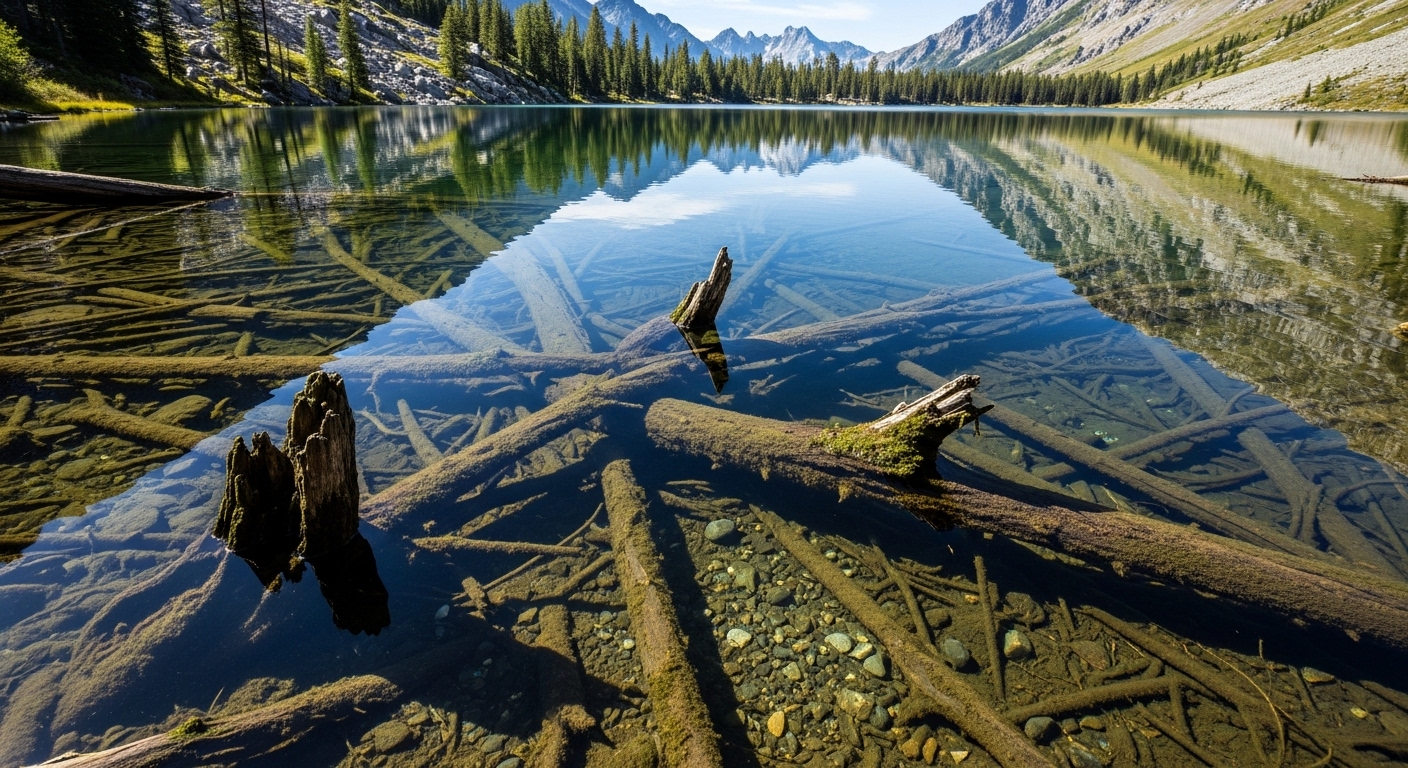
Sunken forests in crystal lakes are some of the most visually arresting natural phenomena on Earth. Imagine standing at the edge of a lake so clear that you can see entire trees standing upright beneath the water’s surface—branches intact, trunks rooted, and shadows drifting slowly across the lakebed. These forests feel frozen in time, quietly existing below the waterline.
At first glance, the scene almost feels unreal. Yet these submerged forests are very real, shaped by geology, climate shifts, and human history. Travelers often come for the beauty but stay for the mystery, wondering how entire forests ended up underwater while remaining so perfectly preserved.
What Exactly Are Sunken Forests
Sunken forests form when trees become submerged due to rising water levels, earthquakes, landslides, glacial movement, or the creation of reservoirs. In some cases, lakes slowly expand and flood existing woodlands. In others, dramatic natural events cause rapid submersion.
What makes certain sunken forests extraordinary is water clarity. In crystal lakes, low sediment, minimal algae, and cold temperatures allow visibility that can extend dozens of meters below the surface.
As a result, these forests remain visible long after submersion.
Why the Trees Remain So Well Preserved
Cold, oxygen-poor water slows decomposition. Without strong currents or sunlight exposure, wood deteriorates much more slowly.
In many crystal lakes, mineral-rich water also inhibits bacterial growth.
Because of this, trees can remain standing for centuries, appearing almost untouched.
Lake Kaindy, Kazakhstan: A Forest Beneath Turquoise Water
Lake Kaindy formed after an earthquake in 1911 caused a massive landslide, blocking a valley and flooding a spruce forest. Today, tree trunks rise eerily through turquoise water, while branches remain visible below the surface.
The lake’s cold temperature preserves the trees remarkably well.
Snorkelers and divers often describe the experience as swimming through a ghost forest.
Learn more about Kazakhstan’s natural landscapes:
Visit Kazakhstan
Lake Cuejdel, Romania: Europe’s Hidden Submerged Woodland
Lake Cuejdel, located in Romania’s Carpathian Mountains, holds one of the largest sunken forests in Europe. Thousands of tree trunks remain visible beneath calm waters.
Unlike dramatic single-event lakes, Cuejdel formed gradually after landslides dammed a valley.
The result is a peaceful yet haunting underwater landscape.
Explore Romania’s natural heritage:
Romania Tourism

Lake Resia, Italy: The Bell Tower Above the Forest
Lake Resia is famous for its church tower rising from the water, but beneath the surface lies an entire submerged village and forest. Created by a reservoir project in the 1950s, the lake flooded farmland and woodland alike.
While much remains hidden, clear winter ice sometimes reveals submerged tree lines.
This blend of human and natural history adds emotional depth to the landscape.
Discover Italy’s alpine regions:
Italia Tourism
Yellowstone Lake, USA: Ancient Trees Under Volcanic Waters
In Yellowstone National Park, researchers have discovered submerged forests preserved by cold water and volcanic conditions. Some trees date back thousands of years.
These underwater forests offer valuable insights into climate history.
They also highlight how nature quietly records time.
Learn more about Yellowstone:
National Park Service – Yellowstone
Why Crystal Lakes Make the Difference
Clarity transforms submerged trees from hidden artifacts into visible landscapes. Without sediment and algae, light penetrates deeply.
This allows visitors to observe forests without diving.
The result feels like looking through glass into another world.
Best Ways to Experience Sunken Forests
Some lakes allow kayaking, paddleboarding, or glass-bottom boat tours. These options offer safe, low-impact views.
Diving provides deeper immersion but requires proper permissions.
Respecting local regulations protects fragile ecosystems.
When to Visit for Best Visibility
Late spring and early autumn often provide optimal clarity. Cooler temperatures reduce algae growth.
Winter can offer extraordinary visibility where ice forms.
Weather stability enhances reflections and transparency.
Emotional Impact on Travelers
Many travelers describe sunken forests as humbling. Seeing trees standing silently underwater evokes reflection.
The experience encourages patience and stillness.
It’s beauty without movement.

How Nature Reclaims and Preserves at Once
Sunken forests illustrate nature’s paradox. Water both destroys and protects.
What once grew in air now survives in silence.
This duality fascinates scientists and travelers alike.
Why WentWorld Explores Places Like This
Sunken forests in crystal lakes challenge how we define landscapes. They blur boundaries between land and water.
These places reward curiosity rather than speed. They remind us that some wonders wait quietly beneath the surface.
Sunken forests in crystal lakes feel like nature’s memory made visible. They invite travelers to slow down, look deeper, and question how time moves.
Have you ever seen a place where the past remains so clearly present? Would you visit a lake just to look beneath its surface?
Share your thoughts and follow WentWorld for more destinations where nature tells quiet, powerful stories.
Catch up on the top stories and travel deals by subscribing to our newsletter!