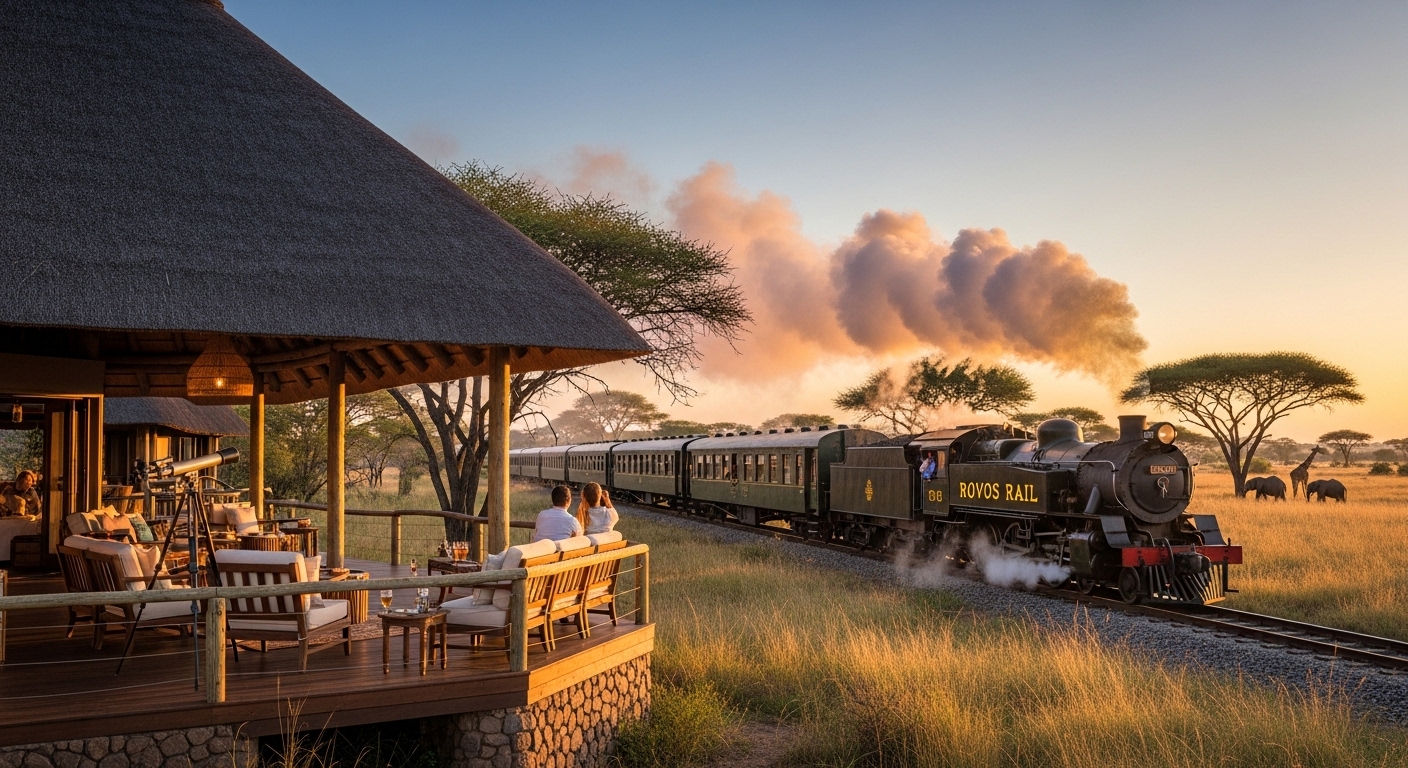
Safari travel often brings to mind long drives, dusty roads, and convoys of vehicles. However, rail-linked safari lodges (no car needed) offer a very different experience. Here, the journey begins on the tracks, not behind the wheel.
Instead of navigating remote highways, travelers step off a train and into wilderness. Because of this seamless transition, rail-linked safari lodges (no car needed) feel calmer, more intentional, and deeply connected to their surroundings.
Would your idea of a safari change if the adventure started with a train ride?
Why rail access matters in safari regions
Railways historically connected remote landscapes long before paved roads existed. As a result, several safari regions developed alongside train routes rather than highways.
Because trains move large numbers of people efficiently, they reduce the environmental pressure caused by private vehicles. Therefore, rail-linked safari lodges (no car needed) support lower emissions and less habitat disruption.
In many cases, rail access preserves wilderness rather than fragmenting it.
The appeal of arriving by train
Arriving by train changes the rhythm of travel. Instead of rushing, passengers observe landscapes unfold slowly through panoramic windows.
Meanwhile, guides often meet guests directly at the station. From there, short transfers or guided walks replace long vehicle journeys.
This approach allows the safari experience to begin before reaching the lodge.
Historic safari rail routes in Africa
Several African safari regions developed alongside colonial-era railways. These routes originally transported goods and settlers, yet today they offer a quieter form of access.
For example, rail corridors near wildlife reserves allow lodges to operate without carving new roads through sensitive habitats.
Learn more about African rail history through Kenya Railway Museum.
Luxury meets sustainability on rail-linked safaris
Many rail-linked safari lodges (no car needed) focus on luxury without excess. Spacious rooms, open-air decks, and guided game walks replace crowded parking areas.
Because guests arrive by train, lodges limit vehicle use inside reserves. As a result, wildlife encounters feel quieter and less intrusive.
Luxury here comes from space, silence, and immersion.
India’s rail-connected wildlife lodges
India offers some of the most accessible rail-linked safari lodges (no car needed). Train stations near national parks allow travelers to avoid long road journeys.
From the station, lodges arrange short eco-friendly transfers or guided entry into buffer zones.
Rail information and routes are available through Indian Railways.

How train travel reduces safari congestion
Safari destinations often struggle with vehicle congestion. Trains help distribute arrivals across scheduled times rather than peak road hours.
Therefore, lodges can stagger activities and reduce crowding at wildlife viewing points.
Ultimately, this improves both animal behavior patterns and visitor experience.
Wildlife encounters beyond game drives
Rail-linked safari lodges (no car needed) often emphasize walking safaris, observation hides, and guided nature trails.
Instead of chasing sightings, guests learn to read tracks, listen to bird calls, and observe smaller ecosystems.
This slower approach creates deeper understanding rather than checklist tourism.
Environmental benefits of car-free safari travel
Reducing vehicle dependency lowers fuel use and soil compaction. Moreover, fewer roads mean less erosion and habitat fragmentation.
Because trains follow established corridors, they concentrate impact instead of spreading it.
As a result, rail-linked safari lodges align closely with conservation goals.
Guest experience and comfort
Train travel allows guests to rest, dine, and socialize before arrival. This contrasts sharply with tiring multi-hour road transfers.
Additionally, luggage handling becomes easier, and arrival feels smoother.
Comfort begins long before check-in.

Challenges of rail-based safari access
Despite advantages, rail-linked safari lodges (no car needed) depend on reliable schedules. Delays can affect arrival times.
However, many lodges build flexibility into itineraries to accommodate rail travel realities.
Most travelers find the benefits outweigh minor inconveniences.
Why WentWorld highlights rail-linked safari lodges (no car needed)
WentWorld focuses on travel that respects both place and pace. Rail-linked safari lodges (no car needed) remove unnecessary layers between travelers and landscapes.
By choosing rail over roads, travelers support quieter safaris and healthier ecosystems.
Would you choose a safari where the journey itself reduces impact? Share your thoughts with WentWorld.
Follow WentWorld on social media for more stories about travel that moves thoughtfully through the world.
Catch up on the top stories and travel deals by subscribing to our newsletter!