There is a rare kind of magic found in desert crater lakes with mirror mornings, a quiet beauty that feels almost unreal. Imagine standing in the middle of an arid landscape, where the sun has barely risen, and before you lies a lake so still it reflects the sky like polished glass. No ripples. No sound. Just you, the desert air, and a perfect reflection of clouds, cliffs, and light. These moments feel suspended in time, and that is what makes them unforgettable.
Deserts are often associated with extremes: harsh sun, dry winds, and endless stretches of sand or rock. Yet hidden within volcanic craters and ancient basins are lakes that challenge everything we think we know about deserts. These lakes are not only geological wonders but also emotional experiences, especially during early mornings when the water becomes a flawless mirror. Have you ever seen a place so calm that it makes you whisper without realizing it?
In this journey by WentWorld.com, we explore some of the most remarkable desert crater lakes with mirror mornings around the world. We will uncover how they formed, why their reflections are so perfect, and what it feels like to witness them at dawn. More importantly, we will talk about why these places matter, not just as destinations but as reminders of nature’s quiet power.
Why Desert Crater Lakes Feel So Surreal
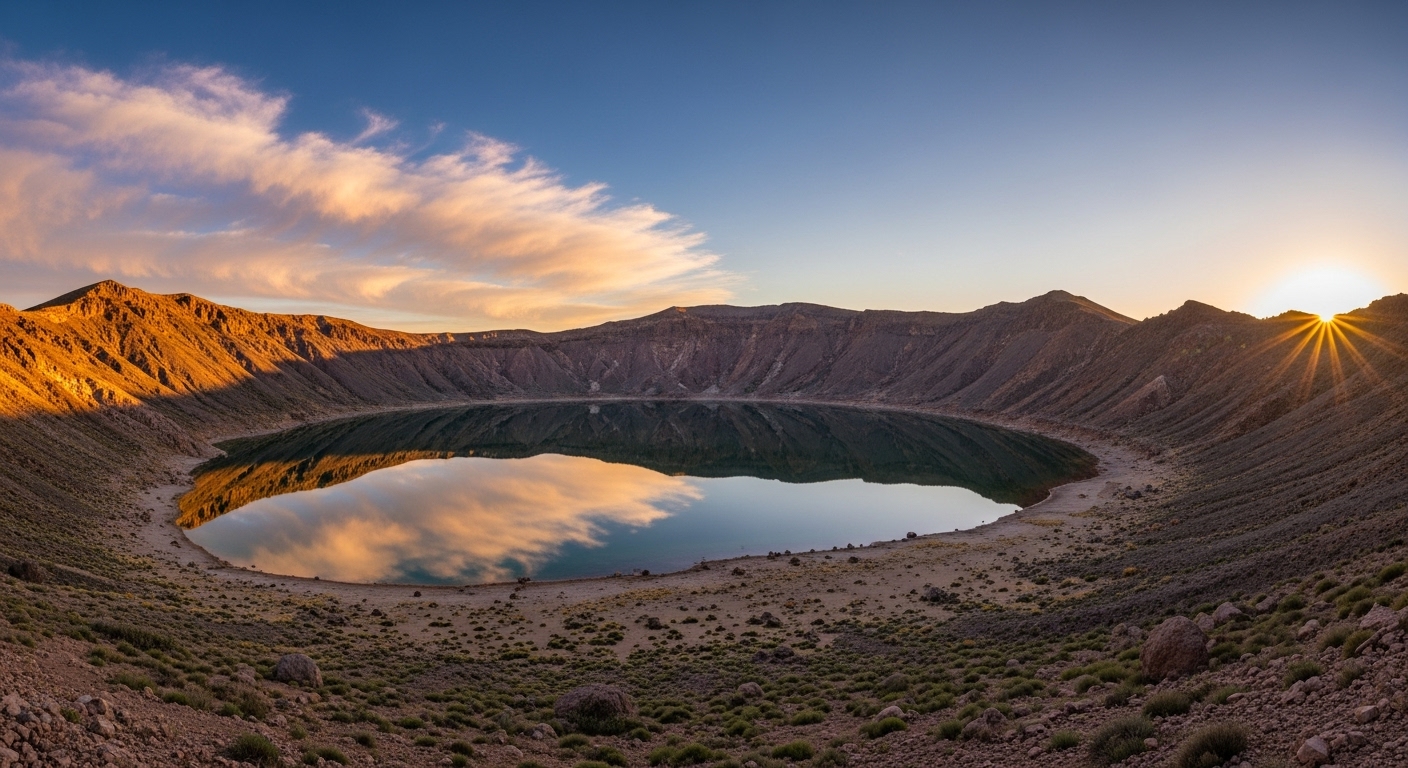
What makes desert crater lakes with mirror mornings feel so surreal is the contrast they create. Deserts are loud in their own way, with heat shimmering in the distance and winds carving landscapes over centuries. Then suddenly, there is water. Not just water, but still water, sitting calmly in a bowl of stone formed by ancient volcanic eruptions or meteor impacts.
These crater lakes are often deep, protected from strong winds by steep walls. This natural shielding is one of the reasons their surfaces can remain incredibly calm, especially in the early morning hours. When the air is cool and the desert is still waking up, the lake becomes a mirror. The sky reflects itself so perfectly that it can be difficult to tell where the land ends and the heavens begin.
Have you ever questioned whether a place could feel both powerful and peaceful at the same time? Desert crater lakes do exactly that. They remind us that even the harshest environments can cradle moments of profound calm.
The Science Behind Mirror Mornings
The phenomenon of mirror mornings at desert crater lakes is not accidental. It is the result of several precise conditions aligning at just the right moment. First, there is the shape of the crater itself. The steep walls act as a natural wind barrier, reducing surface disturbance. Second, desert air cools rapidly at night, leading to calm conditions at dawn.
Water density also plays a role. During early morning hours, temperature differences between surface and deeper water layers are minimal, reducing convection currents. Without wind or temperature-driven movement, the water remains still. This is when reflections become razor sharp.
Interestingly, these mirror mornings are often fleeting. As the sun climbs higher, winds begin to stir and temperatures rise, gently breaking the illusion. This fleeting nature is part of the allure. You have to be there at the right moment, willing to wake up early and wait quietly. Would you be willing to trade sleep for a once-in-a-lifetime reflection?

Al Wahbah Crater, Saudi Arabia
One of the most striking examples of desert crater lakes with mirror mornings is Al Wahbah Crater in Saudi Arabia. Located in the western desert region, this massive volcanic crater spans more than two kilometers wide. At its base lies a salt pan that occasionally fills with shallow water after rainfall.
During rare mornings when water is present and conditions are calm, the crater floor transforms into a reflective canvas. The surrounding cliffs, tinted with mineral colors, appear doubled in the reflection. The experience feels otherworldly, especially given the stark emptiness of the surrounding desert.
Saudi Arabia has been opening its doors to travelers in recent years, with airlines like Saudia making access easier. Yet Al Wahbah remains relatively quiet, offering a sense of discovery that is becoming increasingly rare in the modern world.
Lonar Lake, India
Lonar Lake in India is one of the world’s few known meteorite impact crater lakes. Formed over 50,000 years ago, it sits within the Deccan Plateau, surrounded by dry terrain that contrasts sharply with its greenish waters.
Early mornings at Lonar Lake can be astonishing. When winds are absent, the lake reflects the surrounding crater walls and the soft pastel hues of dawn. The reflection feels almost sacred, amplified by the ancient temples that dot the crater’s rim.
Lonar is also a place of ongoing scientific study due to its unique chemistry and microbial life. Institutions like NASA have shown interest in similar extreme environments as analogs for extraterrestrial research. Standing here, watching the sky reflected in the lake, it is easy to imagine why scientists are fascinated.
Quilotoa Loop, Ecuador
High in the Andes of Ecuador lies the Quilotoa Crater Lake, a turquoise jewel surrounded by rugged volcanic terrain. Although not a traditional desert of sand, the high-altitude environment is dry, windswept, and stark.
On calm mornings, Quilotoa becomes one of the most photogenic desert crater lakes with mirror mornings. The color of the water shifts with the light, sometimes appearing emerald, other times deep blue. The reflection of clouds drifting overhead creates a dreamlike symmetry.
Travelers often reach Quilotoa via the famous Quilotoa Loop, a route popular among hikers. Information from Lonely Planet has helped bring attention to the region, yet there are still moments when you can stand alone at the rim, watching the lake breathe quietly below.
Crater Lake, Oregon
Although surrounded by forests rather than sand, Crater Lake in Oregon shares many characteristics with desert crater lakes due to its volcanic origin and isolated setting. It is one of the deepest lakes in the world, formed by the collapse of Mount Mazama.
Crater Lake is famous for its clarity and intense blue color. On early summer mornings, when winds are calm, the surface becomes mirror-like. The surrounding cliffs and sky reflect with astonishing precision, creating scenes that feel almost painted.
The U.S. National Park Service provides extensive information about Crater Lake through nps.gov, but no amount of reading prepares you for witnessing a mirror morning in person.

The Emotional Impact of Mirror Mornings
There is something deeply emotional about witnessing desert crater lakes with mirror mornings. Perhaps it is the silence, or the way reflections force us to slow down and observe. In a world driven by speed and noise, these moments feel like an invitation to pause.
Many travelers describe a sense of humility when standing before these lakes. The reflection is not just visual; it feels introspective. You see yourself, small and temporary, mirrored against landscapes shaped over millennia.
Have you ever visited a place that made you rethink your relationship with nature? These lakes often leave that kind of impression.
Planning a Visit Without Disturbing the Calm
If you plan to visit desert crater lakes, timing and respect are crucial. Mirror mornings depend on stillness, and even small disturbances can break the surface. Arriving early, moving quietly, and keeping distance from the water’s edge helps preserve the experience.
Many of these sites are ecologically sensitive. Organizations like World Wildlife Fund emphasize responsible travel practices, especially in fragile environments. The goal is to leave no trace, allowing future visitors to experience the same sense of wonder.
Why These Places Matter More Than Ever
In an era of climate change and environmental uncertainty, desert crater lakes are important indicators of ecological balance. Changes in water levels, chemistry, or reflection quality can signal broader shifts in climate patterns.
Beyond science, they matter emotionally. They remind us that beauty can exist in unexpected places and that silence can be as powerful as sound. Desert crater lakes with mirror mornings are not just destinations; they are experiences that linger long after you leave.
As WentWorld.com continues to explore rare and awe-inspiring places, we invite you to reflect on what travel means to you. Is it about ticking destinations off a list, or is it about moments that change how you see the world?
We would love to hear your thoughts. Have you ever witnessed a mirror morning at a crater lake or any other body of water? Did it leave an impression on you? Share your experiences and reflections with us.
If stories like this inspire your sense of wonder, follow WentWorld.com on our social media platforms to stay connected with journeys that celebrate the quiet, extraordinary corners of our planet.
Catch up on the top stories and travel deals by subscribing to our newsletter!