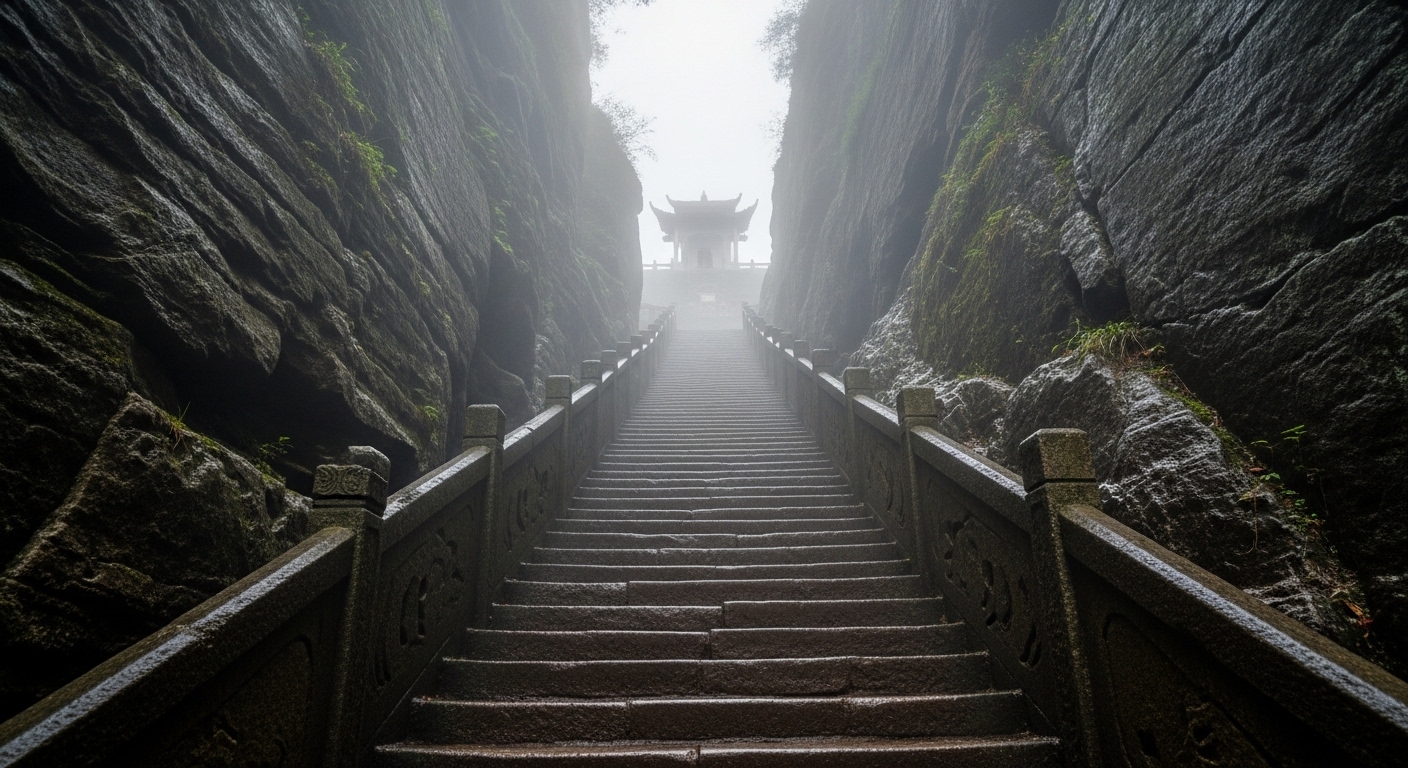
Sky ladder trails are not just paths carved into mountains. They are vertical journeys that blur the line between pilgrimage and adventure. Imagine climbing steep stairways etched into cliffs, with clouds drifting below your feet and ancient shrines waiting at the summit. These trails are not meant to be rushed. Each step demands attention, patience, and often a quiet conversation with yourself.
Across the world, sky ladder trails lead to mountaintop shrines that have drawn pilgrims for centuries. Long before modern travel, people climbed these stairways seeking blessings, forgiveness, clarity, or connection. Today, travelers still follow the same routes, driven by curiosity, spirituality, or the desire to experience something that feels raw and real.
Have you ever stood at the base of a mountain and wondered whether the view at the top would change you? Sky ladder trails have a way of doing exactly that.
What Makes Sky Ladder Trails So Unique
Unlike ordinary hiking trails, sky ladder trails are defined by elevation and exposure. These are stairways built directly into rock faces, sometimes narrow, sometimes uneven, and often steep enough to make your legs burn within minutes. There is rarely a straight, gentle incline. Instead, the climb unfolds vertically, pulling you upward step by step.
What sets sky ladder trails apart is not just the physical challenge but the mental experience. When you climb a staircase suspended along a mountainside, distractions fall away. There is no room for rushing or multitasking. You focus on breathing, balance, and the rhythm of your movement.
Many of these trails were built by hand centuries ago, using simple tools and remarkable determination. The fact that they still exist is a testament to human devotion and resilience. Does knowing that others climbed these same steps hundreds of years ago change how you would approach the journey?
The Spiritual Purpose Behind the Climb
Sky ladder trails were rarely created for convenience. Most lead to mountaintop shrines, temples, or monasteries placed intentionally high above the world below. In many cultures, height symbolizes closeness to the divine. The physical effort required to reach these places becomes part of the spiritual practice.
The climb itself is often seen as an act of purification. Fatigue strips away ego. Fear sharpens awareness. Silence encourages reflection. By the time pilgrims reach the shrine, they arrive humbled and present.
Even for non-religious travelers, this sense of intention is palpable. You may start the climb for the view, but somewhere along the way, the experience becomes personal. What are you carrying with you as you climb? What might you leave behind at the summit?

Mount Hua Plank Walk and Stairways, China
One of the most famous sky ladder trails in the world is found on Mount Hua in China. Known for its dramatic staircases and narrow paths, Mount Hua has been a site of Taoist pilgrimage for centuries. The mountain’s stairways rise sharply, carved directly into stone and bordered by sheer drops.
While the infamous plank walk captures attention, the stairways themselves are equally intense. Thousands of uneven steps stretch upward, demanding stamina and focus. Early mornings often bring mist that wraps the mountain in silence, making the climb feel suspended between earth and sky.
China’s domestic travel network and airlines like Air China have made access easier, but the mountain retains its power. No matter how you arrive, the climb remains unchanged.
Adam’s Peak (Sri Pada), Sri Lanka
Adam’s Peak is one of the most sacred mountains in Sri Lanka, revered by Buddhists, Hindus, Muslims, and Christians alike. The sky ladder trail here consists of more than 5,000 steps leading to the summit shrine.
The climb traditionally begins at night, guided by dim lights lining the stairway. As pilgrims ascend, the darkness fosters quiet reflection. Reaching the summit at sunrise is the reward. The view reveals rolling clouds and a triangular shadow cast by the mountain itself.
Information provided by Lonely Planet highlights Adam’s Peak as both a spiritual and cultural experience. Yet no guidebook fully prepares you for the collective energy of thousands climbing together in silence.
Tiger’s Nest Monastery, Bhutan
Perched dramatically on a cliffside, Tiger’s Nest Monastery is reached via a steep ascent that includes stairways carved into the mountain. Although not a continuous staircase from base to summit, the final stretch embodies the essence of sky ladder trails.
The thin mountain air slows your pace. Prayer flags flutter overhead. The monastery appears suddenly, clinging to the rock as if suspended by faith alone. Standing there, it is hard not to feel awe.
Bhutan limits tourism intentionally, emphasizing mindful travel. Resources from Tourism Council of Bhutan explain this philosophy, which aligns perfectly with the contemplative nature of the climb.
Yamadera Temple, Japan
Yamadera Temple, officially known as Risshaku-ji, sits high above the valley in northern Japan. Reaching it requires climbing over 1,000 stone steps through cedar forests. While not as exposed as some sky ladder trails, the steady ascent and elevation make it deeply immersive.
Each step is marked by small statues and shrines, encouraging pauses along the way. The climb becomes a moving meditation. By the time you reach the summit halls, your breathing has slowed, and your senses feel sharpened.
Japan’s commitment to preserving cultural sites is well documented by organizations like Japan National Tourism Organization, but Yamadera’s true value lies in the experience itself.
The Physical Challenge of Sky Ladder Trails
Climbing sky ladder trails is physically demanding. The steep angle places strain on knees, calves, and lungs. Unlike winding mountain paths, stairways offer little variation in movement, which can accelerate fatigue.
Proper pacing is essential. Many climbers underestimate the effort required, focusing only on the destination. Experienced pilgrims know that steady movement and regular pauses make the climb sustainable.
Have you ever started a climb feeling confident, only to realize halfway up that patience matters more than strength?
Facing Fear on Exposed Stairways
Some sky ladder trails run alongside sheer drops, protected by little more than chains or railings. For those uncomfortable with heights, this can be intimidating. Fear becomes part of the journey.
Interestingly, fear often sharpens presence. Each step becomes deliberate. The mind focuses on the immediate moment rather than distant worries. Many travelers report that confronting fear on these stairways leaves them feeling more grounded afterward.
Would you turn back, or would you trust yourself to keep going?

The View From the Summit
Reaching the summit shrine after climbing a sky ladder trail is deeply satisfying. The view is expansive, but the real reward is internal. Exhaustion blends with accomplishment. Silence feels earned.
Mountaintop shrines are often simple, emphasizing humility rather than grandeur. This contrast reinforces the message that the journey matters as much as the destination.
Standing at the top, looking back at the stairway you climbed, it is natural to reflect. What did the climb teach you? What would you carry forward into daily life?
Responsible Travel on Sacred Trails
Sky ladder trails are often sacred spaces. Respectful behavior is essential. Loud voices, littering, or rushed movement can disrupt the atmosphere for others.
Organizations like World Wildlife Fund encourage low-impact travel practices, especially in fragile mountain environments. Staying on designated paths and minimizing waste helps preserve these trails for future generations.
Why Sky Ladder Trails Continue to Inspire
In a world of instant access and shortcuts, sky ladder trails stand as reminders that some experiences must be earned. They resist convenience. They demand effort, humility, and time.
Whether approached as a pilgrimage or an adventure, these stairways connect us to something larger than ourselves. They challenge our bodies and quiet our minds.
At WentWorld.com, we believe travel is most powerful when it transforms how we see ourselves and the world. Sky ladder trails do exactly that.
Have you ever climbed a stairway to a mountaintop shrine, or is there one you dream of visiting? We would love to hear your thoughts and experiences.
If stories like this resonate with you, follow WentWorld.com on our social media platforms for more journeys that explore meaningful, extraordinary paths across the globe.
Catch up on the top stories and travel deals by subscribing to our newsletter!