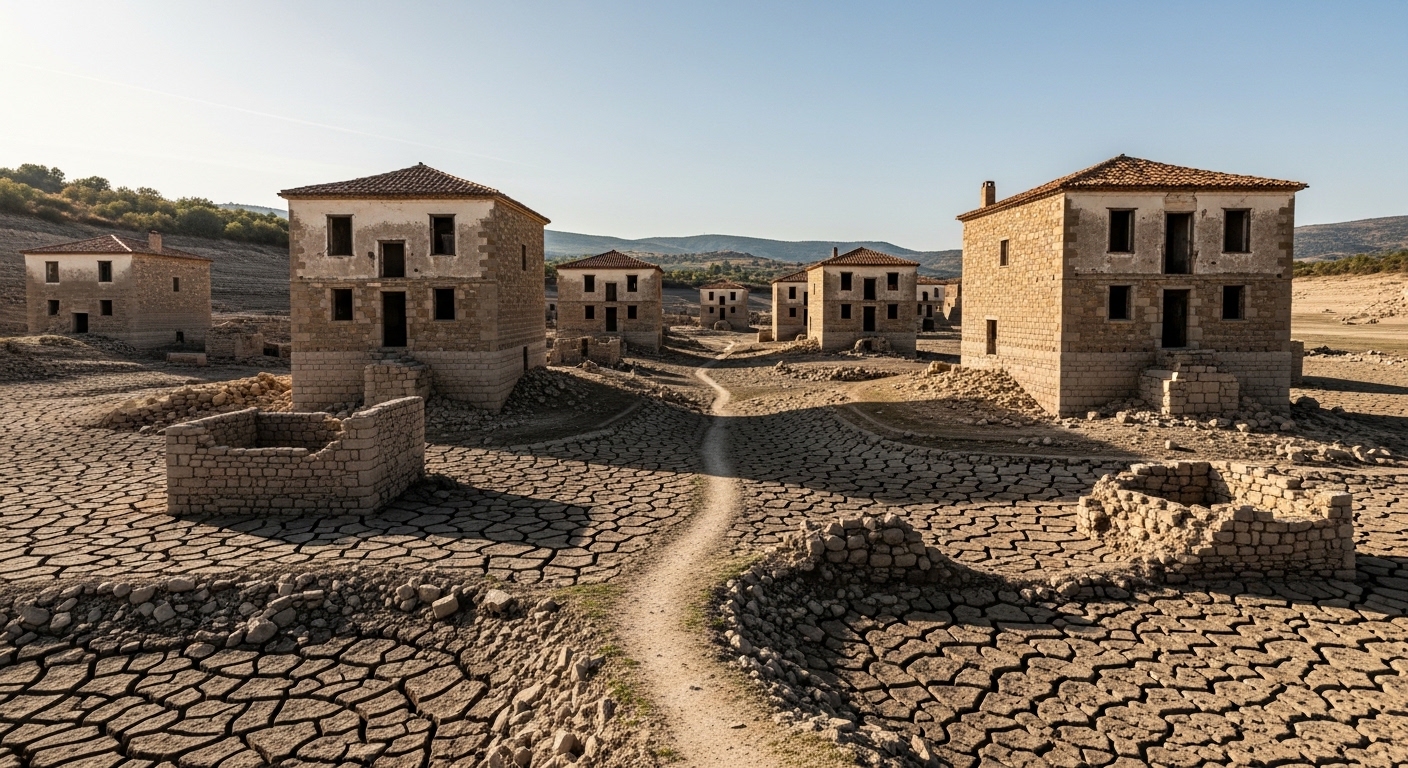
Across the world, there are moments when nature quietly pulls back its curtain and reveals what was once lost. Sunken villages revealed in dry season are among the most haunting and fascinating examples of this phenomenon. Entire towns, churches, roads, and homes reappear when water levels drop, offering travelers a rare glimpse into histories submerged by dams, reservoirs, and changing landscapes.
These places are not ruins in the traditional sense. They were once living communities, filled with daily routines, celebrations, and generations of memories. When dry seasons expose them again, they demand not curiosity alone, but respect. Visiting sunken villages is not about adventure tourism or spectacle; it is about understanding displacement, progress, and remembrance.
Have you ever stood somewhere knowing that beneath your feet once lay a thriving village? What responsibilities do travelers carry when visiting places shaped by loss?
How and Why Villages Became Submerged
Most sunken villages were not lost to natural disasters. Instead, they were deliberately flooded due to large infrastructure projects such as dams, hydroelectric plants, and water reservoirs. During the 20th century, many governments relocated entire communities to support energy production, irrigation, and urban water supply.
While these projects brought progress and resources, they also erased landscapes and forced residents to abandon ancestral homes. In many cases, buildings were never demolished. Churches, cemeteries, bridges, and stone houses remained intact beneath the water.
When droughts or seasonal dry periods occur, sunken villages revealed in dry season emerge once more, reminding visitors that development often comes with hidden human costs.
Why Dry Seasons Reveal Forgotten Landscapes
Dry seasons lower water levels in reservoirs and lakes, especially in regions dependent on seasonal rainfall or snowmelt. When evaporation exceeds inflow, submerged structures rise slowly into view.
Climate change has intensified this phenomenon. Longer dry spells and unpredictable weather patterns mean that sunken villages are appearing more frequently and remaining exposed for longer periods.
While this creates opportunities for exploration and photography, it also raises ethical questions. Should these places be treated as tourist attractions, or as memorial landscapes?

Notable Sunken Villages Around the World
Several locations across continents have become well-known examples of sunken villages revealed in dry season. Each tells a different story.
Aceredo, Spain
Perhaps one of the most striking examples, Aceredo resurfaces when the Lindoso Reservoir dries. Stone houses, doorways, and streets appear almost intact. The village was flooded in the 1990s, displacing families who still return to see their former homes. Spain’s regional tourism resources such as Spain Tourism often emphasize respectful visitation.
Curon Venosta, Italy
Unlike other villages, Curon’s bell tower remains visible year-round above Lake Resia. During extreme dry seasons, parts of the submerged village become accessible on foot. The tower stands as a haunting symbol of cultural loss in northern Italy.
Shicheng (Lion City), China
Submerged beneath Qiandao Lake, Shicheng remains preserved underwater. During rare low-water events, parts of the city approach visibility. Chinese heritage experts treat the site as an archaeological treasure rather than a tourist attraction.
Old Alton, Turkey
Flooded by the Atatürk Dam, this ancient settlement occasionally reappears. Minarets and stone structures rise from the water, blending history with modern engineering.
Would you feel excitement, sadness, or responsibility walking through streets abandoned decades ago?
The Emotional Impact of Visiting Sunken Villages
Visiting a sunken village is unlike visiting ruins or archaeological sites. These places were inhabited until recently. Many former residents are still alive.
Travelers often report feelings of silence, unease, and reflection. Cracked walls, exposed foundations, and scattered household remnants humanize history in ways museums cannot.
This emotional weight is precisely why respectful behavior matters. Sunken villages are not playgrounds or photo props. They are open-air archives of lived experience.
Guidelines for Respectful Visits
If you plan to explore sunken villages revealed in dry season, responsible travel is essential.
- Do not remove artifacts, stones, or personal items.
- Avoid entering unstable structures or collapsed buildings.
- Respect memorial areas, cemeteries, and religious remains.
- Follow local regulations and restricted zones.
- Engage with local guides or community-led tours when available.
Ask yourself before visiting: am I here to observe and learn, or to consume and entertain myself?
Photography Ethics in Submerged Villages
Photography is often the primary reason people seek out these sites. While documentation can raise awareness, it must be done thoughtfully.
Avoid staged poses, disrespectful behavior, or sensational captions. Focus on storytelling rather than shock value. Context matters.
Platforms like National Geographic History often highlight submerged heritage through education rather than spectacle.

Local Communities and Memory Preservation
For displaced residents, these villages are not abandoned. They are remembered.
Some communities organize remembrance days during dry seasons. Others campaign for preservation or digital documentation. Tourism, when handled carefully, can help fund memorial projects or museums.
Supporting local initiatives ensures that stories are preserved alongside structures.
Environmental Lessons From Sunken Villages
Sunken villages reveal more than human history. They highlight environmental trade-offs, water management issues, and climate vulnerability.
As droughts increase, reservoirs shrink. These sites become symbols of water scarcity and long-term planning challenges.
Could these emerging landscapes change how societies approach future development projects?
The Future of Sunken Villages
As climate patterns shift, sunken villages revealed in dry season may become more common. Some may be permanently lost again as water returns. Others could remain exposed longer each year.
There is growing discussion around legal protection, heritage status, and controlled access. These villages exist in a fragile balance between memory, nature, and progress.
Visiting them responsibly ensures they are remembered with dignity rather than exploited.
A Thought for Travelers
Sunken villages are reminders that landscapes are shaped by human decisions. When water recedes, history resurfaces.
If you visit one, walk slowly. Listen to the silence. Acknowledge the lives that once filled these spaces.
We invite you to share your thoughts. Would you visit a sunken village if given the chance? How should travelers balance curiosity with respect?
Follow WentWorld.com on our social media platforms for more meaningful travel stories that explore hidden histories and responsible exploration.
Catch up on the top stories and travel deals by subscribing to our newsletter!