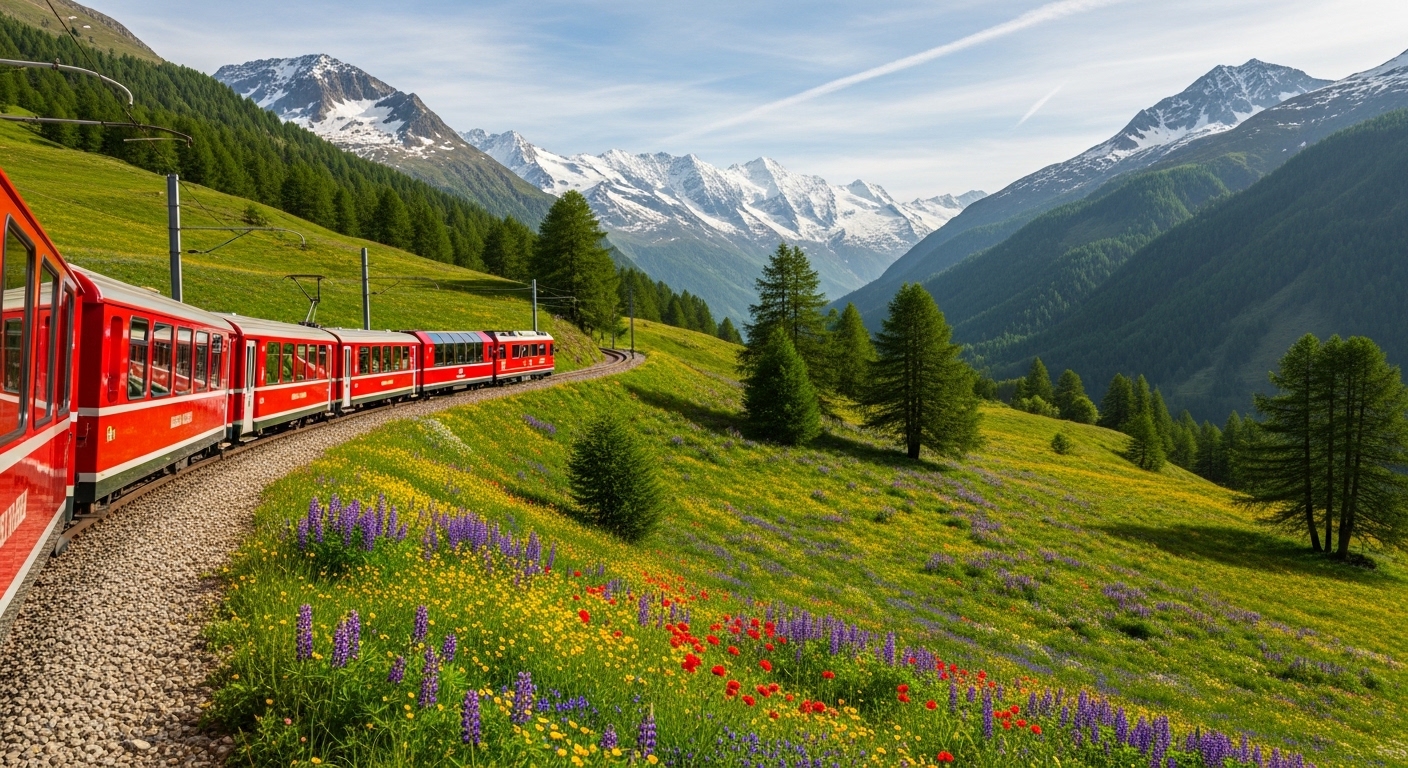
There is something quietly magical about alpine flower trains timed to bloom season. As the wheels glide along narrow mountain rails, entire valleys burst into color outside your window. Meadows ripple with wildflowers, slopes glow with seasonal blooms, and villages seem to emerge from carpets of green, yellow, purple, and white. This is not fast travel. This is slow, intentional movement through nature at its most expressive.
Alpine regions have long been admired for their peaks and winter snows, but spring and early summer reveal an entirely different personality. When flowers bloom at altitude, the mountains soften. Trains that pass through these landscapes during bloom season become front-row seats to one of nature’s most delicate performances. Have you ever traveled somewhere where the journey itself felt like the destination?
In this WentWorld.com journey, we explore alpine flower trains timed to bloom season, rail routes designed by geography, tradition, and timing rather than speed. These train journeys pass through valleys and passes precisely when wildflowers are at their peak, turning everyday rail travel into a moving botanical experience.
Why Alpine Bloom Season Changes Everything
Bloom season in alpine regions is brief and precious. Snowmelt feeds mountain soil, sunlight increases, and wildflowers race against time before colder conditions return. This creates an intense but fleeting window of color.
Unlike manicured gardens, alpine meadows grow freely. Flowers appear where conditions allow, creating unpredictable patterns. One year may bring thick blankets of gentians and edelweiss. Another year may favor alpine roses or buttercups. That sense of uncertainty makes bloom-season travel feel intimate and rare.
Alpine flower trains timed to bloom season are about understanding this rhythm. Rail lines often sit at the perfect altitude, climbing gradually, allowing passengers to witness how flora changes mile by mile. Would you notice how colors shift as elevation increases?
The Quiet Genius of Mountain Railways
Mountain railways were never designed with flowers in mind, yet they unintentionally became ideal bloom-season experiences. Engineers built these routes to follow valleys, hug cliffs, and cross mountain passes gently enough for locomotives to manage.
This means trains pass directly through alpine meadows rather than above or below them. Windows open to slopes dotted with flowers just feet away. Unlike hiking, which requires effort and time, trains offer accessibility without sacrificing immersion.
These railways also move slowly. Curves, gradients, and narrow passes ensure a pace that encourages observation. On alpine flower trains timed to bloom season, slowing down is not a drawback. It is the entire point.

Bernina Express, Switzerland
The Bernina Express is one of the most famous alpine train journeys in the world, connecting Switzerland with northern Italy. During bloom season, this route becomes a moving canvas of color.
As the train climbs above valleys and crosses the Bernina Pass, alpine meadows come alive. Purple crocuses, yellow globeflowers, and white alpine anemones dot the landscape. Glaciers still linger in the distance, creating a dramatic contrast between snow and bloom.
Operated by the Rhaetian Railway, the Bernina Express is recognized by UNESCO for its cultural and engineering significance. Yet for many travelers, the true highlight is watching spring unfold in real time outside panoramic windows.
GoldenPass Line, Switzerland
The GoldenPass Line travels through some of Switzerland’s most diverse alpine regions. During bloom season, this journey feels almost theatrical.
Lower elevations begin with lush green pastures scattered with wildflowers. As the train climbs, flowers become denser and more varied. Small alpine farms appear, surrounded by fields in full bloom. Church steeples rise from valleys framed by floral slopes.
Travelers arriving via Swiss International Air Lines often underestimate how transformative this rail journey can be. It is not about reaching a resort. It is about witnessing how alpine life awakens after winter.
Glacier Express and Spring Transitions
The Glacier Express is often associated with snow and winter, but early summer reveals another side. As snow retreats, alpine flowers emerge along the route connecting Zermatt and St. Moritz.
During this transitional period, the train passes through zones where winter and spring coexist. Snow patches linger near tracks while flowers bloom just beyond. This contrast is uniquely alpine and deeply moving.
Alpine flower trains timed to bloom season shine in these moments of transition. They show how landscapes do not change suddenly, but gradually, layer by layer.
The Mont Blanc Express, France and Switzerland
The Mont Blanc Express links Martigny in Switzerland to Chamonix in France. This route is less glamorous than some luxury trains, yet during bloom season it becomes one of the most authentic alpine experiences.
The train runs close to villages, forests, and open meadows. Wildflowers grow freely alongside the tracks. Pink alpine roses, yellow daisies, and blue gentians appear in clusters, often close enough to feel within reach.
Chamonix itself sits beneath Mont Blanc, and bloom season softens the town’s dramatic setting. Information from France.fr highlights the region’s seasonal beauty, but seeing it unfold from a train adds a sense of continuity that static viewpoints cannot offer.
Austria’s Arlberg Railway
Austria’s Arlberg Railway is best known for winter sports access, yet late spring transforms the route into a floral corridor. As snow melts, alpine flowers fill slopes once dominated by skiers.
This railway passes through tunnels, forests, and open alpine terrain. Each transition reveals a new floral scene. Meadows near villages bloom first, followed by higher slopes where flowers appear later.
Travelers arriving through Austrian Airlines often discover that the train ride itself becomes the highlight of their trip.
Why Flower Trains Feel Different From Scenic Trains
Scenic trains often focus on grand views: towering peaks, deep valleys, dramatic cliffs. Alpine flower trains timed to bloom season focus on detail.
They invite you to notice small things. A single red flower standing out against green grass. Bees moving between blossoms. Light shifting across petals as clouds pass overhead.
This focus creates a more intimate relationship with the landscape. Instead of feeling overwhelmed by scale, you feel connected to the ground itself. Have you ever noticed how slowing down changes what you see?
Timing Your Journey Perfectly
Bloom season varies depending on altitude, latitude, and weather. Lower alpine valleys bloom earlier, often from late May to early June. Higher elevations peak later, sometimes into July.
Planning alpine flower trains timed to bloom season requires flexibility. A warm spring can accelerate blooms. A late snowfall can delay them. This uncertainty adds excitement, turning each journey into a gamble with beauty.
Rail operators rarely advertise flower timing directly, but local tourism offices and guides often provide seasonal insights. Sites like Lonely Planet offer regional advice that can help travelers plan thoughtfully.

The Emotional Pull of Bloom-Season Travel
There is a strong emotional element to traveling during bloom season. Flowers represent renewal. After months of winter dormancy, life returns quickly and boldly.
On alpine flower trains, this renewal unfolds continuously. You watch landscapes change not just geographically, but emotionally. The mood lightens. Colors lift spirits. Even fellow passengers seem quieter, more observant.
Have you ever felt calmer simply by watching nature move past a window?
Responsible Travel in Fragile Alpine Ecosystems
Alpine ecosystems are sensitive. Many wildflowers grow only at specific altitudes and can take years to recover if disturbed.
Trains are among the most sustainable ways to experience these regions. Organizations like the International Union for Conservation of Nature emphasize low-impact travel as essential for preserving mountain environments.
By choosing rail travel and respecting local guidelines, travelers help ensure that future bloom seasons remain just as vibrant.
Why These Journeys Stay With You
Alpine flower trains timed to bloom season linger in memory because they combine movement with mindfulness. You are not rushing toward a destination. You are watching a living landscape unfold.
Long after the journey ends, travelers often remember specific moments. A hillside glowing gold at sunrise. A sudden burst of purple after a tunnel. A quiet valley filled with color and silence.
These are not checklist experiences. They are emotional impressions.
At WentWorld.com, we believe travel should reveal the world’s quieter wonders. Alpine flower trains remind us that timing matters, patience matters, and beauty often arrives briefly.
Have you ever taken a train journey that surprised you more than the destination itself? Or would you plan a trip around bloom season just to witness this transformation? We would love to hear your thoughts and experiences.
If stories like this inspire you to travel more thoughtfully, follow WentWorld.com on our social media platforms for more journeys that celebrate timing, nature, and the art of slow travel.
Catch up on the top stories and travel deals by subscribing to our newsletter!