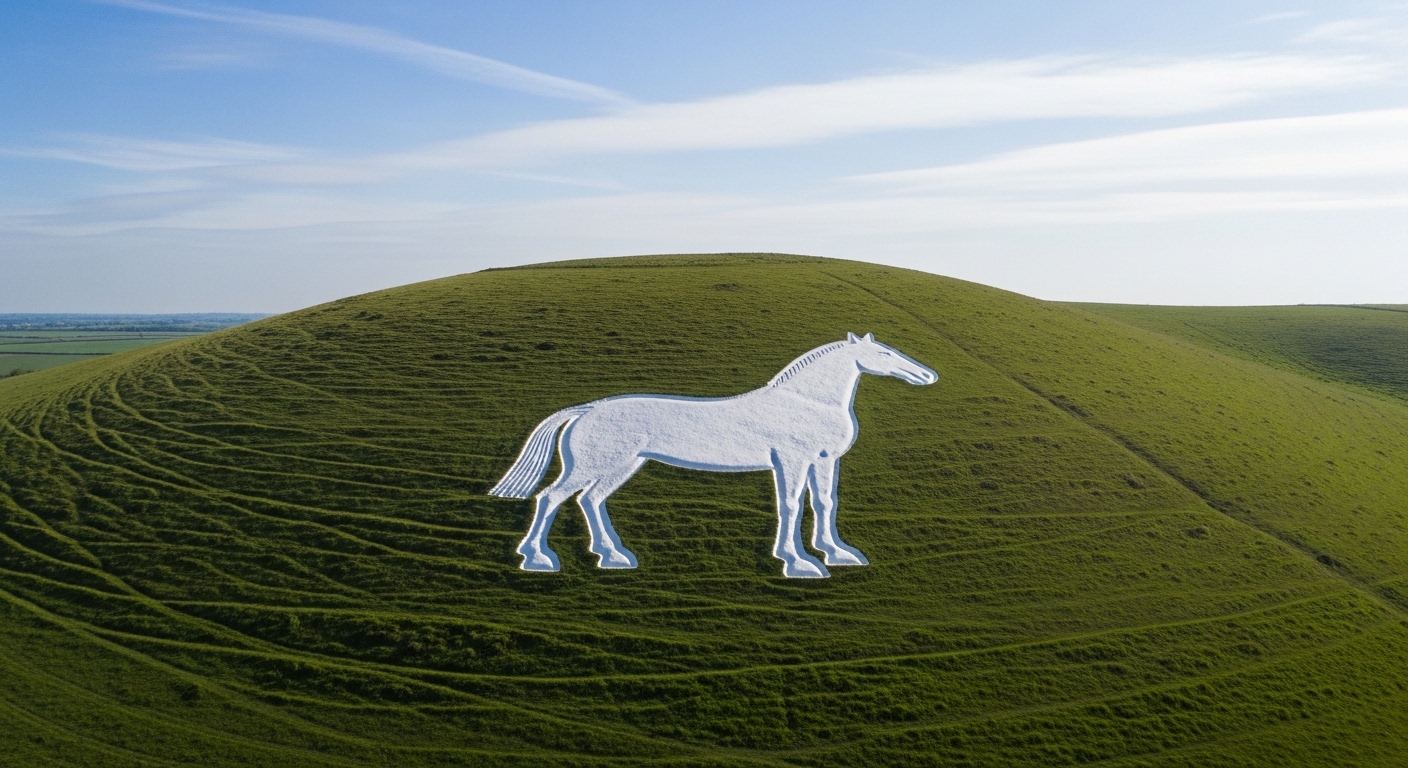
There is something quietly powerful about walking across chalk downs. The land feels open, wind-washed, and timeless. Now imagine following those rolling white hills until a giant horse carved into the earth slowly appears beneath your feet. Chalk downs & white horse hill figures walks are not just scenic countryside strolls. They are journeys across prehistoric imagination, medieval symbolism, and living landscapes that have survived thousands of years.
Across southern England and parts of Europe, chalk hills hold enormous white figures cut directly into the land. These figures are not museum pieces locked behind glass. They are visible, walkable, and still maintained by local communities. Whether you are a history lover, a landscape photographer, or someone who enjoys slow, meaningful travel, these walks offer a rare connection between movement, myth, and memory.
What Are Chalk Downs and Why Are They Special?
Chalk downs are rolling hills made from chalk limestone, formed millions of years ago under ancient seas. Over time, erosion exposed these soft white surfaces, creating landscapes that are easy to shape and highly reflective under sunlight. This unique geology made chalk downs ideal for carving large figures that could be seen from miles away.
Walking on chalk downs feels different from walking on soil or rock. The ground is firm yet soft, the grass short, and the views uninterrupted. These landscapes encouraged early communities to use the hills as canvases for symbols, animals, and messages meant to endure.
Do you think ancient people imagined their work would still be walked across centuries later?
The Mystery of White Horse Hill Figures
White horse hill figures are massive images carved by removing grass and topsoil to expose white chalk beneath. Some date back over 3,000 years, while others were created in medieval or even modern times to honor heritage traditions.
The most famous of these is the Uffington White Horse, believed to be Britain’s oldest hill figure. Unlike later chalk horses, it is abstract, elongated, and stylized, suggesting deep symbolic meaning rather than literal representation.
What makes these figures remarkable is their survival. Without regular maintenance, grass would quickly reclaim them. Their continued visibility proves a living relationship between land and community.
Uffington White Horse: The Iconic Walk
The Uffington White Horse, located in Oxfordshire, is the crown jewel of chalk downs & white horse hill figures walks. Stretching over 110 meters long, this Bronze Age figure sits high above the Vale of White Horse, visible for miles.
The walking route around Uffington takes you along ancient ridgeways, past Iron Age forts, burial mounds, and sweeping farmland. The path connects natural beauty with archaeological depth, making every step feel layered with meaning.
Visitors often combine the walk with nearby sites such as Wayland’s Smithy, a Neolithic burial chamber steeped in folklore. According to legend, travelers could leave a coin and return to find their horse mysteriously shod.
Official walking guidance and conservation details can be found via National Trust.
Westbury White Horse and Wiltshire’s Chalk Country
Wiltshire is another stronghold of chalk downland and hill figures. The Westbury White Horse, carved in the 18th century, dominates a steep hillside above the town. Unlike the abstract Uffington figure, Westbury’s horse is more literal and dramatic.
The walk here is physically demanding but deeply rewarding. From the top, hikers enjoy wide views across Salisbury Plain and nearby countryside shaped by centuries of farming and ritual use.
This region is also close to Stonehenge, reinforcing the sense that chalk landscapes were central to Britain’s earliest cultures. Travelers exploring the area often plan routes recommended by Visit Wiltshire.

The Cerne Abbas Giant and Human Hill Figures
Not all chalk figures depict animals. The Cerne Abbas Giant in Dorset is one of the most debated hill figures in Europe. Carved into a steep hillside, this enormous human figure holding a club has been linked to fertility, satire, religious symbolism, and political protest.
Walking routes around Cerne Abbas allow visitors to view the giant from different angles, emphasizing how landscape perspective influences interpretation. The figure’s visibility shifts with light, season, and distance.
Does knowing that these figures were meant to be seen from afar change how you experience them up close?
Why These Walks Still Matter Today
In an age of digital navigation and fast travel, chalk downs & white horse hill figures walks offer something rare: slowness with purpose. These walks are not about ticking destinations off a list. They are about moving through stories written directly into the land.
They also remind us that ancient people shaped landscapes intentionally, blending art, belief, and environment. These figures served as territorial markers, spiritual symbols, or community identities long before modern signage existed.
Many walkers describe a sense of grounding while following these routes. Without tall buildings or traffic noise, the land becomes the dominant presence again.
Best Time of Year for Chalk Down Walks
Spring and early summer are ideal for walking chalk downs. The grass is short, wildflowers bloom, and visibility is excellent. Autumn also offers crisp air and fewer crowds.
Winter walks are possible but require caution, as chalk paths can become slippery when wet. Proper footwear is essential year-round.
Would you prefer these walks in quiet winter solitude or vibrant summer light?
Preservation and Community Care
Hill figures survive because local communities continue to maintain them through a process known as scouring. This involves re-exposing the chalk by clearing vegetation, often during public events that connect people with their heritage.
Organizations like Historic England work alongside volunteers to protect these sites from erosion, vandalism, and neglect.
Walking responsibly is part of this preservation. Staying on paths, respecting signage, and avoiding climbing directly on figures help ensure their survival.

Planning Your Chalk Downs Walking Route
Most chalk down walks are accessible via public footpaths and national trails. The Ridgeway National Trail is one of the most popular routes, linking multiple prehistoric sites and hill figures.
Travelers often reach these areas through nearby cities such as Oxford, Swindon, or Salisbury. Regional rail services and road access make these walks easy to combine with broader countryside travel.
Flight connections through British Airways or other European carriers bring international visitors close to these landscapes without difficulty.
The Future of Chalk Landscape Tourism
Interest in slow travel and heritage walking routes is growing. As travelers seek experiences that feel meaningful rather than manufactured, chalk downs and hill figures are gaining renewed attention.
Digital guides, conservation storytelling, and community-led tours are helping new generations understand why these ancient carvings still matter.
Perhaps the most powerful aspect of these walks is their simplicity. You walk, you observe, and you imagine the hands that carved meaning into the land long before roads existed.
Have you ever walked somewhere that made time feel layered rather than linear?
We would love to hear from you. Have you explored chalk downs or hill figures before, or are they now on your travel list? Share your thoughts and experiences in the comments.
Follow WentWorld.com on social media for more journeys into landscapes where history, myth, and travel intersect.
Catch up on the top stories and travel deals by subscribing to our newsletter!