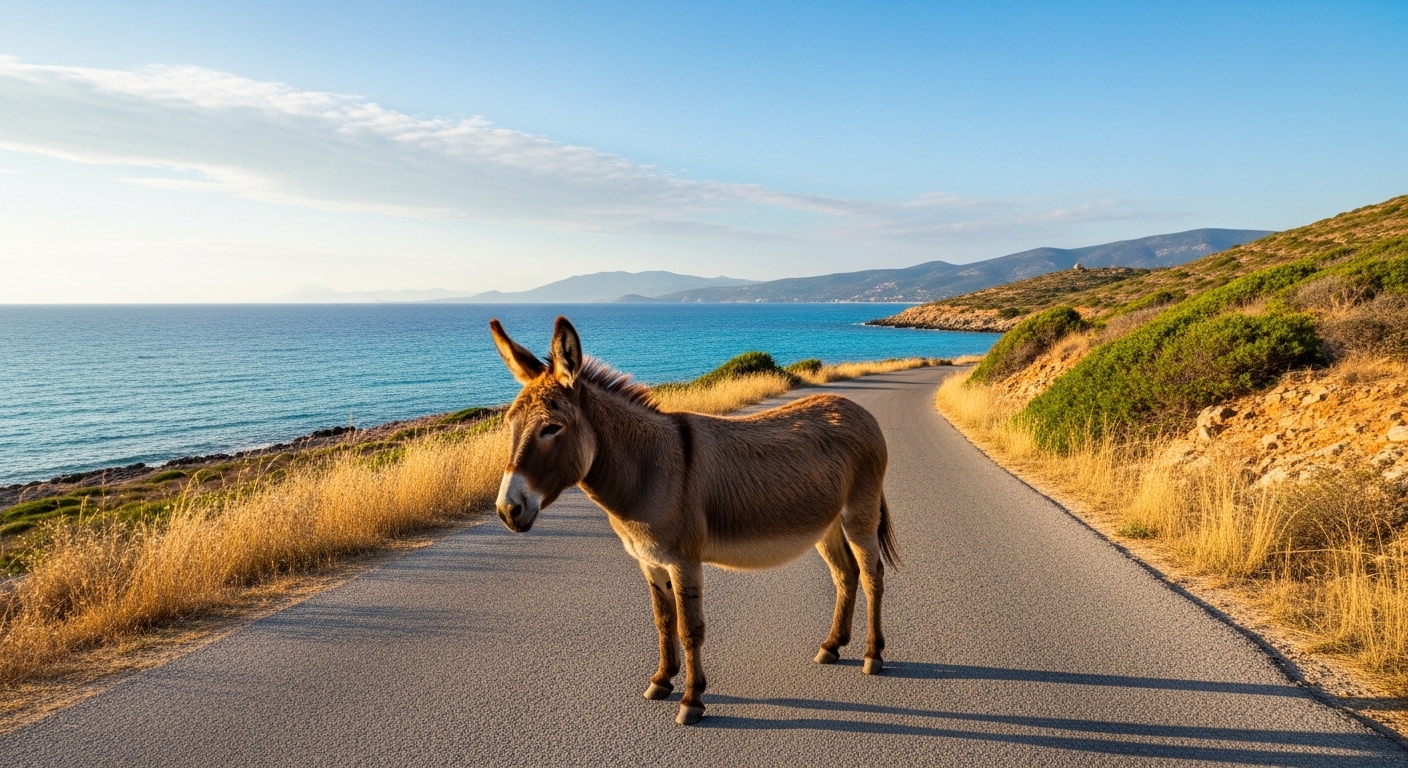
Wild donkey islands—ethical encounters and etiquette is more than a travel idea; it is a responsibility that follows every visitor onto these remote shores. Across a small number of islands worldwide, wild donkeys roam freely, shaping landscapes, ecosystems, and cultural identity in ways many travelers do not initially expect. Instead of controlled wildlife settings, these animals live independently, responding to both nature and human presence.
At first glance, seeing donkeys wandering beaches or crossing island roads can feel charming. However, that initial reaction often masks a deeper reality. These animals are not domesticated pets, nor are they designed for tourism interaction. As a result, every encounter carries ethical weight, whether travelers realize it or not.
This guide by WentWorld.com explores where wild donkey islands exist, how ethical encounters should be approached, and why proper etiquette matters. More importantly, it asks an essential question: can observation be more meaningful than interaction when it comes to wildlife travel?
The Historical Roots of Wild Donkey Islands
To understand wild donkey islands—ethical encounters and etiquette, it helps to begin with history. Donkeys did not naturally evolve on most of the islands they inhabit today. Instead, they were introduced centuries ago by settlers, traders, and colonial forces as working animals.
Over time, many of those human settlements declined or disappeared entirely. Consequently, the donkeys were left behind, forced to adapt or perish. Through generations, they learned to survive on limited resources, forming herds and developing behaviors suited to harsh island environments.
Today, these animals exist as living reminders of human expansion and abandonment. Therefore, ethical travel requires acknowledging that their presence is tied directly to historical choices rather than natural migration.
Bonaire: A Living Example of Responsible Coexistence
Bonaire is one of the most well-known wild donkey islands in the world. Here, donkeys roam freely across salt flats, desert roads, and coastal areas. Unlike many destinations, the island has strong legal protections in place to safeguard their welfare.
Because donkeys frequently approach roads and open spaces, visitors often feel tempted to feed or touch them. Unfortunately, this is where well-meaning behavior turns harmful. Feeding human food disrupts digestion, alters natural behavior, and increases road-related injuries.
Organizations such as The Donkey Sanctuary emphasize that distance is not cruelty but kindness. In practice, ethical encounters on Bonaire involve patience, quiet observation, and respect for animal autonomy.
Asinara Island, Italy: Conservation Through Restriction
Off the coast of Sardinia lies Asinara Island, home to a rare population of albino donkeys. Once used as a prison colony, the island has since transformed into a protected national park.
Unlike open-access destinations, Asinara strictly limits visitor movement. As a result, donkeys are allowed to roam without constant human interference. Visitors are advised not to approach, feed, or obstruct their paths, even for photography.
Through conservation policies enforced by Italian environmental authorities, Asinara demonstrates that ethical encounters sometimes require limitations. While restrictions may frustrate travelers, they ultimately preserve both animal welfare and ecological balance.

Why Ethical Encounters Matter in Modern Travel
As tourism continues to grow globally, wildlife encounters have increasingly become content-driven experiences. Unfortunately, this shift often places animals under stress. Wild donkey islands—ethical encounters and etiquette exist precisely because casual interaction can create lasting harm.
When donkeys associate humans with food, they lose natural foraging habits. Over time, this leads to aggressive behavior, road accidents, and health problems. Moreover, repeated exposure to crowds can elevate stress levels and disrupt social structures.
According to World Animal Protection, ethical wildlife tourism prioritizes animal needs over visitor convenience. Therefore, responsible observation becomes a form of conservation.
Common Mistakes Visitors Often Make
One of the most frequent mistakes travelers make is assuming friendliness equals permission. Donkeys may appear calm or curious; however, this does not mean they welcome touch or feeding.
Another common issue involves blocking paths for photographs. Even brief interruptions can disrupt grazing or movement patterns. In contrast, stepping aside allows animals to maintain control of their environment.
Additionally, loud behavior, sudden movements, and flash photography contribute to unnecessary stress. Ethical etiquette, therefore, begins with self-awareness.
Observing Without Interfering
Ethical encounters rely on intentional restraint. Instead of approaching, stand still and allow animals to choose distance. Photography should remain quiet and unobtrusive, without chasing the perfect shot.
On islands where donkeys cross roads, slowing vehicles is essential. Many destinations enforce reduced speed limits to protect wildlife. Airlines such as KLM also promote responsible travel messaging for wildlife-sensitive destinations.
Ultimately, ethical observation asks for nothing in return. It allows nature to unfold without human demand.
The Cultural Importance of Island Donkeys
Beyond ecology, wild donkeys often hold cultural significance. On Bonaire, they symbolize resilience and survival. In parts of Italy and Greece, they represent agricultural heritage and historical labor.
Because of this connection, disrespecting the animals can feel like disrespecting local identity. Ethical encounters, therefore, extend beyond animals to include the communities that coexist with them.
Have you ever considered how wildlife tourism affects local values as much as ecosystems?
When Protection Requires Saying No
Some wild donkey islands restrict access entirely during certain seasons. While this can disappoint travelers, it often reflects environmental necessity.
According to guidelines supported by UNESCO, preservation sometimes requires denying access to prevent long-term damage. In this context, ethical travel means accepting boundaries without resistance.
Consequently, respect becomes more valuable than proximity.

Teaching Ethical Behavior to Younger Travelers
Families visiting wild donkey islands carry added responsibility. Children are naturally curious; however, guidance shapes how that curiosity is expressed.
By teaching observation rather than interaction, parents help foster empathy instead of entitlement. Over time, these lessons influence how future travelers treat wildlife.
Would you rather raise a traveler who collects photos or one who understands impact?
The Future of Wild Donkey Islands
Climate change, habitat pressure, and tourism growth continue to challenge island ecosystems. As a result, the future of wild donkey islands—ethical encounters and etiquette depends largely on visitor behavior.
Supporting conservation programs, respecting local laws, and sharing responsible travel stories all contribute to protection. Moreover, choosing awareness over access helps preserve these landscapes for generations.
At WentWorld.com, we believe travel should deepen understanding rather than diminish it. Wild donkey islands remind us that meaningful experiences often come from restraint.
Have you encountered wild animals while traveling? Did you feel confident about interacting responsibly? Share your experiences and reflections with us.
For more stories that explore travel through ethics, respect, and curiosity, follow WentWorld.com on our social media platforms.
Catch up on the top stories and travel deals by subscribing to our newsletter!