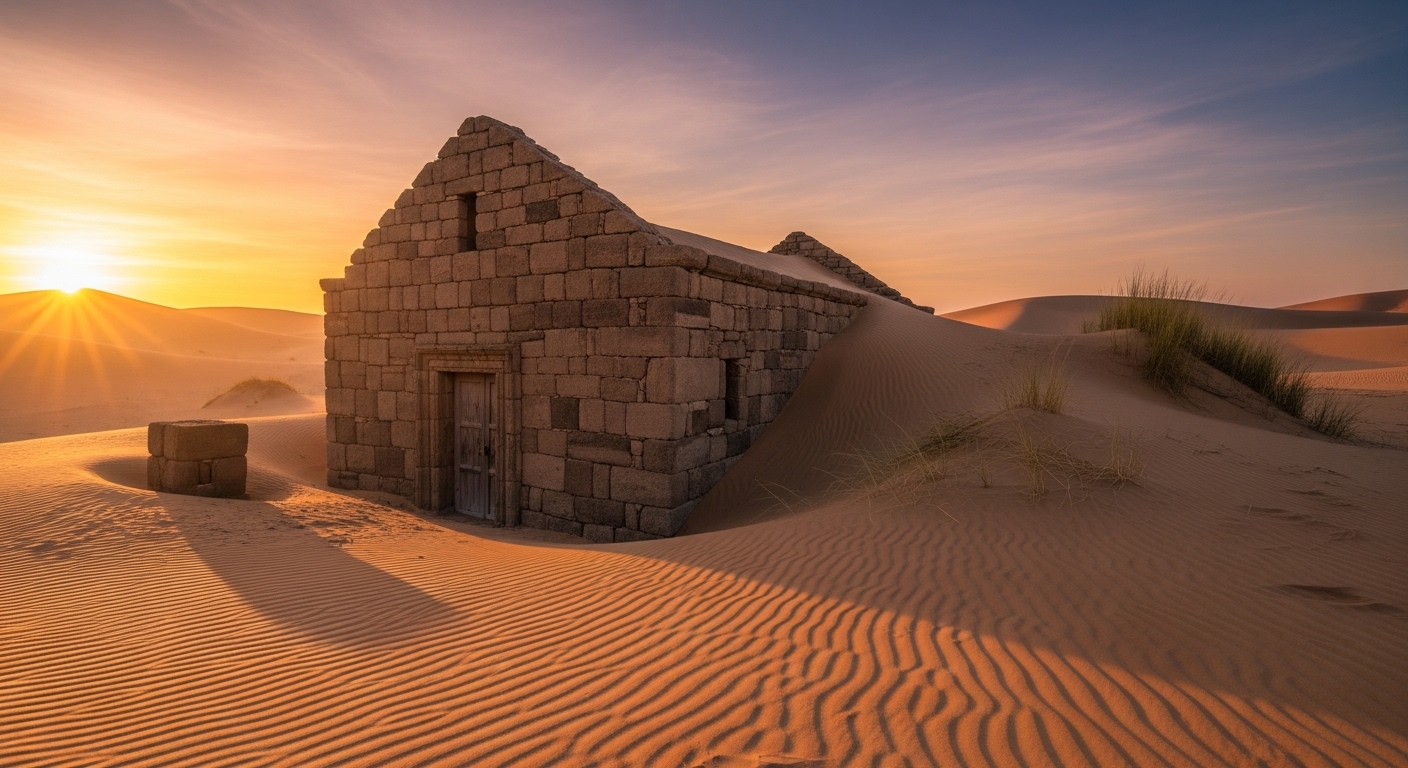
Imagine wandering through a desert where sand dunes seem endless, and suddenly, the top of a centuries-old church emerges from the ground. Buried churches unearthed by shifting sands offer more than just an intriguing sight; they reveal stories of communities long forgotten, civilizations that once thrived, and the relentless dance between nature and time. These unexpected archaeological discoveries capture our imagination and make us question what else might lie hidden beneath the desert floor.
Deserts are landscapes of extremes—harsh winds, scorching heat, and vast stretches of barren land. Yet, hidden within these harsh terrains, history sleeps beneath layers of sand, waiting for the perfect moment to resurface. When shifting dunes reveal a fragment of stonework, a bell tower, or a weathered facade, it feels like the desert itself is telling us its stories.
In this WentWorld.com exploration, we’ll uncover some of the most remarkable buried churches unearthed by shifting sands, the history behind them, and why their sudden reappearance fascinates historians, travelers, and photographers alike. Have you ever stumbled upon a place that made you feel like you had stepped into another time?
The Mystery of Desert-Buried Churches
Churches buried under sand are not just random occurrences. Many were abandoned due to changing trade routes, declining populations, or natural disasters. Over centuries, dunes encroached slowly, swallowing these structures and turning them into hidden relics. Today, as desert landscapes shift due to wind patterns and occasional rains, these churches reappear in fragments, often in the most unexpected places.
The appeal is both aesthetic and emotional. There’s something haunting about seeing ornate arches or bell towers peeking above sand. The contrast between intricate human craftsmanship and the vast, untamed desert evokes feelings of both awe and melancholy. How would you feel if you saw the roof of a centuries-old church emerging from the sands on a morning walk?
Science Behind the Sands
Shifting sands are not random—they follow natural patterns driven by wind, rainfall, and erosion. Over decades, dunes move slowly, sometimes burying entire villages, sometimes uncovering long-lost structures. This movement is influenced by prevailing winds, sand composition, and even microclimates within deserts. Archaeologists often track these patterns to anticipate potential discoveries.
For example, in regions like Egypt’s Western Desert, the Sahara, and parts of the Middle East, researchers use satellite imagery and aerial surveys to locate buried structures. Organizations such as Archaeological Institute of America often document these findings. The intersection of geology and archaeology makes every unearthed church a fascinating case study in both natural and human history.
St. Simeon Monastery, Syria
One of the most iconic examples of a church affected by shifting sands is the St. Simeon Monastery in northern Syria. While much of the structure remains standing, over time, sand dunes have partially buried the surrounding chapels and pathways. Early morning light casting shadows on the sand reveals the subtle contours of walls, arches, and mosaics.
The monastery is accessible via regional airlines such as Syrian Air, but reaching it requires careful planning due to desert terrain. Travelers who do arrive often describe a sense of timelessness, as if the sands themselves are guardians of history.
Churches of the Empty Quarter, Saudi Arabia
The Rub’ al Khali, also known as the Empty Quarter, is one of the largest sand deserts in the world. In recent decades, explorers and researchers have documented multiple sites where church foundations and partial walls have emerged as dunes shifted. Some of these churches are believed to date back over a thousand years, tied to early Christian communities along ancient trade routes.
Visiting these locations is challenging, but the reward is remarkable: witnessing the desert slowly reveal the past. Researchers collaborate with international institutions, and information is often shared through resources like The British Museum to better understand the cultural context of these findings.

Challenges of Preservation
While discovery is thrilling, preservation is difficult. Exposed structures face wind erosion, shifting sands, and occasional floods. Archaeologists must balance excavation with conservation. In some cases, temporary coverings or sand stabilization techniques are used to protect fragile walls until further study is possible.
Tourists are encouraged to view these sites responsibly. Even small footprints or attempts to uncover hidden areas can accelerate deterioration. Desert environments are delicate, and the very forces that reveal these churches also threaten them. Organizations like World Heritage provide guidelines for sustainable visitation.
Emotional and Cultural Significance
Seeing buried churches unearthed by shifting sands is more than a historical experience—it’s a deeply emotional one. These structures are monuments to faith, community, and resilience. Even partially buried, they tell stories about people who lived, prayed, and built their lives in harmony with an environment far harsher than modern cities.
Many travelers report a strange sense of intimacy with history at these sites. The sand seems to amplify silence, and each uncovered stone feels like a message from centuries past. Have you ever felt that quiet connection to history when visiting a forgotten place?

Modern Discoveries and Digital Mapping
Technology has transformed how we find and study buried churches. Drones, LIDAR scanning, and satellite imaging allow archaeologists to detect anomalies under sand without disturbing the landscape. Platforms like NASA and Google Earth provide tools to track shifting dunes and identify potential sites.
This modern approach increases the chances of preserving delicate structures while also making remote sites accessible virtually to the wider public. Even if you cannot visit a remote desert, digital exploration can give you a glimpse of these hidden wonders.
Planning Your Visit Responsibly
If you are inspired to witness these desert churches firsthand, preparation is key. Desert climates are extreme, and some locations are remote. Bringing a knowledgeable guide, respecting local regulations, and traveling with minimal impact ensures that the sands can continue to protect and reveal history. Many of these areas are still sparsely populated, so contact local authorities or travel agencies before venturing into the desert.
Have you ever thought about how sand, often seen as a barrier, can become a storyteller? Visiting buried churches offers a lesson in patience, observation, and respect for both nature and history.
Why We Keep Returning to Desert Mysteries
Deserts keep us humble. They remind us that even the quietest forces—wind, sand, and time—can shape civilizations. Buried churches unearthed by shifting sands are tangible evidence of this slow but relentless process. They challenge our understanding of permanence and impermanence, and they encourage travelers to slow down, look closely, and listen.
We would love to hear from you: have you ever encountered a hidden or unexpected historical site that made you feel connected to the past? Share your experiences with us and join the conversation. For more stories that reveal the hidden wonders of our world, follow WentWorld.com on our social media platforms.
Catch up on the top stories and travel deals by subscribing to our newsletter!