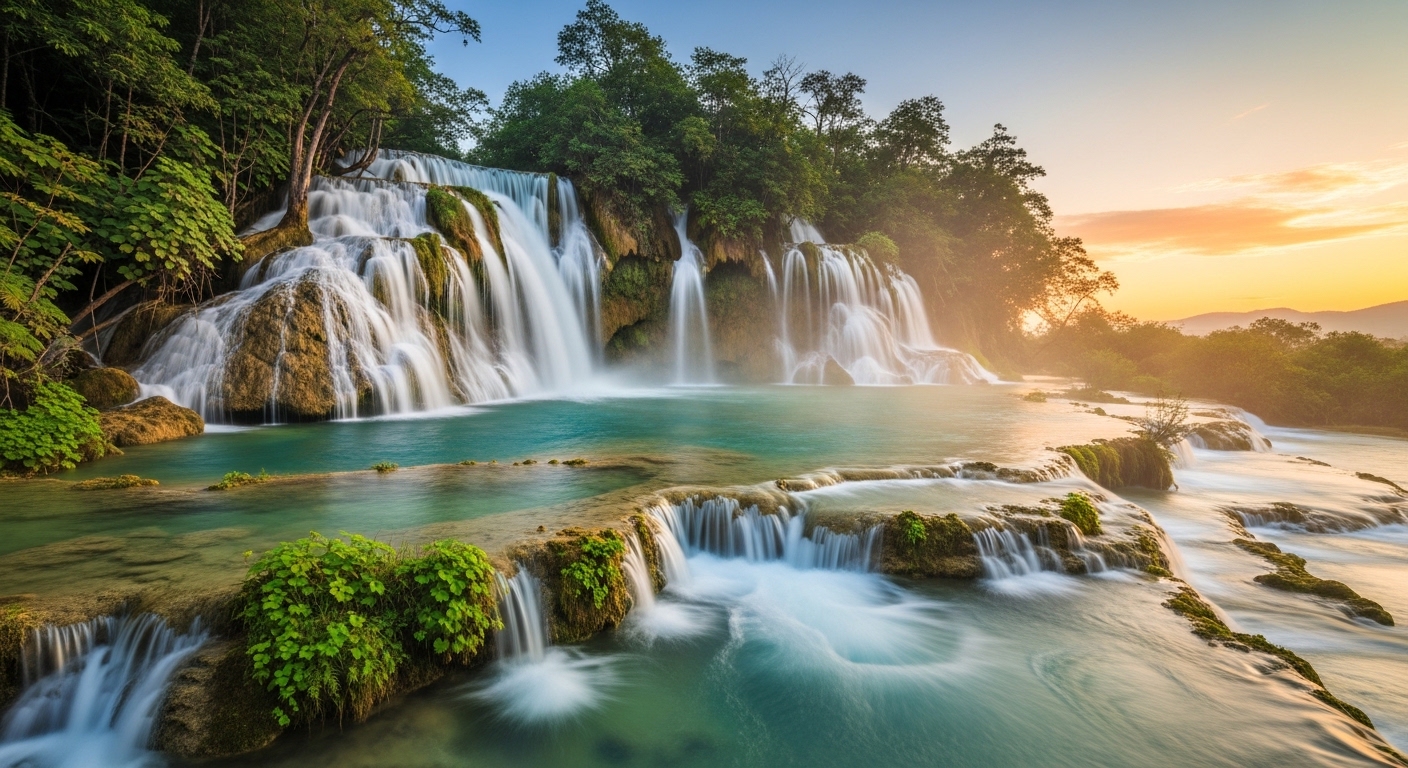
There is something deeply satisfying about discovering waterfall terraces you can climb without crowds. Not just seeing them from a distance, but stepping onto smooth stone ledges, feeling cool water rush past your ankles, and moving upward at your own pace. These are not places packed with tour buses or selfie sticks. They are quiet, layered waterfalls that invite exploration rather than observation.
Most famous waterfalls are meant to be admired from afar. You stand behind a railing, take a photo, and move on. Terraced waterfalls are different. They form natural staircases carved by time, water, and gravity. In the early hours or remote regions, these waterfalls offer something rare in modern travel: freedom to climb, pause, and connect with nature without crowds pressing in.
In this WentWorld.com guide, we explore waterfall terraces you can climb without crowds, scattered across different corners of the world. We look at why these formations exist, what makes them safe and accessible, and how to experience them responsibly. Have you ever wanted to feel part of the landscape instead of just passing through it?
What Makes a Waterfall Terraced and Climbable
Waterfall terraces form when mineral-rich water flows over limestone or volcanic rock, depositing layers over thousands of years. Instead of one dramatic vertical drop, the water spreads across a series of shallow steps and pools. These steps are often wide, gently sloped, and textured, making them naturally climbable.
Unlike steep waterfalls, terraced cascades slow the movement of water. This creates calmer pools between levels and reduces erosion. In many places, the rock surface becomes smooth but not slippery, especially during dry seasons. This balance is what allows visitors to walk, sit, and climb without technical equipment.
Of course, not all terraced waterfalls are safe everywhere. Conditions change with seasons, rainfall, and human impact. That is why the most rewarding experiences often come from lesser-known locations where nature remains relatively untouched. Would you rather follow a marked path or discover a route shaped only by water and time?
Why Crowds Avoid These Places
Many waterfall terraces remain uncrowded simply because they do not fit the classic postcard image. They are not towering cliffs with thunderous drops. Instead, they are subtle, wide, and layered. Some require short hikes, early starts, or local knowledge to reach.
In some regions, access roads are unpaved or signage is minimal. Tour operators tend to focus on easily marketable attractions, leaving these quieter sites off the mainstream itinerary. This is good news for travelers who value space and authenticity.
Another reason crowds stay away is effort. Climbing terraces means getting wet, moving slowly, and sometimes scrambling over rock. It is not always glamorous. Yet for many travelers, that effort is exactly what makes the experience meaningful.

Kuang Si Falls Upper Terraces, Laos
Kuang Si Falls near Luang Prabang is famous, but few visitors venture beyond the lower viewing platforms. Above the main cascade lies a network of upper terraces that thin out quickly as you climb higher.
These upper levels are made of limestone, shaped into pale turquoise steps by mineral deposits. Early in the morning, before tour groups arrive, the terraces are quiet and reflective. Water flows gently across wide ledges, allowing careful climbing.
Travelers reaching Laos often arrive via regional hubs, with airlines such as Lao Airlines connecting Luang Prabang to neighboring countries. From there, a short trip leads to one of Southeast Asia’s most peaceful waterfall experiences.
Have you ever stayed at a place longer simply because it felt calm? The upper terraces of Kuang Si have that effect.
Huanglong Terraces, China
Huanglong, located in Sichuan Province, is known for its travertine pools cascading down a valley. While some sections are protected by boardwalks, many outer terraces remain accessible and surprisingly quiet.
The water here flows slowly over golden-yellow mineral steps, forming shallow pools that invite exploration. In less-visited areas, you can move carefully between levels, feeling the subtle texture of stone beneath your feet.
Information from UNESCO highlights Huanglong as a World Heritage Site, but its size allows visitors to find solitude away from the main routes.
The key is timing. Early mornings or shoulder seasons reveal a completely different atmosphere, where the sound of water replaces the noise of crowds.
Semuc Champey, Guatemala
Hidden deep in the Guatemalan jungle, Semuc Champey is a natural limestone bridge topped with a series of turquoise pools. The Cahabón River flows underneath, while calm water collects above in layered terraces.
Climbing between these pools feels intuitive. Smooth stone ledges separate each level, and the water depth varies enough to allow wading rather than swimming. Despite its beauty, Semuc Champey remains relatively uncrowded due to its remote location.
Many travelers rely on guidance from platforms like Lonely Planet, but nothing prepares you for the sensation of moving freely across water-carved steps in the middle of the forest.
Would you travel farther if it meant having a place almost to yourself?
Plitvice Upper Cascades, Croatia
Plitvice Lakes National Park is no secret, but most visitors stay on wooden walkways around the lower lakes. The upper cascades, especially in less promoted sections, offer terraced waterfalls where water trickles gently over mossy stone.
During quieter hours, you can find areas where climbing between shallow levels is permitted and safe. These sections feel worlds away from the busy boardwalks.
Resources from croatia.hr help visitors plan routes that avoid peak congestion, allowing a more immersive experience.
There is something powerful about knowing a famous place can still offer solitude if you move differently within it.
Pamukkale’s Hidden Edges, Turkey
Pamukkale is globally recognized for its white travertine terraces, yet many visitors stay within designated paths. Along the outer edges and less visited sections, there are smaller terraces where water flows quietly and crowds thin out.
Here, you can carefully climb between shallow pools, feeling warm mineral water underfoot. The terraces are smooth and gently sloped, shaped by calcium-rich springs over millennia.
Turkish travel authorities and airlines like Turkish Airlines have made the region accessible, but timing remains everything.
Would you wake up early or stay late if it meant having a place like this in near silence?

The Emotional Pull of Climbing Waterfalls
Climbing waterfall terraces is not about conquering nature. It is about cooperation. You move with the flow, adjusting your steps to the rhythm of water.
Each level feels earned, not through strength but patience. You pause naturally, sitting in shallow pools, watching water spill gently downward. The experience becomes meditative.
Many travelers say these moments stay with them longer than famous landmarks. Perhaps it is because they require presence. You cannot rush across wet stone. You must slow down.
Responsible Climbing and Preservation
Waterfall terraces are delicate. Oils from skin, sunscreen residue, and erosion from heavy foot traffic can damage mineral formations.
Organizations like World Wildlife Fund emphasize low-impact travel in freshwater ecosystems. Simple choices matter. Avoid stepping on fragile edges. Do not use soap or chemicals. Respect local guidelines.
Preserving these places ensures future travelers can experience the same quiet magic.
Why These Waterfalls Matter in Modern Travel
In a time when travel often feels rushed and crowded, waterfall terraces you can climb without crowds represent a different approach. They reward curiosity, effort, and patience.
They remind us that adventure does not always mean extremes. Sometimes it means gentle movement through layered water, listening rather than rushing.
At WentWorld.com, we believe these experiences redefine what meaningful travel looks like. Not louder. Not faster. Just deeper.
Have you ever climbed a waterfall or waded through natural terraces? Did it change how you see nature-based travel? We would love to hear your stories and reflections.
If thoughtful journeys and lesser-known places inspire you, follow WentWorld.com on our social media platforms and continue exploring the world beyond the obvious.
Catch up on the top stories and travel deals by subscribing to our newsletter!