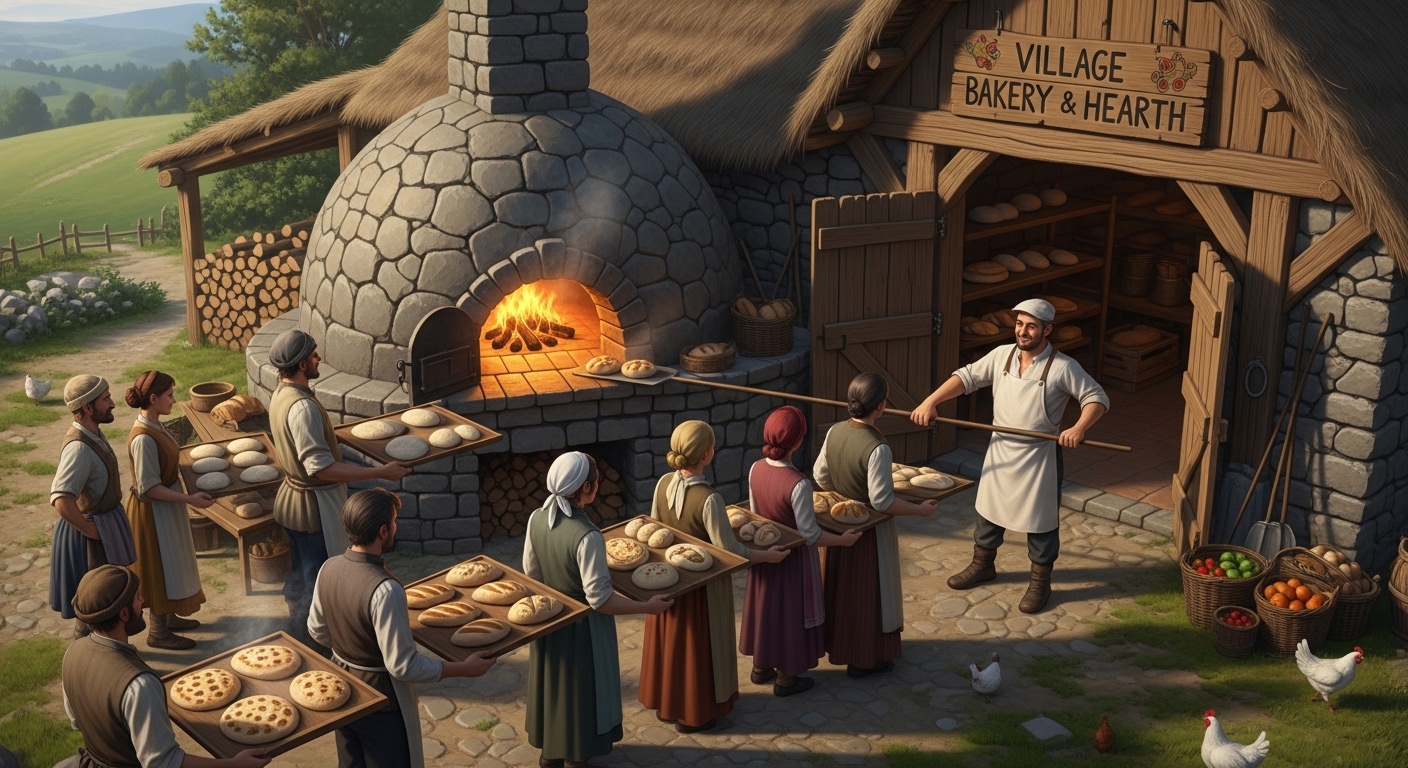
In many corners of the world, village bakeries that still use communal ovens quietly continue a tradition older than written recipes. These bakeries do not chase speed or efficiency. Instead, they protect rhythm, patience, and shared effort. When people gather around a single oven, bread becomes more than food. It becomes a reason to slow down, speak to one another, and participate in something deeply rooted in place.
Modern life has trained us to expect instant results. Bread now appears wrapped and sliced, disconnected from process or people. Yet in villages where communal ovens still burn, the smell of baking announces a collective moment. Neighbors arrive with dough tucked into cloth. Conversations unfold naturally while the fire does its work. Have you ever noticed how waiting together changes the way people talk?
This WentWorld.com story explores village bakeries that still use communal ovens, the cultures that sustain them, and the experience of witnessing food made through cooperation rather than convenience. Along the way, we invite you to reflect on how shared traditions shape both flavor and community.
The Purpose Behind Communal Ovens
Communal ovens emerged from necessity. Building and fueling a large oven required effort and resources that few households could manage alone. Villages solved this problem collectively. One oven served many families, and baking became a scheduled, social activity.
Today, village bakeries that still use communal ovens maintain this logic. Families prepare dough at home, then bring it to a shared space where heat and time belong to everyone. The oven dictates the pace. People adapt to it rather than rushing the process.
Instead of isolating food production, communal ovens anchor daily life. They create predictable moments of interaction, which modern systems often remove. Do you think food tastes different when it carries shared responsibility?
How Shared Heat Improves Bread
Anyone who has eaten bread from village bakeries that still use communal ovens quickly notices the difference. Thick crusts crackle when broken. The interior holds moisture without feeling dense. These qualities come directly from how the oven works.
Villagers typically build communal ovens from stone or brick and fire them with wood. Once heated, the oven stores intense energy. Bakers load bread first, using peak heat to develop crust and structure. As temperatures slowly fall, they bake pastries, flatbreads, and even cooked meals.
This gradual cooling rewards planning and cooperation. Nothing goes to waste. Heat serves everyone. Modern ovens replicate consistency, but they rarely match complexity.
French Villages and the Four à Pain
Across rural France, the four à pain remains a familiar sight. Some ovens date back centuries. Others reflect careful restoration carried out by local communities.
In regions such as Provence and Dordogne, village bakeries that still use communal ovens organize weekly baking days. Locals arrive early. Wood is stacked deliberately. The fire burns down slowly before bakers slide loaves into the oven using long paddles.
France continues to protect culinary heritage through national initiatives highlighted by France.fr. Despite this attention, communal baking here feels practical rather than performative. Visitors sense authenticity because villagers still depend on the process.

Morocco’s Neighborhood Ferran
In Moroccan towns and villages, communal ovens called ferran remain essential. Families prepare dough at home, then send it to the oven with children or neighbors. Bakers recognize each household’s markings, which identify loaves after baking.
The ferran sits at the center of neighborhood life. Heat radiates outward as people wait nearby. Conversations happen easily. Trust holds the system together.
Travelers arriving through airlines such as Royal Air Maroc often encounter these ovens by chance. The experience leaves a strong impression because tourism did not create it. Daily need keeps it alive.
Italy’s Mountain Communal Bakeries
High-altitude villages in Italy rely on communal ovens for practical reasons. Harsh winters and remote terrain encourage shared resources.
Village bakeries that still use communal ovens in regions like Abruzzo and Trentino operate on fixed baking days. Residents bring bread, focaccia, and trays of vegetables. After the main bake, the falling heat cooks meals slowly.
Organizations such as Slow Food emphasize these practices as living heritage. Each loaf reflects local grain, climate, and memory.
Communal Ovens in Rural Mexico
In parts of Oaxaca and Puebla, adobe communal ovens continue to serve villages. Families gather wood together and fire ovens collectively.
Village bakeries that still use communal ovens here produce pan de pueblo, bread shaped by local taste. Some loaves carry subtle sweetness. Others lean savory. All reflect shared method.
Festivals increase oven use dramatically. Weddings, religious events, and holidays bring entire communities together around fire and flour.
Social Bonds Built Around Baking
Communal ovens strengthen relationships naturally. Waiting creates space for conversation. Skills pass casually from one generation to the next.
Village bakeries that still use communal ovens operate as informal gathering points. No one advertises them. Everyone knows when to show up.
By contrast, modern food systems emphasize speed. Entry, purchase, exit. Connection disappears. What do you think we lose when efficiency replaces interaction?
Modern Challenges and Preservation
Despite their value, communal bakeries face challenges. Younger residents move away. Regulations restrict traditional ovens. Industrial bread undercuts pricing.
Some villages respond creatively. Baking days double as cultural events. Others collaborate with preservation groups. Institutions like UNESCO recognize food traditions as intangible cultural heritage.
Still, use determines survival. An unused oven becomes decoration. Practice keeps tradition meaningful.

Experiencing a Communal Bake
Participation changes perspective. Timing matters. Heat demands attention. Bread refuses shortcuts.
Village bakeries that still use communal ovens teach patience through action. Even imperfect loaves hold value because effort was shared.
Have you ever worked alongside strangers and felt connected through a simple task?
Why Communal Bakeries Still Matter
Communal ovens challenge modern assumptions. Speed does not always equal progress. Slowness can protect quality.
Village bakeries that still use communal ovens also support sustainability. Shared heat saves fuel. Local sourcing reduces transport. Skills remain local.
For travelers, respect matters. These spaces function as living systems, not attractions.
Keeping the Fire Alive
The future of communal ovens depends on participation. When people bake together, they protect relationships as much as recipes.
WentWorld.com believes meaningful travel honors living culture. Village bakeries that still use communal ovens offer lessons in cooperation, patience, and shared reward.
We invite your thoughts. Have you encountered a communal oven while traveling or at home? Would you wait your turn to bake if given the chance? Share your experience with us.
For more stories that explore food, culture, and quiet traditions, follow WentWorld.com on our social media platforms and stay connected.
Catch up on the top stories and travel deals by subscribing to our newsletter!