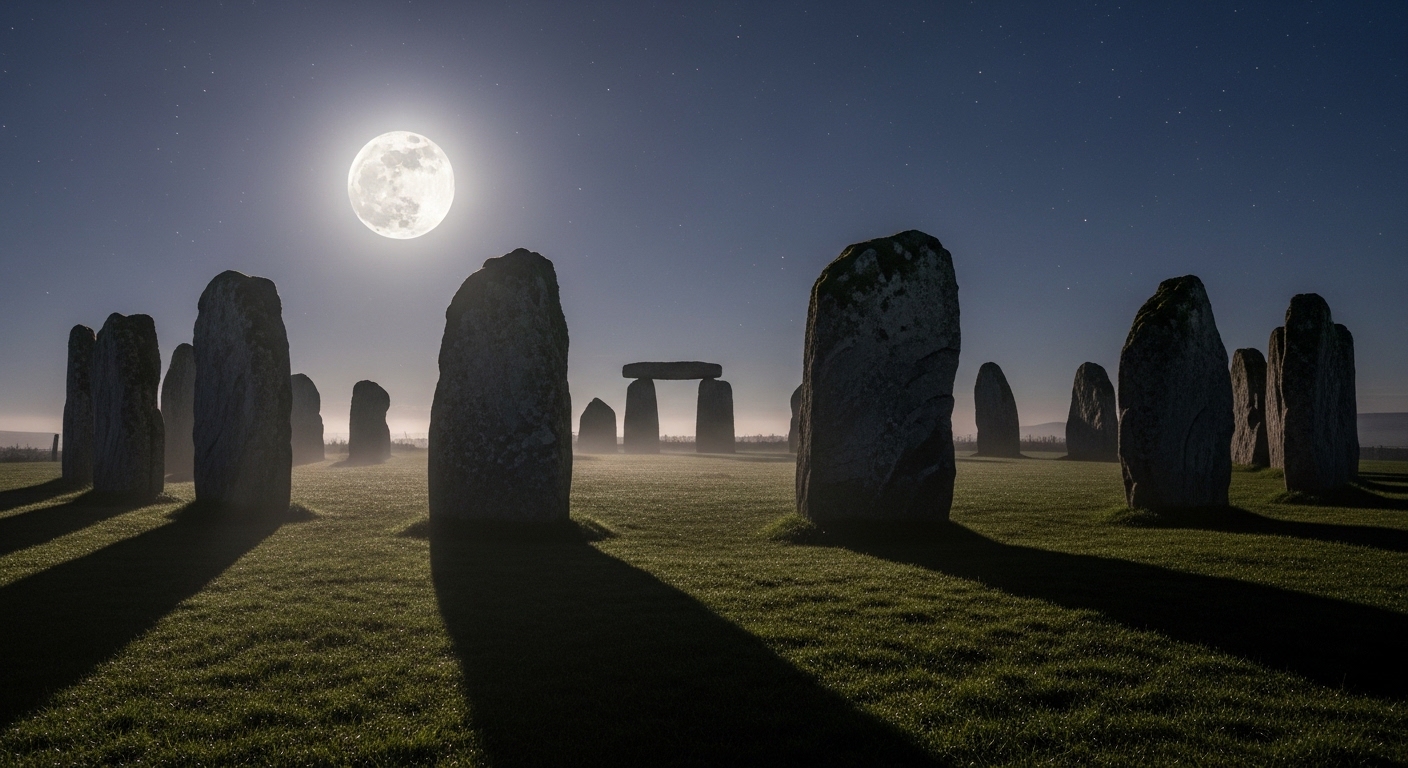
There is something profoundly humbling about standing among ancient stones under a moonlit sky. In certain parts of the world, these moments feel intentional, almost scripted by civilizations long gone. Moon-calibrated stone sites with night tours are not accidents of history. They are carefully designed monuments where stone, sky, and lunar cycles align with astonishing precision.
These sites remind us that ancient societies understood astronomy in ways that still surprise modern scientists. Long before telescopes or satellites, people tracked lunar phases, eclipses, and solstices using stone circles, passage tombs, and standing monoliths. Today, night tours at these sites allow travelers to experience them as they were originally intended—under the moon’s glow.
Have you ever wondered what it would feel like to witness history not in daylight, but exactly when it was meant to be seen?
What Does “Moon-Calibrated” Really Mean?
A moon-calibrated stone site is designed so that specific lunar events align with architectural features. This may include moonlight illuminating a chamber during a full moon, shadows falling in precise patterns, or stones marking lunar standstill points that occur only every 18.6 years.
Unlike solar-aligned monuments, lunar calibration requires long-term observation and generational knowledge. Ancient builders had to track moon cycles over decades. This makes moon-calibrated stone sites with night tours some of the most intellectually impressive archaeological achievements in human history.
Why would ancient people invest so much effort into the moon? The answer lies in timekeeping, agriculture, spirituality, fertility rituals, and navigation. The moon governed tides, planting seasons, and ceremonial calendars.
Stonehenge: England’s Moonlit Enigma
Stonehenge is often associated with the sun, but fewer visitors realize its deep lunar significance. Archaeological research suggests that certain stones align with the moon’s extreme rising and setting points during major lunar standstills.
Special night access programs organized through English Heritage allow limited groups to experience the monument under moonlight. Standing inside the stone circle at night changes everything. The silence feels heavier. The stones feel alive.
Would Stonehenge feel as powerful during the day if it was truly designed for the night?
Callanish Stones: Scotland’s Lunar Observatory
On the Isle of Lewis, the Callanish Stones form one of the most striking examples of lunar calibration in Europe. During major lunar standstill events, the moon appears to skim along nearby hills before settling perfectly within the stone arrangement.
Night tours here are often self-guided, with local guides offering storytelling experiences that blend archaeology, folklore, and astronomy. The remote setting makes moonlight the dominant illumination.
Travelers exploring the Scottish Highlands through resources like VisitScotland often describe Callanish night visits as haunting and unforgettable.

Newgrange: Moonlight Inside a Stone Age Chamber
While Newgrange in Ireland is famous for its winter solstice sun alignment, researchers believe lunar events also played a role in its design. Some theories suggest moonlight once reached interior stones during specific cycles.
Limited evening experiences organized by Heritage Ireland allow visitors to explore the site in near darkness. The silence inside the passage amplifies the sense of cosmic intention.
How different does history feel when you experience it without electric light?
Chaco Canyon: Lunar Architecture in the American Southwest
In New Mexico, Chaco Canyon contains stone structures aligned with both solar and lunar cycles. The Pueblo Bonito complex shows evidence of moon tracking, including alignments connected to the 18.6-year lunar standstill.
Night sky programs led by the National Park Service combine astronomy with archaeology, allowing visitors to witness how ancient builders mapped the moon’s movements using stone.
Under the desert sky, the connection between earth and cosmos becomes impossible to ignore.
Why Night Tours Matter
Daytime visits show structure. Night tours reveal purpose. Moon-calibrated stone sites with night tours come alive when artificial light disappears and moonlight becomes the guide.
At night, shadows deepen. Alignments become visible. The sensory experience mirrors what ancient observers may have felt thousands of years ago.
Would museums feel different if we experienced history on its original schedule instead of our modern convenience?
Modern Science Confirms Ancient Intelligence
Laser scanning, satellite mapping, and astronomical software now confirm alignments that ancient builders achieved without modern tools. Many moon-calibrated sites were dismissed as coincidences until technology proved otherwise.
This has reshaped how archaeologists view ancient knowledge systems. These were not primitive societies guessing at the sky. They were careful observers, mathematicians, and engineers.
Does this change how you think about prehistoric civilizations?

Planning a Visit to Moon-Calibrated Sites
Visiting these sites requires timing. Night tours often depend on moon phases, weather, and conservation restrictions. Some are available only during full moons or rare lunar standstill years.
Travel platforms like Lonely Planet often highlight seasonal access tips and cultural etiquette for visiting sacred sites at night.
Patience is part of the experience. These monuments reward those willing to wait.
The Emotional Impact of Moonlit History
Many visitors report unexpected emotional reactions during night tours. The combination of darkness, silence, and celestial alignment creates a sense of timelessness.
You are no longer a tourist. You are a witness.
This is the power of moon-calibrated stone sites with night tours. They collapse time and remind us that humans have always looked up, wondering.
The Future of Night Tourism at Ancient Sites
As interest grows in experiential and meaningful travel, night tours are expanding cautiously. Preservation remains the priority. Limited access ensures these sites survive for future generations.
Moon-calibrated monuments teach us that progress does not erase wonder. It refines it.
Have you ever visited an ancient site at night? Would you plan a trip around a moon cycle just to experience history the way it was designed?
Share your thoughts in the comments and follow WentWorld.com on social media for more journeys into the world’s most mysterious destinations.
Catch up on the top stories and travel deals by subscribing to our newsletter!