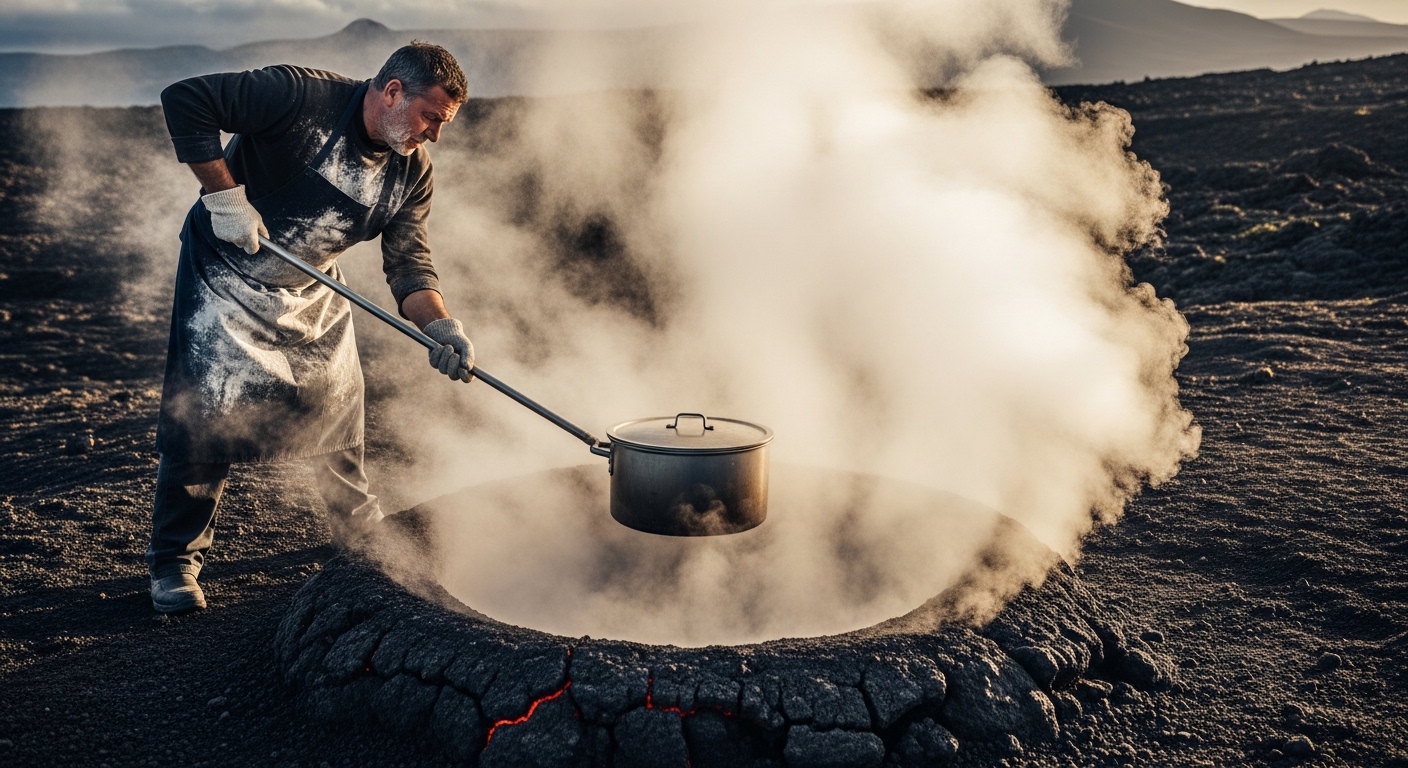
Imagine biting into warm bread that was baked not by electricity, gas, or fire, but by the natural heat of the Earth itself. Volcanic steam bread: bakeries using geothermal heat represents one of the most fascinating culinary traditions you probably never knew existed. In volcanic regions, local bakers actively harness underground steam and geothermal vents to create bread using nothing except the planet’s internal energy.
Instead of relying on modern ovens, these communities use hot soil, steam chambers, and volcanic sand. As a result, baking becomes both sustainable and deeply cultural. Moreover, the flavor differs noticeably from conventional bread. The texture feels softer, the aroma feels earthier, and the experience feels far more meaningful.
How Geothermal Baking Actually Works
Geothermal baking works by using naturally heated underground environments. Instead of flames, bakers place sealed containers of dough into steam pits or volcanic soil. Then, geothermal heat slowly cooks the bread over several hours.
Because the temperature stays stable, bakers achieve consistent results without burning the crust. At the same time, steam creates moisture that prevents dryness. Consequently, the bread remains tender and rich in flavor.
Would you trust the Earth itself to bake your food?
Japan: Steam Bread in Beppu and Owakudani
Japan offers some of the most famous examples of volcanic steam bread: bakeries using geothermal heat. In towns like Beppu and Owakudani, steam rises directly from the ground due to intense geothermal activity.
Local bakers place bamboo steamers over natural vents and let geothermal pressure do the work. Meanwhile, customers gather around watching bread form inside clouds of white steam.
Travelers exploring Japan through Japan National Tourism Organization often encounter these bakeries unexpectedly. Therefore, many visitors remember these moments more vividly than visiting famous landmarks.
The bread typically tastes slightly sweet and carries a subtle mineral fragrance. Because no artificial heat interferes with the process, the flavor stays clean and gentle.

Iceland: Lava-Baked Rye Bread
Iceland pushes geothermal baking even further. In fact, one of the most iconic forms of volcanic steam bread: bakeries using geothermal heat appears near Lake Myvatn.
Locals bury sealed pots of rye dough in geothermal soil for up to 24 hours. During this time, underground steam slowly caramelizes the sugars inside the bread.
Visitors arriving via Visit Iceland can witness bakers pulling fresh loaves straight from the steaming ground. As a result, many travelers describe the experience as both surreal and unforgettable.
Would you eat bread that spent an entire day cooking underground next to lava?
Mexico: Volcanic Stone Ovens
Mexico also contributes to this tradition. Near the Popocatépetl volcano, bakers use volcanic stone ovens that retain geothermal heat for long periods.
Although these ovens do not always use direct steam, they absorb natural underground warmth. Therefore, bread bakes slowly and evenly without artificial energy.
Tourism platforms such as Visit Mexico frequently highlight these bakeries as part of regional culinary heritage.
Why Geothermal Bread Tastes Different
Geothermal baking changes bread in several important ways.
- Steam keeps moisture locked inside
- Slow cooking enhances natural sweetness
- Mineral-rich air influences aroma
- Absence of flames prevents bitterness
Because of these factors, people often describe geothermal bread as softer, richer, and more satisfying.
Do you think food tastes better when nature controls the process?

Sustainability and the Future of Earth-Powered Baking
One of the strongest arguments for volcanic steam bread: bakeries using geothermal heat involves sustainability. These bakeries operate with almost zero emissions.
No fuel burns. No electricity flows. Instead, Earth provides continuous renewable energy.
As energy costs rise globally, geothermal baking offers a realistic model for low-impact food production. Therefore, eco-focused chefs now experiment with artificial geothermal chambers inspired by volcanic systems.
Challenges of Volcanic Baking
However, geothermal baking still faces limitations.
- Only works in volcanic zones
- Temperature fluctuates naturally
- Production remains small-scale
- Safety requires constant monitoring
Despite these obstacles, most bakers prefer to preserve tradition rather than industrialize the process.
The Cultural Value of Earth-Baked Bread
Ultimately, volcanic bread represents far more than food. It reflects human adaptation to extreme environments.
Instead of fearing volcanoes, communities learned how to cooperate with them. As a result, dangerous landscapes turned into life-sustaining kitchens.
When you eat geothermal bread, you literally taste geography, climate, and history combined.
Would you rather eat bread made by machines or bread created by the planet itself?
Have you ever tasted food cooked using natural forces like steam, lava, or underground heat? Share your experiences in the comments below.
Follow WentWorld.com on social media to discover more hidden food traditions, rare travel cultures, and extraordinary places around the world.
Catch up on the top stories and travel deals by subscribing to our newsletter!