There is a strange kind of magic in the places we usually ignore. These are not the famous landmarks, the polished city centers, or untouched wilderness. Instead, the real stories often live in the in-between. Welcome to edgeland travel: between city and wild on greenways, a form of exploration that takes you into abandoned rail lines, overgrown canals, forgotten industrial zones, and rewilded urban edges.
Edgelands are the unofficial spaces of our cities. They are neither fully urban nor fully rural. In these areas, highways fade into fields, factories crumble into forests, and rivers slip quietly behind warehouses. Although most people pass these areas every day, few actually enter them. Yet, they may be the most honest landscapes we have left.
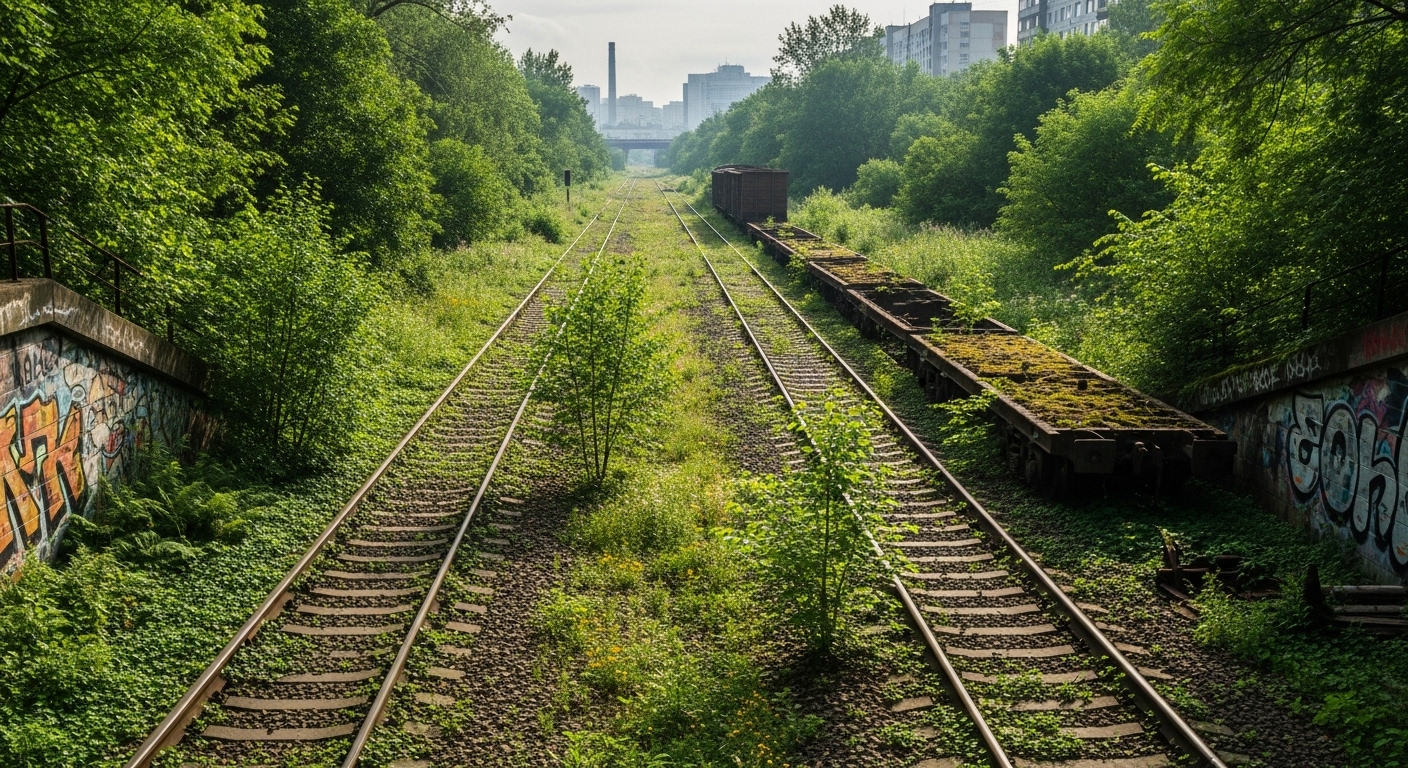
Imagine walking along a path that starts behind a shopping mall and ends in a meadow. Or crossing a railway bridge covered in graffiti that leads into dense greenery. That is edgeland. Once you start noticing it, you realize it exists everywhere, often right under your nose.
What Exactly Is Edgeland Travel?
Edgeland travel involves exploring transitional spaces where human development and nature meet. It focuses on greenways, abandoned infrastructure, urban wilderness, and rewilded zones that sit between city life and open countryside. Unlike traditional tourism, it does not rely on monuments or attractions. Instead, it celebrates neglected beauty, accidental ecosystems, and quiet human absence.
The term “edgelands” was popularized by British writers documenting post-industrial landscapes in the UK. However, the concept exists globally. For example, derelict ports in Europe, abandoned highways in the United States, and empty canals in Asia all count as edgelands. They form an invisible network of alternative travel routes waiting to be explored.
In a world obsessed with bucket lists, edgeland travel asks a different question: what if the most meaningful places are the ones no one is trying to sell you?
Why Edgeland Travel Is Growing Fast
Traditional tourism is becoming overwhelming. Overcrowded cities, expensive attractions, and highly curated experiences leave many travelers craving something quieter and more authentic. Therefore, edgeland travel offers a refreshing alternative.
These spaces are free, unscripted, and constantly changing. One month, a path may be blocked by overgrowth; the next, it opens into a hidden wetland full of birds and wildflowers. Moreover, there are no entrance tickets, no queues, and no Instagram hotspots—just you, the landscape, and its hidden stories.
Platforms such as Atlas Obscura and National Geographic Travel have increasingly documented forgotten urban spaces, helping bring edgeland exploration into mainstream awareness. As a result, more people are discovering that the most overlooked places can be the most fascinating.
Have you ever felt that seeing the same famous sites repeatedly online gets tiring?

Greenways: The Backbone of Edgeland Travel
Greenways often serve as the easiest entry point into edgeland travel. These pathways usually begin as urban walking or cycling routes but gradually drift into wild territory. Many follow old railway lines, canals, pipelines, or utility corridors.
For instance, the High Line’s lesser-known extensions in New York and the Promenade Plantée in Paris show how greenways transform abandoned infrastructure into livable, scenic routes. Additionally, countless disused rail trails across Europe and North America offer immersive experiences for curious travelers. What starts as a simple city walk frequently becomes a journey into unexpected ecosystems.
Some greenways connect directly to national parks or rural landscapes, acting as biological corridors for animals and plants. Meanwhile, others remain trapped between warehouses and highways, forming isolated green bubbles within industrial zones.
Have you ever followed a walking trail without checking where it might end?
Iconic Edgeland Destinations Around the World
Edgeland travel exists globally, offering unique experiences in virtually every urban environment. For example, Berlin, Germany is famous for abandoned airports, empty factories, and vast green ruins. Tempelhofer Feld, a former airport, is now a massive open park where runways are used by cyclists, kite flyers, and picnickers.
In Detroit, USA, entire neighborhoods have reverted into meadows, forests, and wetlands. Photographers and urban explorers document how nature slowly reclaims collapsed infrastructure, producing haunting yet beautiful visuals.
Tokyo, Japan conceals narrow green corridors along rivers, canals, and railway edges. These hidden spaces often feel invisible to tourists yet reveal intimate slices of daily life and quiet urban ecology.
London, UK features extensive edgelands along the Thames, abandoned docks, and overgrown industrial parks. The city’s outer green belt contains hundreds of unofficial trails through forgotten spaces. Travelers can explore more through Lonely Planet, which now highlights urban nature and alternative routes.
The Beauty of Forgotten Infrastructure
Abandoned structures carry a unique charm. Rusted bridges, collapsing warehouses, and unused railway stations hold memories of human ambition even in the absence of people. In edgeland travel, infrastructure becomes part of the landscape. Concrete cracks fill with moss, steel beams host bird nests, and broken windows frame sunsets.
These spaces reveal how temporary our cities really are. Nature does not need permission to return, and in edgelands, this process becomes visible, poetic, and sometimes startling.
Do you feel more connected to a place when it shows signs of decay rather than perfection?
Edgelands as Climate Classrooms
Edgelands are not only poetic; they are also environmental indicators. Rising water levels, invasive plant species, pollution, and urban heat islands are easier to study in transitional zones. Consequently, many universities and environmental organizations use edgelands to study urban ecology. These spaces show how ecosystems adapt to human impact and how cities can rewild themselves without expensive interventions.
Walking through an edgeland often feels like stepping into the future of climate adaptation: less control, more coexistence.

Who Is Edgeland Travel For?
Edgeland travel appeals to slow travelers, photographers, writers, hikers, cyclists, and anyone seeking authenticity. Unlike conventional travel, it requires curiosity rather than a large budget. Urban residents benefit especially, as edgelands remind them that wilderness can exist within walking distance.
Have you ever realized that the most peaceful place nearby is one you never thought to enter?
Risks and Realities
Not all edgelands are safe. Some are polluted, structurally unstable, or private property. Therefore, responsible travel is crucial. Avoid dangerous buildings, respect boundaries, and leave no trace. These spaces survive because they are overlooked; the goal is to experience them, not exploit them.
The Future of Edgeland Travel
As cities expand and climate pressures increase, edgelands will become increasingly important. They serve as green buffers, flood zones, biodiversity corridors, and mental health refuges. Urban planners are beginning to recognize that not all spaces need to be developed. Sometimes, the most sustainable approach is to let nature take the lead.
Edgeland travel: between city and wild on greenways may soon become one of the most meaningful forms of travel. It offers truth and reflection, rather than luxury or curated experiences.
We would love to hear from you. Have you explored forgotten paths, abandoned sites, or urban wilderness? Do you think these spaces deserve protection, or should they remain invisible?
Follow WentWorld.com on social media for more unconventional travel stories, hidden landscapes, and the spaces most people never notice.
Catch up on the top stories and travel deals by subscribing to our newsletter!