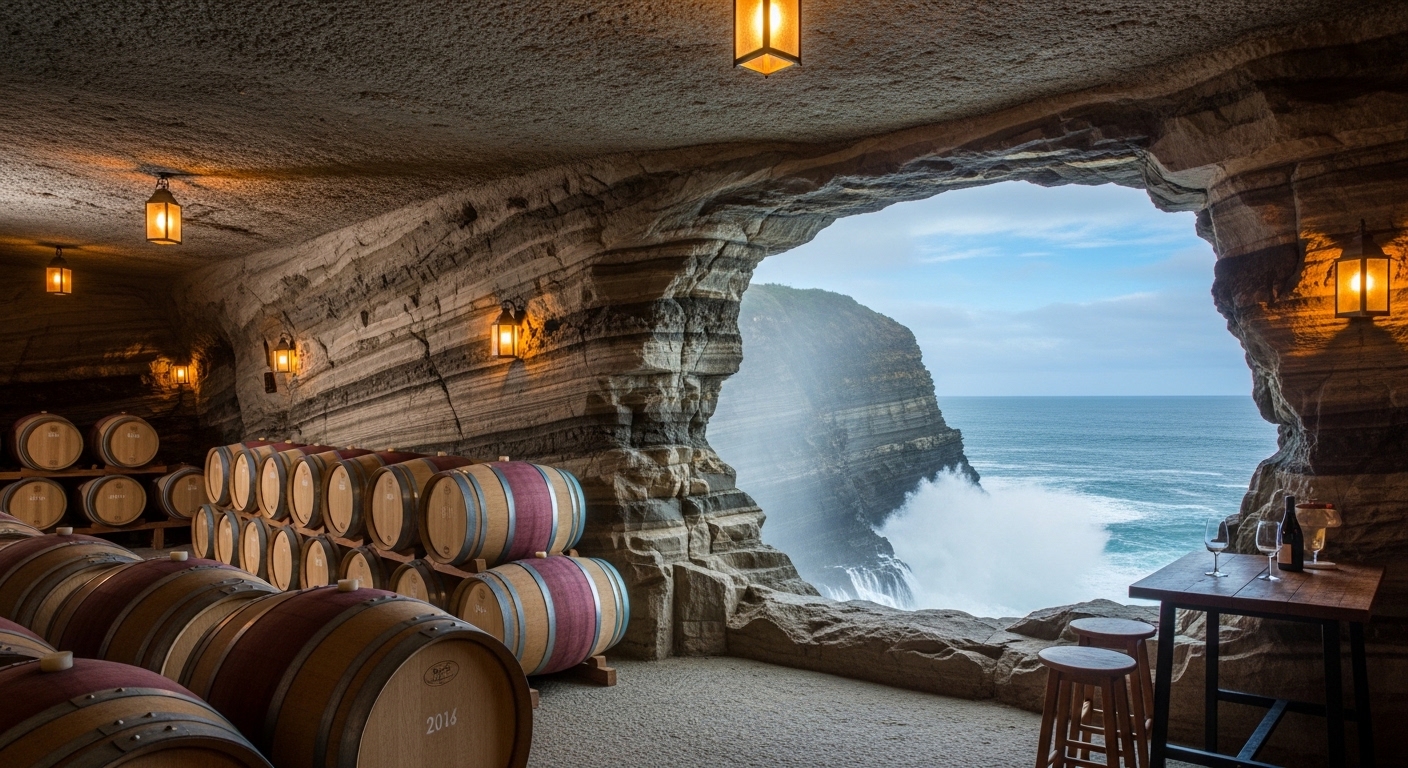
There is something irresistibly romantic about the idea of wine aging inside cliffs, with waves crashing below and salty ocean air slowly shaping every bottle. Cliff vault wine cellars with ocean air aging represent one of the most fascinating intersections of geography, craftsmanship, and sensory experience. These are not ordinary wine caves. They are carved into coastal rock faces, suspended between land and sea, using nature itself as part of the aging process.
While traditional wine cellars rely on underground darkness and stable temperatures, cliff vault cellars add a new dimension. They introduce humidity from the ocean, constant air movement, mineral-rich stone walls, and subtle salt exposure. The result is wine that evolves differently, often gaining complexity, texture, and character that cannot be replicated inland.
Have you ever wondered how the environment around a bottle influences its final taste? Could the sound of waves and the scent of the sea actually shape what ends up in your glass?
What Makes Cliff Vault Wine Cellars Unique
Cliff vault wine cellars are typically built directly into coastal cliffs or steep rock formations overlooking the ocean. Unlike standard underground cellars that are sealed from the outside world, these spaces often allow controlled airflow from the sea. This creates a microclimate that is almost impossible to artificially reproduce.
The key elements that make these cellars unique include:
- Natural humidity: Ocean air maintains stable moisture levels, preventing corks from drying and preserving wine integrity.
- Temperature stability: Thick rock walls insulate the cellar from extreme heat or cold.
- Salt particles: Tiny traces of salt in the air subtly interact with barrels and bottles.
- Continuous airflow: Natural ventilation replaces mechanical systems.
This environment turns the cliff itself into part of the winemaking process. Instead of fighting nature, these cellars embrace it.
The Science Behind Ocean Air Aging
Wine aging is fundamentally a chemical evolution. Oxygen, humidity, and temperature all influence how flavors develop over time. In cliff vault wine cellars with ocean air aging, these factors behave differently than in traditional environments.
Ocean air carries higher moisture content, which slows evaporation through corks. This reduces oxidation and preserves aromatic compounds. At the same time, the mild salinity in the air can subtly affect barrel wood, influencing tannin structure and mouthfeel.
Some winemakers believe that wines aged near the sea develop a softer texture, enhanced minerality, and a slightly more rounded finish. While science still debates the exact mechanisms, blind tastings consistently show noticeable differences between ocean-aged and inland-aged wines.
Do you think terroir should include not just soil and climate, but also proximity to the sea?

Iconic Locations Around the World
Several regions have become famous for their cliff-based wine cellars and ocean aging traditions.
- Portugal – Douro Coast: Along the Atlantic cliffs, some boutique wineries age select bottles inside stone vaults exposed to maritime air. Portuguese producers have long experimented with coastal storage to soften bold reds. Official tourism resources like Visit Portugal highlight wine experiences along the coast.
- Spain – Basque Country: Txakoli producers age wines in cliffside cellars near the Bay of Biscay, where salty air enhances crispness and acidity. The region is well known for coastal gastronomy and wine tourism.
- France – Brittany & Bordeaux Coast: Some experimental estates age wine in sea-facing caves carved into limestone cliffs. French wine authorities have explored maritime maturation as part of modern cellar innovation.
- Italy – Ligurian Coast: In Cinque Terre and nearby coastal villages, small producers age white wines inside cliff vaults overlooking the Mediterranean. Travel guides from Italia.it often reference these cellars as hidden gems.
- Chile – Pacific Coast: New World wineries are increasingly using cliffside storage to create unique ocean-influenced vintages, especially for Sauvignon Blanc and Pinot Noir.
Each of these places uses geography as a silent partner in winemaking. Would you travel specifically to taste a wine that matured inside a cliff?
The Experience of Visiting a Cliff Vault Cellar
Walking into a cliff vault wine cellar feels different from entering a traditional winery. The air is cooler, damp, and carries a faint scent of stone and salt. You often hear the distant sound of waves echoing through the rock.
Many of these cellars are accessible only through narrow tunnels carved into cliffs. Some require descending staircases, others involve small coastal paths. The journey itself becomes part of the ritual.
Tasting sessions usually include limited-release bottles that were aged exclusively in these environments. The wines are often described as more elegant, less aggressive, and exceptionally balanced.
Have you ever tasted a wine where the location felt as important as the grape variety?
Why Winemakers Are Returning to Natural Aging
In an age of automation and climate-controlled warehouses, many winemakers are rediscovering the value of natural environments. Cliff vault wine cellars represent a philosophical shift back toward slow, organic maturation.
Producers cite several motivations:
- Reducing energy consumption by avoiding artificial climate systems.
- Creating unique products that cannot be mass-produced.
- Responding to consumer demand for authentic, story-driven wines.
- Exploring new flavor profiles through environmental aging.
For boutique wineries, ocean aging is also a powerful branding tool. A bottle aged inside a sea cliff tells a story before it is even opened.
How Ocean Aging Changes Flavor Profiles
While no two wines are the same, certain patterns appear across cliff-aged wines.
Common characteristics include:
- Enhanced minerality and freshness.
- Smoother tannins.
- More integrated aromas.
- Slightly lower perceived acidity.
Some sommeliers compare the effect to aging wine underwater, a growing trend explored by organizations like Decanter, which has documented submerged wine experiments.
The difference with cliff vault cellars is that the wine remains accessible, breathable, and influenced by real atmospheric conditions instead of full submersion.

Challenges of Cliff-Based Cellars
Despite their beauty, cliff vault wine cellars are not easy to maintain.
- Structural risks: Coastal erosion can threaten cellar stability.
- Limited capacity: These cellars rarely store large volumes.
- Accessibility: Transporting bottles in and out is logistically complex.
- Regulatory hurdles: Many are located in protected coastal zones.
Yet for producers who value craftsmanship over scale, these challenges are worth the reward.
The Future of Cliff Vault Wine Cellars
As climate patterns shift and consumers seek meaningful experiences, cliff vault wine cellars with ocean air aging are likely to become even more valuable.
We are seeing a rise in:
- Wine tourism focused on extreme or unique environments.
- Experimental aging methods tied to natural elements.
- Limited-edition bottles marketed through storytelling.
Some wineries are even combining ocean aging with other techniques, such as underwater storage or volcanic caves, creating layered maturation profiles.
Would you pay more for a wine aged in a place no warehouse could ever replicate?
Why These Cellars Matter Beyond Wine
Cliff vault cellars are not just about flavor. They represent a deeper philosophy: that nature is not something to be controlled, but something to collaborate with.
In a world obsessed with efficiency, these spaces celebrate slowness. They remind us that time, environment, and patience still matter.
They also preserve cultural landscapes. Many of these cellars exist in historic coastal villages, keeping local traditions alive and supporting small communities.
Have you noticed how the most memorable travel experiences often involve places that refuse to modernize too quickly?
We would love to hear from you. Would you travel specifically to visit a cliff vault wine cellar? Have you ever tasted ocean-aged wine? Share your thoughts and experiences in the comments below.
Follow WentWorld.com on our social media platforms for more stories about rare destinations, hidden craftsmanship, and the world’s most extraordinary places.
Catch up on the top stories and travel deals by subscribing to our newsletter!