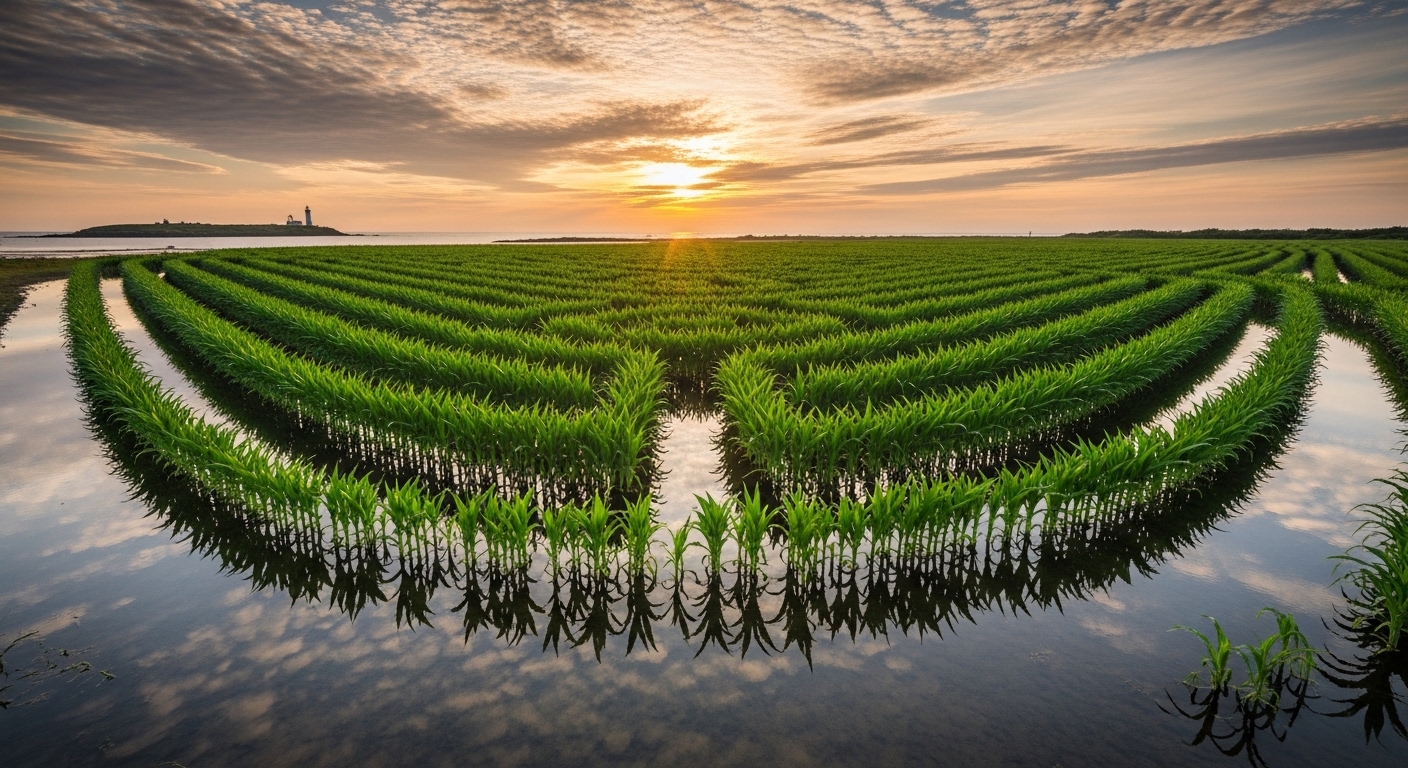
There is something deeply enchanting about tidal corn mazes and coastal farm trails. These unique landscapes merge two worlds that rarely meet: the quiet order of farmland and the wild, shifting rhythm of the sea. Imagine walking through tall corn stalks while hearing distant waves crash against the shore, or strolling along muddy coastal paths where farmers time their work according to the tides. The experience feels magical, as if agriculture itself has learned to move in harmony with nature.
Typically, corn mazes are associated with inland countryside and autumn festivals. Yet, in certain coastal regions, farms are influenced by tides, salt air, and constantly changing shorelines. This creates a form of rural tourism where fields flood, trails shift, and landscapes transform daily. Visitors are not only exploring attractions but also observing living systems shaped by nature’s clock. Have you ever walked a path that only exists for a few hours each day? Or explored a maze knowing the tide might soon reshape the entire field? These experiences redefine the meaning of adventure.
How Tides Influence Coastal Farms
Understanding tidal corn mazes and coastal farm trails begins with appreciating how tides affect agriculture. Many coastal farms are situated on low-lying land near estuaries, marshes, and bays. These areas are rich in nutrients, making them ideal for crops. However, regular flooding is part of the landscape. Instead of resisting the water, some farmers choose to work with it. For instance, they plant salt-tolerant crops or design trails that change with the tides. When the tide recedes, visitors can walk through fields that would otherwise be underwater. When it rises again, the same paths become reflective wetlands, creating a breathtaking view of sky and water.
This relationship between farming and tides feels almost ritualistic. Farmers rely on tide charts as much as weather forecasts to plan their daily work. In a world dominated by technology and automation, these tidal rhythms represent one of the last truly natural farming clocks. They remind us that patience and observation are sometimes more important than speed and efficiency.
The Rise of Tidal Corn Mazes
Corn mazes have long been a symbol of autumn fun, but tidal corn mazes take the concept to a new level. These mazes are planted near coastlines where high tides occasionally flood sections of the field. As a result, the maze’s shape, difficulty, and even atmosphere can change dramatically depending on the time of day.
In regions like Nova Scotia, the northeastern United States, and coastal England, farms create seasonal mazes that interact intentionally with tides. During low tide, the maze is fully accessible. However, as the water rises, parts of the field may become shallow waterways that reflect the sky and crops, offering an almost surreal experience. Walking through such a maze is not just about solving it; it becomes about embracing the environment and its temporary beauty. Would you feel more adventurous knowing the landscape itself is fleeting?

Coastal Farm Trails That Shift With the Sea
Coastal farm trails are paths winding through farmland, marshes, and tidal ecosystems. Unlike conventional hiking trails, these routes change daily due to tides, erosion, and seasonal farming cycles. Some trails pass through grazing fields that double as tidal wetlands, while others follow dikes and levees built to manage flooding. In areas like the Wadden Sea in Europe or Canada’s Bay of Fundy, certain paths disappear entirely at high tide, only to reappear hours later.
Organizations such as National Trust in the UK preserve these landscapes, blending conservation with public access. Walking these trails feels different from hiking in forests or mountains. The ground seems alive, soft, and shifting beneath your feet. Additionally, the interaction of water, light, and crops creates a constantly evolving scene that keeps every step engaging.
Bay of Fundy, Canada
The Bay of Fundy is famous for having the highest tides in the world, with differences exceeding 15 meters between low and high tide. This extreme tidal range has shaped both agriculture and tourism in the region. Several farms in Nova Scotia now offer tidal corn mazes and coastal farm trails where visitors can explore reclaimed marshlands. These lands, once protected by historic dikes, now support crops, livestock, and eco-tourism activities.
During low tide, golden fields and winding paths invite exploration. As the tide rises, water gradually covers portions of the farmland, creating temporary lagoons that mirror the sky above. Tourism boards like Nova Scotia Tourism highlight these experiences as examples of sustainable, immersive rural travel.
The Wadden Sea, Netherlands and Germany
The Wadden Sea, stretching across the Netherlands, Germany, and Denmark, is one of the world’s largest tidal flat systems and a UNESCO World Heritage site. Farmers manage land that floods regularly, blending traditional agriculture with tidal rhythms. Some coastal trails even allow visitors to walk across exposed seabeds during low tide, creating a sensation of walking on the ocean itself.
Cornfields near the Wadden Sea are protected by dikes, yet salt air and moisture still influence crops. Conservation groups and organizations like UNESCO promote these areas as living classrooms for climate adaptation. Exploring these lands feels educational as well as awe-inspiring, offering lessons in resilience and balance between humans and nature.
Norfolk Coast, England
England’s Norfolk coast presents another prime example of tidal corn mazes and coastal farm trails. The region features salt marshes, flat farmland, and historic windmills, making it picturesque and culturally rich. Some farms here create seasonal mazes near tidal rivers, where water levels fluctuate throughout the day. Visitors can enjoy the maze in the morning, then see parts of it submerged by the afternoon tide.
Walking these landscapes provides a timeless experience. You might encounter sheep grazing near tidal creeks, old barns overlooking marshes, and footpaths disappearing into water. Unlike standard attractions, these experiences feel like participating in a living rhythm between land and sea.
Why These Experiences Stand Out
Tidal corn mazes and coastal farm trails feel distinct because they challenge expectations of stability. Most travel experiences promise predictability: trails remain trails, fields remain fields. Here, nothing is fixed. Visitors must check tide schedules, observe environmental cues, and accept change. This unpredictability creates a deep connection to the place and encourages mindfulness. Have you ever visited a location that forced you to slow down and embrace uncertainty? These tidal landscapes do just that.

Ecological and Cultural Significance
Beyond tourism, tidal farms play critical ecological roles. Coastal farms act as buffers against rising seas, absorbing storm surges and reducing erosion. They also support wildlife: birds rely on wetlands during migration, and fish use flooded fields for breeding. Conservation groups like World Wildlife Fund emphasize tidal agriculture as a model for climate resilience.
Culturally, these farms preserve practices that are disappearing elsewhere. They reflect deep local knowledge and adaptation to natural cycles. Visitors gain insight into a form of agriculture that harmonizes human activity with environmental patterns.
Planning Your Visit
Timing is crucial for experiencing tidal corn mazes and coastal farm trails. Check tide tables in advance, and plan to visit early in the day to experience both low and rising tides. Wear waterproof footwear and respect private farmland. Many farms welcome visitors, but courteous behavior ensures these delicate environments remain intact. Most importantly, embrace the slow pace and subtle changes in water, light, and sound.
Why WentWorld Celebrates These Places
At WentWorld.com, we are fascinated by destinations where nature and human activity coexist thoughtfully. Tidal corn mazes and coastal farm trails exemplify this harmony. They are playful yet profound, showing that some of the most memorable travel experiences come from quiet observation rather than luxury or spectacle.
We invite you to share your experiences. Have you explored a coastal farm trail shaped by tides? Did it change your perspective on nature or time? Join the conversation and let us know your thoughts.
If stories like this inspire your sense of adventure, follow WentWorld.com on our social media platforms to discover more hidden corners of the world where slow, mindful travel reveals extraordinary moments.
Catch up on the top stories and travel deals by subscribing to our newsletter!