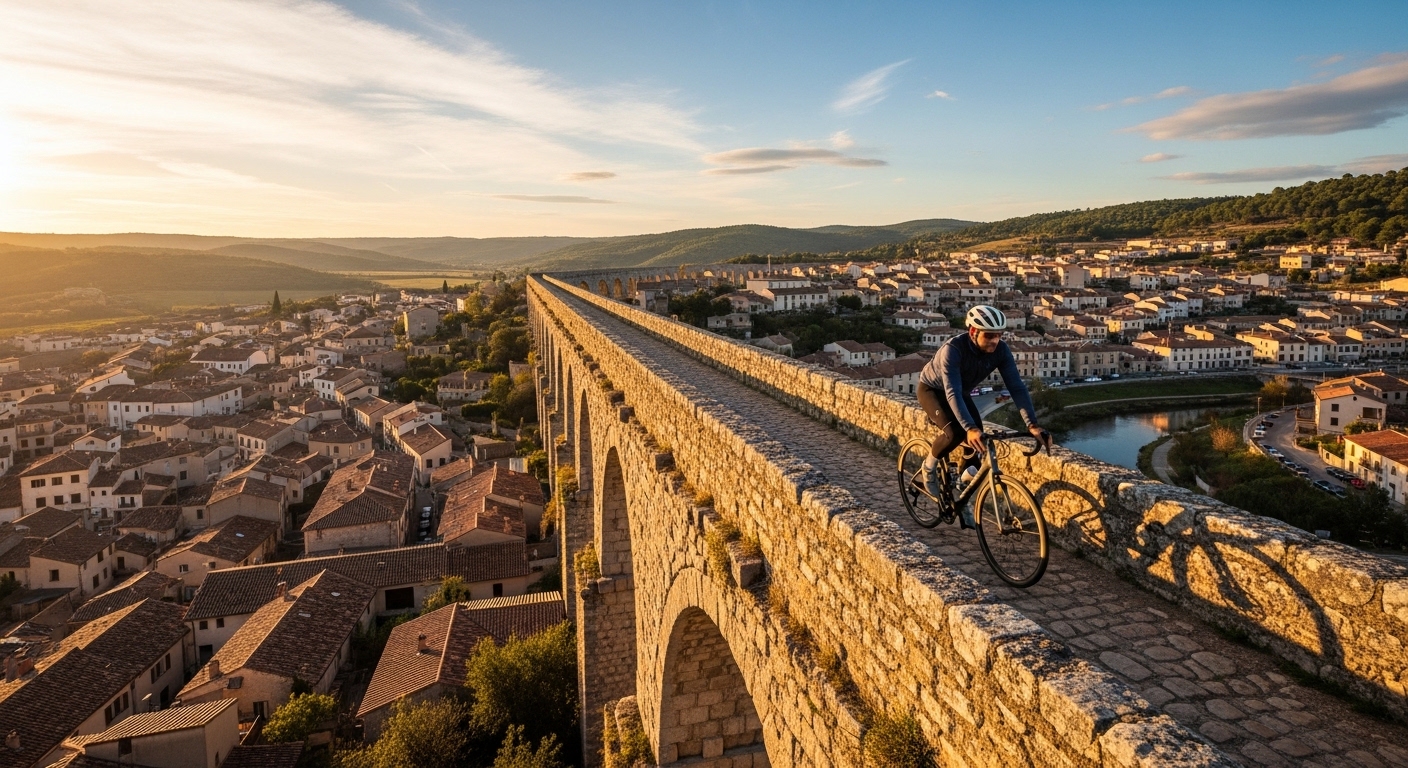
Riding along historic aqueduct paths you can cycle above towns is unlike any ordinary bike experience. Not only are you gliding over centuries-old engineering feats, but you are also moving through a living history lesson. Beneath your wheels once flowed the lifeblood of entire cities, yet today these paths carry travelers and dreamers eager to witness the past from an elevated perspective. It’s a journey that blends adventure, discovery, and a sense of timelessness.
Picture yourself pedaling on a narrow stone walkway suspended above rooftops, vineyards, or winding rivers. Town life unfolds quietly beneath you, almost oblivious to your elevated passage. Aqueducts were never meant for leisure; they were constructed to sustain life. Now, they offer an entirely new kind of thrill. Through WentWorld.com’s exploration, we uncover some of the most remarkable aqueduct paths and explain why they remain unforgettable destinations for cyclists seeking more than just exercise.
Why Cycling on Aqueducts Feels Unique
Most cycling routes follow roads, rivers, or coastlines, but aqueduct paths follow a different kind of poetry. Originally designed to transport water across challenging terrain, these structures now serve as elevated pathways for modern travelers. They were created by civilizations that aimed to conquer nature’s obstacles with precision and foresight. As a result, cycling along these paths feels almost like moving through a carefully preserved time capsule.
In addition, the experience itself is unique because the routes are unusually flat. Water demands perfect gradients, so the slight inclines and declines of aqueducts allow for smooth, effortless cycling. Unlike busy roads or mountain trails, these paths guide you forward gently, making it easy to take in the scenery without constant exertion. Have you ever felt like a route was designed specifically for observation rather than speed?
The Ingenious Engineering Behind Aqueduct Paths
The engineering required to construct aqueducts is astonishing. They were built to transport water across valleys, rivers, and mountains, often spanning several miles. Builders had to calculate precise gradients: too steep and the water would rush destructively; too shallow and it would stagnate. This meticulous attention to detail has a fascinating side effect for modern cyclists: the paths are perfectly suited for riding. Smooth, gradual slopes and sturdy stone surfaces create an almost magical cycling experience.
Moreover, many of these aqueducts have been preserved or adapted as public pathways. In doing so, ancient infrastructure that once sustained cities now sustains curiosity, exploration, and adventure. If you appreciate history while staying active, few experiences rival pedaling along these elevated channels.
Pont du Gard, France
Few aqueducts are as iconic as Pont du Gard in southern France. Built by the Romans nearly 2,000 years ago, it once carried water to the city of Nîmes across the Gardon River. Today, visitors can cycle near and around the structure, following paths that trace the original water route. Pedaling beside one of the tallest Roman aqueducts ever built is awe-inspiring. You feel dwarfed by history, yet strangely connected to it.
Furthermore, France has actively promoted these scenic routes. Organizations like France.fr provide guidance on regional cycling paths that incorporate historical landmarks, allowing travelers to enjoy both natural beauty and cultural heritage. The combination of engineering marvel and tranquil surroundings makes Pont du Gard a must-visit for any cycling enthusiast.

Levadas of Madeira, Portugal
The levadas of Madeira offer another unforgettable experience. These narrow aqueduct channels, carved into the mountainsides starting in the 16th century, originally transported water from lush northern regions to dry southern valleys. Today, some levadas serve as walking and cycling paths, suspended above dense forests, waterfalls, and tiny villages. As you ride, mist drifts around you and clouds occasionally float beneath your viewpoint, creating a surreal sensation.
Moreover, the Portuguese government and tourism boards like Visit Portugal actively highlight these routes as cultural heritage sites. Even with increasing popularity, however, there are still quiet moments where you can experience solitude and connection with the natural world.
Acueducto de Segovia, Spain
The Roman aqueduct of Segovia is one of the most impressive structures in Spain. While the central arches are reserved for pedestrians, the surrounding countryside has historic paths suitable for cycling. These elevated routes reveal the full scope of Roman ingenuity, showing how a single structure supported entire communities. Cycling here offers both physical activity and an intimate glimpse into centuries-old urban planning.
Additionally, Spain’s official travel portal Spain.info provides resources about historic monuments, but the authentic experience lies in tracing the aqueducts that shaped daily life. You feel as though you are following the footsteps of countless generations who relied on these water channels for survival.
Elan Valley Aqueduct, Wales
Hidden in the rolling hills of Wales, the Elan Valley Aqueduct transported water over 70 miles to Birmingham. Today, cyclists can enjoy a mixture of smooth, historic paths and scenic viewpoints above quiet towns and reservoirs. The ride offers sweeping vistas of lush valleys and misty hills, evoking a sense of cinematic beauty. Sheep graze peacefully below, while ancient stonework keeps watch over the trail.
British cycling networks, supported by organizations like Sustrans, have helped preserve these routes for sustainable travel. They demonstrate how historic infrastructure can adapt to modern recreational use without losing its original purpose or aesthetic.
The Emotional Power of Elevated Cycling
There is a subtle psychological effect when cycling above towns rather than through them. The usual noises of daily life fade away, replaced by smooth movement and expansive views. Elevated paths encourage mindfulness and reflection. Riders often report feeling both humbled and invigorated, aware of the history beneath their wheels while enjoying a gentle connection with the present moment.
Furthermore, cycling along these aqueducts offers a rare opportunity to slow down and notice details that might otherwise go unnoticed. Stones weathered over centuries, small plants sprouting in cracks, and occasional glimpses of townspeople going about their morning routines remind you that every moment is layered with history.

Why These Routes Matter in Modern Travel
In an era dominated by high-speed transportation and instant gratification, historic aqueduct paths encourage patience and observation. They show that travel can be both meaningful and sustainable. These elevated corridors require minimal construction for modern use, reuse ancient infrastructure, and connect communities without harming ecosystems. As organizations like World Wildlife Fund emphasize, slow travel models are essential for the future of tourism. Cycling on aqueducts fits perfectly within that philosophy.
Planning Your Own Aqueduct Ride
Finding historic aqueduct paths for cycling requires a combination of research and curiosity. They are not always well-marked, and maps may be limited. Local guides, travel forums, and regional tourism boards often provide the best resources. Early morning or late afternoon rides are ideal, as the light is soft and the towns are quiet. Hybrid or gravel bikes are recommended due to varied surfaces, ranging from stone to dirt paths. Most importantly, cyclists should treat these paths with respect, as they are living cultural artifacts.
Why You Will Remember These Rides Forever
Highways and hotel rooms are easy to forget. However, cycling on aqueduct paths leaves a lasting impression. These routes offer more than exercise; they provide perspective, connection, and a profound sense of continuity with the past. You move along the same lines that once carried life-giving water, bridging centuries in a single ride.
Have you ever experienced a route that felt like a conversation with history? We would love to hear your stories. Have you cycled along an aqueduct or any elevated historic path? Did it alter how you perceive travel?
If experiences like these inspire your adventures, follow WentWorld.com on our social media platforms for more hidden journeys that blend exploration, history, and mindful travel.
Catch up on the top stories and travel deals by subscribing to our newsletter!