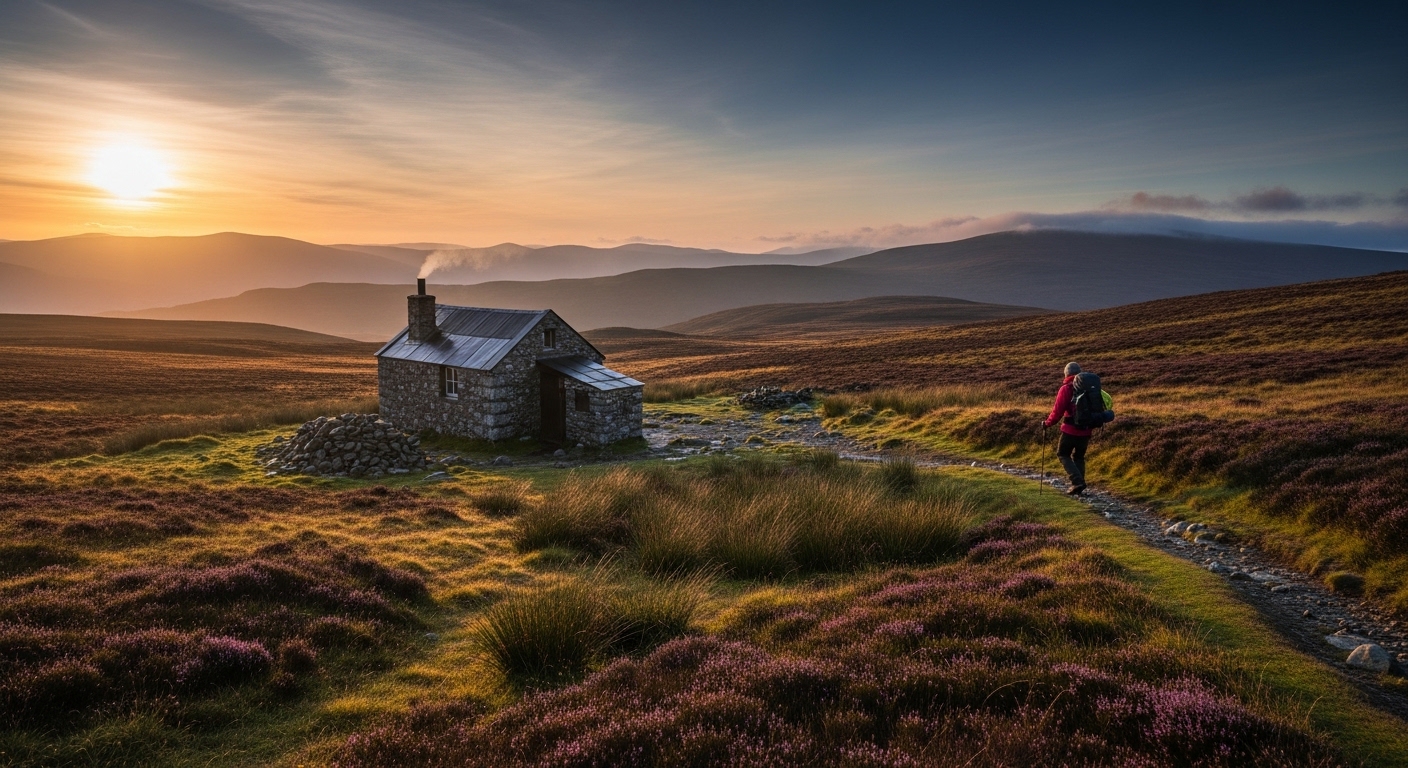
There is a special kind of freedom in traveling with no fixed hotels, no reservations, and no deadlines—just a backpack, a map, and a series of simple shelters scattered across wild landscapes. Moorland bothy hops: shelter-to-shelter treks represent one of the purest forms of slow adventure. Rather than chasing destinations, these journeys invite travelers to move gently across open moors, rolling hills, and remote valleys while discovering what it truly means to live at nature’s pace.
Unlike traditional hiking routes that revolve around commercial lodges or organized campsites, bothy hopping offers something far more personal. Instead of checking into a room, you step into a stone shelter with no electricity, no staff, and no luxury. What you gain, however, is silence, solitude, and an unexpected sense of belonging among fellow wanderers. Would you trade a hotel bed for a cold stone floor if it meant waking up surrounded by untouched wilderness?
What Is a Bothy and Why Are They So Special?
A bothy is a simple shelter, usually found in remote parts of the UK and Ireland, particularly across Scotland’s vast moorlands. Historically, these structures were built for shepherds, farm workers, and estate staff who needed temporary refuge from extreme weather. Over time, many were abandoned; however, hikers and outdoor communities gradually reclaimed them.
Today, bothies are protected and maintained by volunteer organizations like the Mountain Bothies Association. Because of this community-driven model, bothies remain free, open, and unbookable. In other words, anyone can use them, as long as they respect the space.
This is exactly what makes moorland bothy hops: shelter-to-shelter treks so different from modern tourism. Instead of relying on money, these journeys rely on trust. Instead of services, they depend on responsibility. Have you ever experienced travel that functions purely on mutual respect?
The Appeal of Shelter-to-Shelter Travel
In a world obsessed with speed, efficiency, and constant connectivity, bothy hopping feels intentionally slow. Consequently, every decision becomes more meaningful. You walk when the weather allows. You stop when the body demands rest. You adjust your route based on fog, wind, or daylight rather than bookings or check-in times.
Furthermore, daily goals become beautifully simple. The only real objective is to reach the next shelter before nightfall. Some days you may cover ten kilometers. On other days, barely five. Yet, progress is no longer measured in distance. Instead, it is measured in quiet moments, shifting clouds, and the sound of boots against wet grass.
Would you enjoy a journey where success is defined not by achievement, but by presence?
Where Moorland Bothy Hops Exist
Scotland is undeniably the heart of bothy culture. Regions like the Cairngorms, Assynt, Knoydart, and Rannoch Moor offer extensive networks of shelters scattered across dramatic landscapes. While England and Wales do have a few bothies, Scotland remains unmatched in both scale and atmosphere.
For example, popular areas for moorland bothy hops: shelter-to-shelter treks include:
- The Cairngorm Plateau
- Glen Affric
- Knoydart Peninsula
- Flow Country
- Rannoch Moor
Interestingly, travelers arriving through VisitScotland often discover that bothy hopping allows deeper access to the landscape than conventional tourism ever could. There are no signs, no fences, and no guided paths—only land that invites exploration.

What a Typical Bothy Hop Feels Like
Usually, a journey begins in a small village or at a remote train stop. At first, there may be a road. Then, the road becomes a track. Eventually, even the track disappears. From that point onward, there is only sky, wind, and endless grass.
After several hours of walking, you finally notice it in the distance: a small stone structure sitting quietly among the hills. Sometimes smoke rises from the chimney. Other times, silence welcomes you. Either way, the door opens into a shared space where strangers instantly become temporary companions.
Inside, you might find a notebook filled with handwritten stories. Meanwhile, someone brews tea over a small stove. Another traveler dries socks near the fire. There is no small talk about jobs or status—only conversations about weather, routes, and life beyond the hills.
Is there any form of accommodation more human than this?
The Social Side of Bothy Hopping
Although bothy travel appears solitary, it often becomes deeply social. You may meet solo hikers, artists, photographers, or even international travelers who learned about bothy culture through platforms like Lonely Planet.
Moreover, bothies eliminate social hierarchies. Everyone cooks their own food. Everyone cleans the floor. Everyone shares the same cold, the same fire, and the same view. As a result, conversations feel authentic, unfiltered, and unusually sincere.
Many experienced hikers say the most unforgettable part of moorland bothy hops: shelter-to-shelter treks is not the scenery, but the people who pass through their journey for a single night.
Challenges of Bothy Travel
Despite its beauty, this form of travel is not easy. There may be no firewood. Sometimes the roof leaks. Occasionally, the bothy is already full. Furthermore, weather can change rapidly, turning clear skies into horizontal rain within minutes.
Navigation also requires real skill. GPS may fail. Phone signal often disappears. Consequently, travelers must rely on maps, compasses, and intuition. In contrast to modern travel, there is no safety net.
Yet, this discomfort is precisely what makes bothy hopping meaningful. Would you trust yourself without modern convenience?
Why This Type of Trek Is Growing in Popularity
In recent years, more travelers have begun rejecting luxury in favor of authenticity. Therefore, bothy hopping feels increasingly relevant. It offers:
- No accommodation costs
- Minimal environmental impact
- True digital detox
- Strong sense of community
- Deep emotional connection to place
Unlike mass tourism, this form of adventure leaves no physical footprint. Instead, it leaves psychological ones.

The Philosophy Behind Bothy Culture
Bothy culture follows a simple rule: leave the place better than you found it. Carry out all rubbish. Respect others. Share space. These values reflect an older philosophy of travel, where land is borrowed rather than consumed.
In many ways, moorland bothy hops: shelter-to-shelter treks are not about destinations at all. Instead, they are about attitude. You are not a customer. You are a guest of the landscape.
The Future of Bothy Travel
As climate awareness grows, bothy travel fits naturally into sustainable tourism. It requires no new construction, no constant energy consumption, and no commercial infrastructure. At the same time, rising popularity brings responsibility.
If bothy culture is to survive, visitors must behave ethically. Overuse, litter, and disrespect could easily destroy what makes these shelters special.
Would you support travel models that prioritize preservation over profit?
If you are seeking adventure without crowds, comfort without luxury, and connection without consumption, bothy hopping may be your perfect journey.
Share your thoughts below. Would you try a shelter-to-shelter trek, or do you prefer traditional accommodations?
Follow WentWorld.com on social media for more unconventional travel ideas, slow adventures, and stories from the world’s most unique places.
Catch up on the top stories and travel deals by subscribing to our newsletter!