There is something hauntingly beautiful about storm shelters turned cliffside meditation rooms. These spaces once held fear and urgency, yet now they welcome stillness, reflection, and deep connection with nature. Across coastal regions, abandoned military bunkers, emergency shelters, and reinforced storm rooms carved into cliffs are quietly transforming into some of the most unique meditation spaces on Earth.
Picture sitting inside a thick concrete chamber built to withstand hurricanes or wartime bombing, now softened by candlelight, sea air, and the sound of waves crashing below. Where alarms once echoed, silence now reigns. Where people once hid, visitors now breathe, meditate, and contemplate. This unusual transformation illustrates how humans reclaim fear-driven architecture and turn it into something meaningful.
Would you feel calmer knowing the room you’re meditating in could survive a category five storm?
Why Storm Shelters Exist in Coastal Cliffs
Coastal communities have built storm shelters directly into cliffs for centuries. People constructed these shelters to protect against cyclones, tsunamis, naval attacks, and extreme weather. Thick rock walls, narrow entrances, and deep interiors provided maximum safety during emergencies.
Many shelters became obsolete after wars ended or new infrastructure appeared. However, their locations—remote, elevated, and surrounded by natural beauty—make them ideal for a very different purpose: meditation. For example, in Cornwall, old World War II bunkers now serve as private mindfulness rooms overlooking the Atlantic. Similarly, in parts of Norway, Cold War shelters embedded in fjord cliffs host silent retreats.
Do you think spaces designed for danger feel more powerful for reflection than purpose-built wellness centers?
The Psychological Shift From Fear to Stillness
The emotional transformation behind storm shelters turned cliffside meditation rooms is striking. These rooms originally protected the body; now they protect the mind. Psychologists suggest that meditating in places with historical intensity can deepen emotional awareness. The contrast between past fear and present calm creates a heightened sense of safety and gratitude. You not only meditate—you participate in a narrative of human resilience.
For instance, in Iceland, former emergency storm shelters near volcanic coastlines host guided meditation sessions focused on impermanence and natural forces.
Would your meditation feel more meaningful if you knew people once hid there during real disasters?
Why Cliffs Are Ideal Meditation Locations
Cliffs naturally isolate sound, distractions, and visual noise. This makes them perfect for deep meditation. Shelters built directly into rock faces benefit from several advantages:
- Natural sound insulation
- Consistent internal temperatures
- Minimal light pollution
- Panoramic ocean views
- Symbolic elevation above daily life
In Portugal, retreat centers along the Algarve coast use former maritime shelters as silent rooms for breathwork and long-form meditation.
Would you rather meditate in a forest, a temple, or inside a cliff carved by storms?

Real Examples Around the World
Several notable storm shelters turned cliffside meditation rooms showcase the concept beautifully:
- Scotland: Former naval lookout shelters along the Hebrides now host mindfulness retreats focused on sound therapy.
- Japan: Tsunami shelters near coastal villages have become quiet contemplation chambers for grief healing.
- Spain: Old civil defense bunkers on the Costa Brava now serve as yoga caves and silent reading rooms.
- New Zealand: Emergency cyclone shelters carved into cliffs function as solo meditation tourism sites.
Many of these spaces remain non-commercial. Local communities preserve them, valuing silence over profit.
Would you prefer these places remain hidden or become accessible to travelers seeking calm?
The Design Philosophy Behind These Spaces
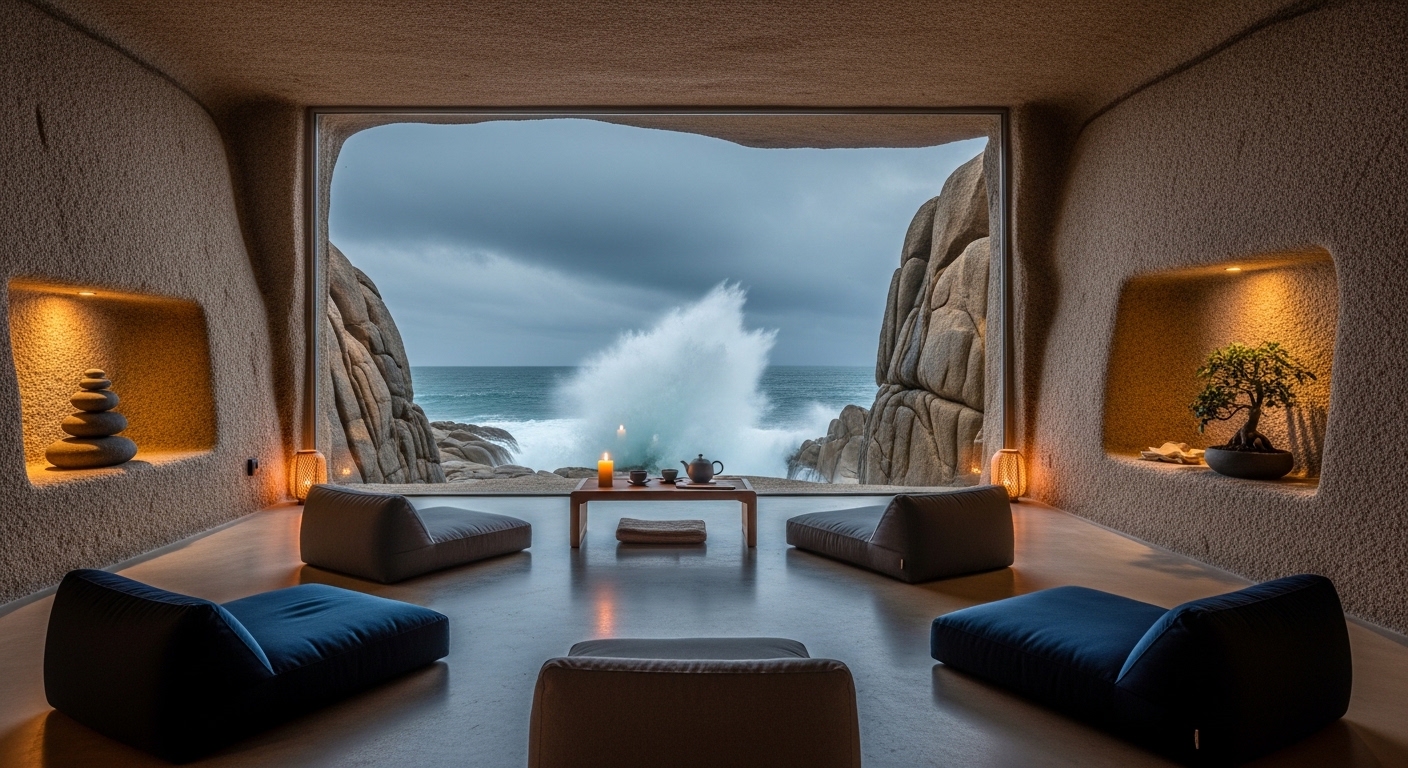
Unlike luxury spas, these meditation rooms embrace minimalism. Designers intentionally preserve rough stone walls, narrow entrances, and low ceilings. The goal is presence, not comfort. Common features include:
- Unpolished concrete and stone
- Floor cushions instead of furniture
- Natural light shafts
- Ocean-facing openings
- Sound-only environments
The architecture forces the mind to slow down. Inside a storm shelter, you cannot multitask. There are no signals, screens, or distractions.
Do you think modern wellness spaces are too comfortable to truly change people?
Spiritual Meaning of Survival Spaces
In many cultures, survival spaces carry spiritual symbolism. They represent the thin line between life and death. When these spaces become meditation rooms, they embody transformation. In Buddhist philosophy, impermanence is central. Meditating inside a structure built to survive catastrophe reinforces this lesson physically. You sit where others once feared, and realize fear is temporary.
In trauma therapy, similar environments reframe stress responses. Former shelters now function as controlled spaces for emotional healing.
Would you feel emotionally lighter leaving a place that once represented fear?
The Rise of Silent Tourism
Storm shelters turned cliffside meditation rooms belong to the growing trend of silent tourism. Travelers increasingly seek destinations where the main activity is doing nothing. Unlike adventure travel or luxury resorts, silent tourism focuses on:
- No conversation
- No schedules
- No photography
- No consumption
- No performance
People often feel exhausted by constant stimulation. These spaces offer radical stillness.
Would you pay to stay somewhere that doesn’t allow talking?

Challenges and Ethical Questions
Repurposing survival infrastructure for tourism raises ethical questions. Critics argue these spaces should remain for emergencies or memorialized instead of commercialized. Communities must consider:
- Over-tourism in fragile cliff ecosystems
- Spiritual spaces turning into Instagram content
- Loss of historical authenticity
Some areas restrict access to locals, while others require guided visits with strict silence rules.
Should places of historical fear be protected from modern consumption?
The Future of Storm Shelter Meditation Spaces
As climate change increases extreme weather, new storm shelters are being built again. Architects now design them with dual purposes: emergency protection and mental wellness. Future shelters may include:
- Acoustic meditation chambers
- Solar-powered lighting
- Natural ventilation systems
- Hidden emergency supplies within retreat spaces
These spaces demonstrate a new kind of architecture: buildings that serve both crisis and calm.
Perhaps the most beautiful idea is this: the same structure that once saved lives can now help people understand them.
Would You Meditate in a Place Built for Survival?
Storm shelters turned cliffside meditation rooms challenge how we think about safety, fear, and peace. They remind us that the strongest walls sometimes serve to protect awareness, not just bodies. Would you choose to meditate in a luxury spa, or inside a concrete chamber carved into a cliff by war and storms?
We would love to hear your thoughts. Would you visit one of these spaces? Should they remain hidden or open to travelers seeking silence?
Follow WentWorld.com on social media for more stories about hidden architecture, forgotten spaces, and unconventional travel experiences.
Focus Keyphrase for SEO: Storm Shelters Turned Cliffside Meditation Rooms
Catch up on the top stories and travel deals by subscribing to our newsletter!