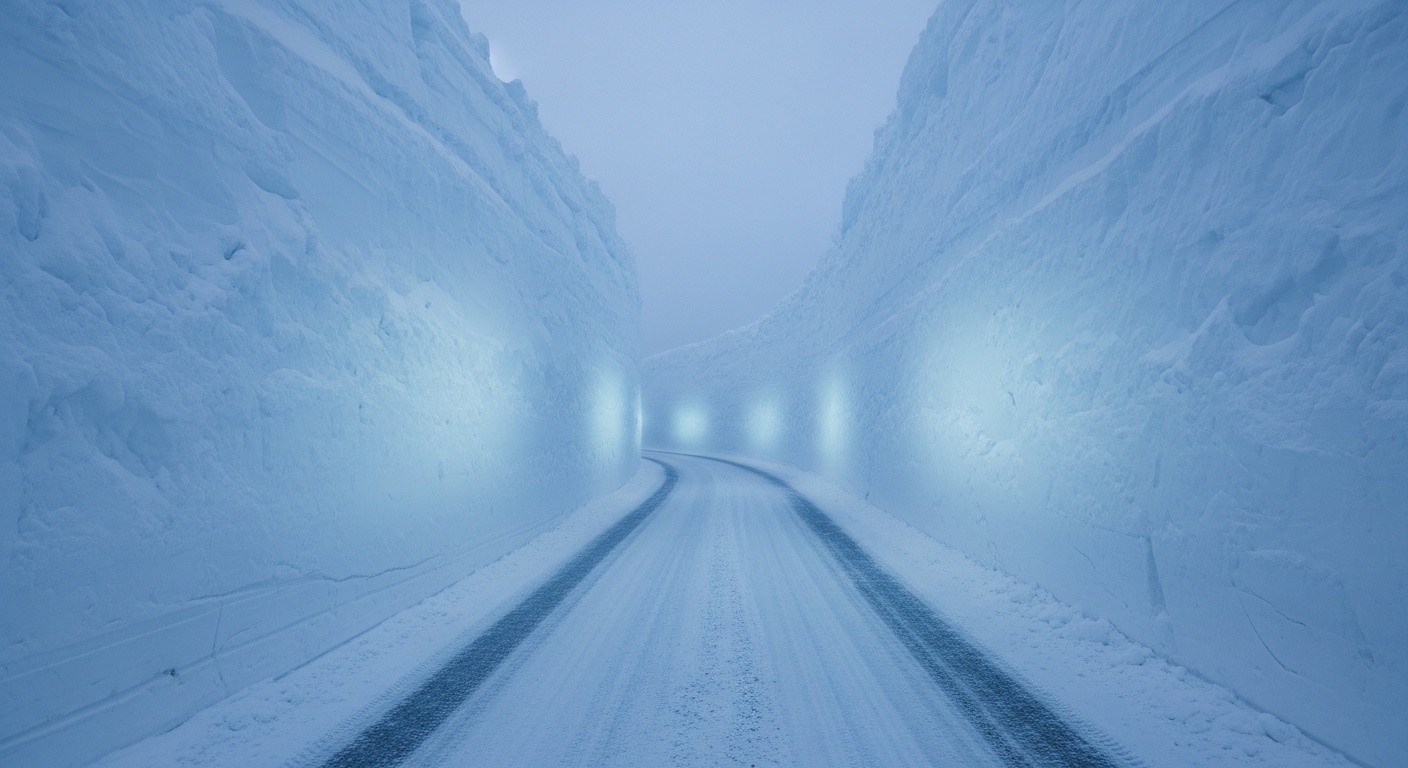
There are places on Earth where winter does not simply arrive, it completely transforms the landscape. In some regions, snow does not just cover roads, it becomes the road itself. These extraordinary snow tunnels used as seasonal streets are not tourist gimmicks or temporary attractions, but real functioning pathways carved directly through towering walls of snow. Walking or driving through them feels like stepping into another world, one where ice replaces concrete and silence replaces traffic noise.
For most of us, snow is an inconvenience. It delays flights, blocks streets, and forces us to stay indoors. But in certain parts of the world, snow becomes an architectural material. Entire transport routes are rebuilt each year by nature itself. Instead of fighting the snow, communities adapt to it and design their lives around it. Have you ever imagined using a tunnel made entirely of snow as your daily street?
In this WentWorld.com journey, we explore the most remarkable places where snow tunnels function as seasonal streets. We look at how they are created, why they exist, what it feels like to travel through them, and why these frozen roads represent one of the most fascinating examples of human adaptation to extreme environments.
What Makes Snow Tunnels Possible
The idea of snow tunnels used as seasonal streets sounds unreal until you understand the conditions required for them to exist. These tunnels only form in regions where snowfall is not just heavy, but extreme. We are talking about several meters of snow accumulating over months, often in mountainous or high-latitude areas.
Once the snowpack becomes deep enough, local authorities or communities begin carving through it to reopen transportation routes. Instead of removing all the snow, they create corridors within it. The result is a tunnel with walls made entirely of compacted snow, sometimes reaching heights of 10 to 20 meters.
Temperature plays a crucial role. The snow must remain cold and stable for weeks or months, otherwise the walls would collapse. This is why snow tunnels are always seasonal. When spring arrives, they melt away, leaving no trace behind.
Doesn’t it feel strange to think that some of the world’s most dramatic streets only exist for a few months each year?
Tateyama Kurobe Alpine Route, Japan
One of the most famous examples of snow tunnels used as seasonal streets is the Tateyama Kurobe Alpine Route in Japan. Each spring, massive snow walls are carved through the mountains of Toyama Prefecture, creating a corridor known as the Snow Wall Walk.
The walls can rise over 20 meters high, turning the road into a frozen canyon. Buses travel through these tunnels, and pedestrians are allowed to walk between towering snow cliffs. The experience feels cinematic, like walking inside a glacier.
Japan’s official tourism board japan.travel documents how this route has become a symbol of seasonal transformation. Airlines such as Japan Airlines even promote spring visits specifically for this phenomenon.
What makes Tateyama special is not just the size of the snow walls, but the precision with which they are maintained. Engineers monitor snow stability daily to ensure safety for thousands of visitors.

Riksgränsen, Sweden
In northern Sweden, near the Arctic Circle, lies the village of Riksgränsen. This region receives some of the heaviest snowfall in Europe. Roads here are not simply cleared, they are sculpted.
During peak winter, certain access routes become snow tunnels used as seasonal streets. These corridors are created by snowplows that cut directly through meters of compacted snow, forming sheltered passages for vehicles and pedestrians.
Unlike Japan’s polished tourist routes, Riksgränsen feels raw and practical. These tunnels exist not for spectacle, but for survival. They allow communities to function in conditions that would shut down most cities.
Information about Arctic infrastructure is often shared by environmental research organizations like Nature, which highlights how climate extremes shape human behavior.
Hokkaido Snow Corridors
Hokkaido, Japan’s northernmost island, experiences brutal winters with constant snowfall. Rural roads here frequently turn into snow tunnels used as seasonal streets, especially in mountainous farming regions.
These tunnels are not tourist attractions, yet they look just as surreal. Farmers drive tractors through walls of snow taller than houses. Children walk to school between frozen cliffs. Delivery trucks navigate corridors that look like ice caves.
The daily normality of such extreme conditions is what makes Hokkaido fascinating. What feels like a once-in-a-lifetime experience for visitors is simply routine for locals.
Have you ever considered how different your daily commute would feel if it happened inside a tunnel made of snow?
The Engineering Behind Frozen Streets
Creating snow tunnels is not as simple as carving through ice. It requires careful planning, machinery, and constant monitoring. Snow density must be compact enough to support vertical walls. If the snow is too light, it collapses. If it becomes too warm, it melts.
Heavy-duty snow blowers and rotary plows are used to carve clean, straight corridors. Engineers measure wall angles to prevent cave-ins. Drainage channels are sometimes built to manage meltwater during warmer days.
In many regions, authorities prefer tunnels over full snow removal because it is more efficient. Instead of moving thousands of tons of snow off the road, they simply reshape it.
This makes snow tunnels one of the most sustainable forms of seasonal infrastructure. No concrete. No steel. Just nature rearranged.
How It Feels to Walk Through One
Walking through snow tunnels used as seasonal streets feels unlike any other travel experience. Sound becomes muted. The thick snow walls absorb noise, creating a strange silence even when vehicles pass by.
Light behaves differently too. Sunlight filters through the snow, giving everything a soft blue glow. Shadows are blurred. The air feels cleaner and colder, carrying the faint scent of ice.
Many travelers describe a sense of being inside the landscape rather than on it. You are not just observing winter, you are physically moving through it.
It makes you wonder how often modern travel removes us from nature instead of immersing us in it.
Why These Streets Exist at All
Snow tunnels exist because people choose to live in extreme environments. Mining towns, ski villages, research stations, and remote farming communities all require year-round access.
Instead of abandoning these areas during winter, societies adapt. Roads become temporary. Infrastructure becomes seasonal. Even social routines shift to match the frozen landscape.
Organizations like World Wildlife Fund often emphasize how climate and geography shape human settlement patterns. Snow tunnels are a perfect example of this relationship.

Climate Change and the Future of Snow Streets
Ironically, some of the world’s most famous snow tunnels may disappear in the future. Rising global temperatures threaten consistent snowfall patterns in many regions.
Places that once relied on snow tunnels used as seasonal streets may eventually lose them. Winters may become shorter, less predictable, or warmer.
This makes these frozen roads more than just curiosities. They are fragile cultural phenomena, tied directly to the planet’s climate system.
Visiting them today is not just travel, it is witnessing a form of infrastructure that may not exist for future generations.
Why Snow Tunnels Fascinate Us
There is something deeply compelling about roads made of snow. They represent resilience, creativity, and the human ability to coexist with extreme nature.
They also challenge our assumptions about what a street should look like. We expect asphalt, streetlights, and traffic signs. Instead, we get ice walls, blue shadows, and complete silence.
Snow tunnels remind us that travel is not only about destinations, but about the paths we take to reach them.
Would You Walk a Frozen Street?
Imagine waking up in a village where your morning walk takes you through a tunnel of snow taller than buildings. No shops. No signs. Just frozen walls guiding your way.
Would you find it peaceful or unsettling? Would it feel magical or isolating?
We would love to know your thoughts. Have you ever visited a place with extreme seasonal infrastructure? Or is there a winter landscape you dream of exploring?
If unique travel stories like this inspire you, follow WentWorld.com on our social media platforms and stay connected with destinations that challenge how we see the world.
Catch up on the top stories and travel deals by subscribing to our newsletter!